
Filters:
…
Years: 1552 - 1563
People
Groups
- Polytheism (“paganism”)
- Saxons
- Germans
- Hungarian people
- Wends, or Sorbs (West Slavs)
- Christianity, Chalcedonian
- Bavarians (West Germanic tribe)
- Thuringia, Duchy of
- Passau, Bishopric of
- Saxony, Duchy of
- Holy Roman Empire
- Germany, Kingdom of (within the Holy Roman Empire)
- Slovaks (West Slavs)
- Carinthia, Duchy of
- Czechs [formerly Bohemians] (West Slavs)
- Austria, Margravate of
- Hanseatic league (informally organized)
- Hungary, Kingdom of
- Bamberg, Prince-Bishopric of
- Mazovia, Duchy of
- Poland, Greater
- Austria, Archduchy of
- Brandenburg (Ascanian) Margravate of
- Bohemia, Kingdom of
- Styria, Duchy of
- Lübeck, Free City of
- Brunswick-Lüneburg, Duchy of
- Regensburg (Ratisbon), Imperial Free City of
- Cammin, Prince-Bishopric of
- Hungary, Kingdom of
- Regensburg, Prince-Bishopric of
- Anhalt-Zerbst, Principality of
- Anhalt-Bernburg, Principality of
- Holy Roman Empire
- Galicia–Volhynia, Kingdom of
- Brunswick-Wolfenbüttel, Duchy of
- Salzburg, Archbishopric of
- Saxe-Ratzeburg-Lauenburg, Duchy of
- Saxe-Mölln-Bergedorf, Duchy of
- Poland of the later Piasts, Kingdom of
- Lithuania, Grand Duchy of
- Mecklenburg, Duchy of
- Bavaria-Straubing, Wittelsbach Duchy of
- Ottoman Empire
- Bavaria-Landshut, Wittelsbach Duchy of
- Saxony, Electorate of
- Crown of the Kingdom of Poland
- Poland of the Jagiellonians, Kingdom of
- Lithuania, Grand Duchy of
- Bavaria-Ingolstadt, Wittelsbach Duchy of
- Bavaria-Munich, Wittelsbach Duchy of
- Saxe-Lauenburg, Duchy of
- Prussian Confederation
- Transylvania (Hungarian governate)
- Ottoman Empire
- Prussia, Royal (autonomous subject of the Polish Crown)
- Teutonic Knights of Prussia, or Monastic state of the Teutonic Knights (House of the Hospitalers of Saint Mary of the Teutons in Jerusalem)
- Hesse, Landgraviate of
- Lutheranism
- Hungary, Royal
- Schmalkaldic League
- Jesuits, or Order of the Society of Jesus
- Hungary, Ottoman
- Hungary (Transylvania), Ottoman vassal Kingdom of
Topics
- Humanism, Renaissance
- Renaissance Architecture
- Protestant Reformation
- Counter-Reformation (also Catholic Reformation or Catholic Revival)
Commodoties
Subjects
Regions
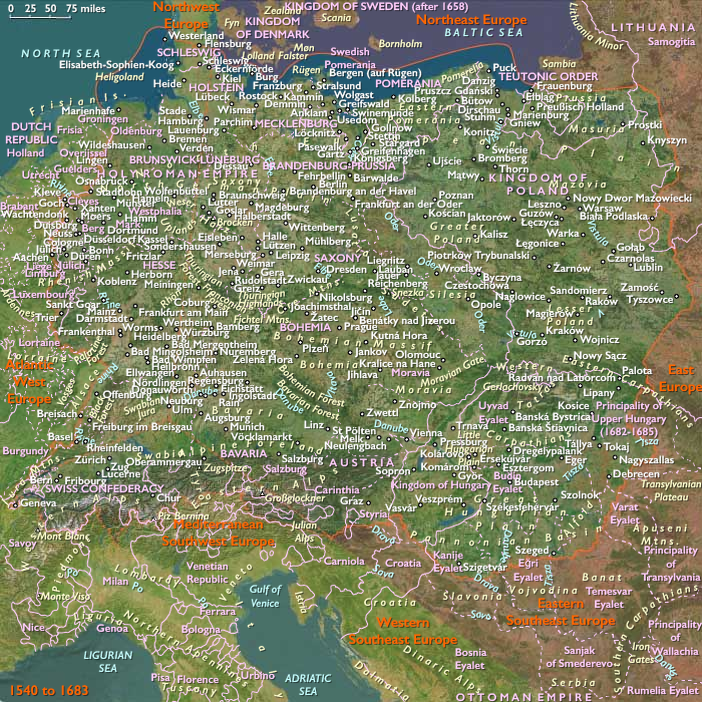
Subregions
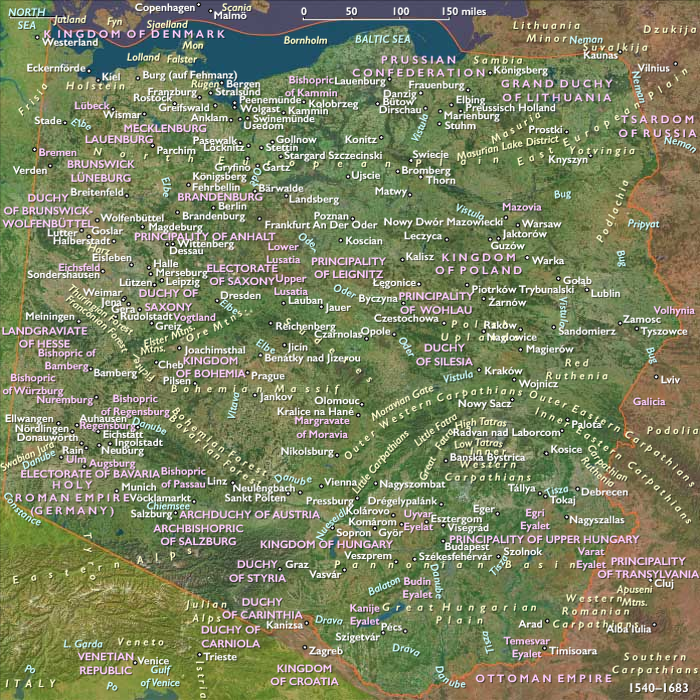
Years: 1552 - 1563
People
Groups
- Polytheism (“paganism”)
- Saxons
- Germans
- Hungarian people
- Wends, or Sorbs (West Slavs)
- Christianity, Chalcedonian
- Bavarians (West Germanic tribe)
- Thuringia, Duchy of
- Passau, Bishopric of
- Saxony, Duchy of
- Holy Roman Empire
- Germany, Kingdom of (within the Holy Roman Empire)
- Slovaks (West Slavs)
- Carinthia, Duchy of
- Czechs [formerly Bohemians] (West Slavs)
- Austria, Margravate of
- Hanseatic league (informally organized)
- Hungary, Kingdom of
- Bamberg, Prince-Bishopric of
- Mazovia, Duchy of
- Poland, Greater
- Austria, Archduchy of
- Brandenburg (Ascanian) Margravate of
- Bohemia, Kingdom of
- Styria, Duchy of
- Lübeck, Free City of
- Brunswick-Lüneburg, Duchy of
- Regensburg (Ratisbon), Imperial Free City of
- Cammin, Prince-Bishopric of
- Hungary, Kingdom of
- Regensburg, Prince-Bishopric of
- Anhalt-Zerbst, Principality of
- Anhalt-Bernburg, Principality of
- Holy Roman Empire
- Galicia–Volhynia, Kingdom of
- Brunswick-Wolfenbüttel, Duchy of
- Salzburg, Archbishopric of
- Saxe-Ratzeburg-Lauenburg, Duchy of
- Saxe-Mölln-Bergedorf, Duchy of
- Poland of the later Piasts, Kingdom of
- Lithuania, Grand Duchy of
- Mecklenburg, Duchy of
- Bavaria-Straubing, Wittelsbach Duchy of
- Ottoman Empire
- Bavaria-Landshut, Wittelsbach Duchy of
- Saxony, Electorate of
- Crown of the Kingdom of Poland
- Poland of the Jagiellonians, Kingdom of
- Lithuania, Grand Duchy of
- Bavaria-Ingolstadt, Wittelsbach Duchy of
- Bavaria-Munich, Wittelsbach Duchy of
- Saxe-Lauenburg, Duchy of
- Prussian Confederation
- Transylvania (Hungarian governate)
- Ottoman Empire
- Prussia, Royal (autonomous subject of the Polish Crown)
- Teutonic Knights of Prussia, or Monastic state of the Teutonic Knights (House of the Hospitalers of Saint Mary of the Teutons in Jerusalem)
- Hesse, Landgraviate of
- Lutheranism
- Hungary, Royal
- Schmalkaldic League
- Jesuits, or Order of the Society of Jesus
- Hungary, Ottoman
- Hungary (Transylvania), Ottoman vassal Kingdom of
Topics
- Humanism, Renaissance
- Renaissance Architecture
- Protestant Reformation
- Counter-Reformation (also Catholic Reformation or Catholic Revival)
Commodoties
Subjects
Regions
Subregions