
East Central Europe (1540–1551 CE): Religious Polarization, …
Years: 1540 - 1551
East Central Europe (1540–1551 CE): Religious Polarization, Ottoman Advances in Hungary, and the Reshaping of Saxon Electoral Power
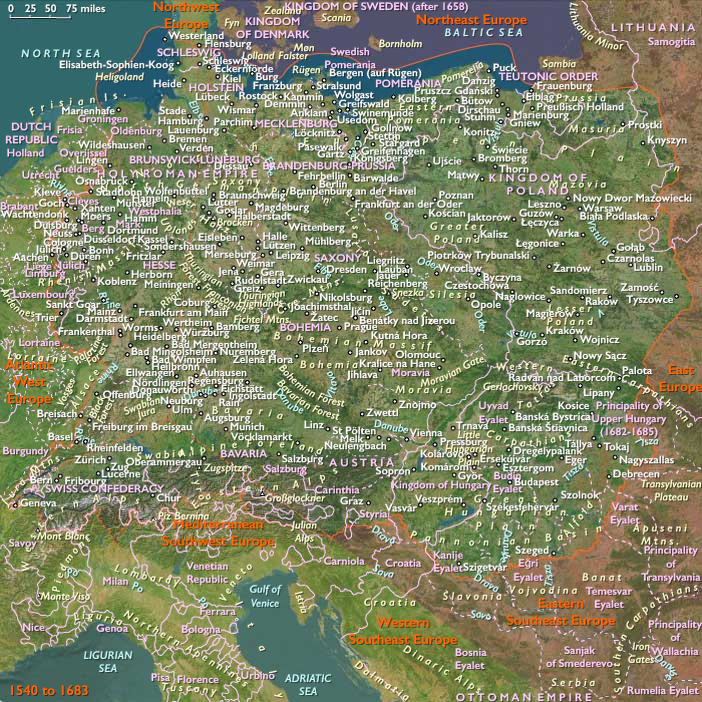
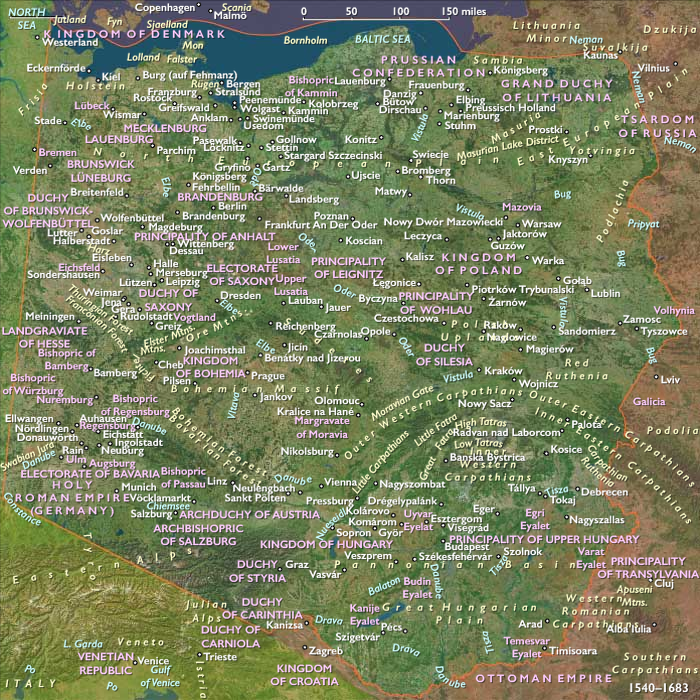
Between 1540 and 1551 CE, East Central Europe—comprising Poland, Czechia, Slovakia, Hungary, and eastern parts of Germany and Austria—experienced intensified religious conflicts, territorial fragmentation due to Ottoman advances, and crucial political realignments within the Holy Roman Empire. This era was dominated by the Schmalkaldic War (1546–1547), pitting the Protestant Schmalkaldic League against the imperial alliance led by Emperor Charles V. The war's aftermath dramatically reshaped regional political dynamics, most notably through the reassignment of the Saxon electoral dignity. Simultaneously, Hungary faced deepening division under Ottoman incursions, while the Habsburgs fortified their eastern defenses, profoundly influencing the region’s geopolitical and religious trajectory.
Political and Military Developments
The Schmalkaldic War and Saxon Electoral Realignment (1546–1547)
-
Emperor Charles V decisively defeated the Protestant Schmalkaldic League, a coalition led by Elector John Frederick I of Saxony and Landgrave Philip I of Hesse.
-
In 1547, as a consequence of John Frederick’s defeat and capture, Charles stripped him of the prestigious Electorate of Saxony, drastically reducing his territorial control.
-
Charles reassigned the electoral dignity to Duke Maurice of Saxony of the Albertine line, John Frederick’s cousin, rewarding Maurice for his support against the Protestant league.
-
This event firmly divided Saxony into:
-
Electoral Saxony (Albertine Saxony), under Maurice, which grew into a major Protestant power influential in subsequent imperial politics.
-
Ducal Saxony (Ernestine Saxony), under John Frederick and his successors, politically diminished yet remaining an influential Lutheran stronghold (notably around Weimar, Gotha, and Coburg).
-
Ottoman Conquest and Fragmentation of Hungary
-
In 1541, Sultan Suleiman the Magnificent captured Buda, decisively partitioning Hungary into three separate entities:
-
Royal Hungary: Northwestern Hungary, under direct Habsburg rule, centered at Pressburg (Bratislava).
-
Ottoman Hungary: Centrally administered Ottoman province, anchored at Buda.
-
Transylvania: A semi-independent principality under Ottoman suzerainty, initially ruled in the name of the infant prince John Sigismund (John Zápolya’s son), with significant diplomatic maneuvering by advisors such as Bishop George Martinuzzi.
-
Habsburg Defensive Consolidation
-
King and Emperor Ferdinand I of Habsburg (r. 1527–1564) strengthened eastern frontier defenses against Ottoman incursions, notably around Vienna, Pressburg, and Graz, stabilizing the Austrian territories and facilitating more centralized governance.
Economic and Technological Developments
Economic Disruptions and Realignment
-
Persistent warfare significantly disrupted traditional Hungarian trade routes. Economic activity shifted northward, bolstering urban economies in Bohemia, Poland, and German Imperial Free Cities (notably Nuremberg, Augsburg, Regensburg, Lübeck, and Wrocław).
-
Enhanced silver mining in Bohemia and Austria (notably Joachimsthal and Kutná Hora) supported regional economies and funded defensive efforts against Ottoman advances.
Cultural and Artistic Developments
Deepening Religious and Cultural Polarization
-
Protestant territories intensified efforts in vernacular religious literature, Lutheran education, and theological scholarship. Martin Luther’s Bible translations continued influencing local languages and cultures profoundly.
-
Catholic regions (particularly Austria, Bavaria, Salzburg, Bamberg, Regensburg, and Passau) increasingly embraced early Counter-Reformation measures, emphasizing art, architecture, and renewed religious orthodoxy.
Renaissance Humanist Patronage
-
Courts in Austria, Bohemia, and Hungary remained vibrant cultural centers, drawing heavily from Italian Renaissance influences, thereby enriching regional artistic and intellectual life.
Settlement and Urban Development
Frontier Fortifications and Urban Resilience
-
Ottoman threats triggered extensive urban fortification enhancements, notably in Vienna, Graz, Pressburg, and Hungarian border towns. These developments shaped urban planning, military architecture, and regional infrastructure significantly.
-
Lutheran cities, especially in Saxony and Mecklenburg, thrived culturally and economically, anchoring Protestant identity and urban growth.
Social and Religious Developments
Protestant-Catholic Territorial Division
-
The aftermath of the Schmalkaldic War hardened territorial boundaries between Lutheran and Catholic polities. Maurice’s elevation to Electoral Saxony signified a major realignment in Protestant leadership within the Holy Roman Empire.
-
Protestant states institutionalized Lutheran governance, education, and clergy training, embedding their confessional identity firmly into local societies.
Long-Term Consequences and Historical Significance
The period from 1540 to 1551 CE critically defined East Central Europe's religious and political landscape. The reassignment of Saxony's electoral dignity from the Ernestine to the Albertine line following the Schmalkaldic War decisively reshaped imperial politics, bolstering Albertine Saxony as a powerful Protestant player. Hungary’s tripartite fragmentation following the Ottoman capture of Buda permanently altered the region’s political dynamics, while Habsburg defensive measures stabilized Austria and Bohemia. Collectively, these transformations entrenched lasting religious and territorial divisions, profoundly shaping East Central Europe’s trajectory throughout the subsequent centuries.
People
- Charles V, Holy Roman Emperor
- Ferdinand I
- John I Zápolya
- John Sigismund II Zápolya
- Maurice of Wettin
- Maximilian I of
- Philip I of Hesse
- Sigismund I (”the Old”) Jagiello
- Sigismund II Augustus Jagiello
- Suleiman I “the Magnificent”
Groups
- Polytheism (“paganism”)
- Saxons
- Germans
- Hungarian people
- Wends, or Sorbs (West Slavs)
- Christianity, Chalcedonian
- Bavarians (West Germanic tribe)
- Thuringia, Duchy of
- Passau, Bishopric of
- Saxony, Duchy of
- Germany, Kingdom of (within the Holy Roman Empire)
- Holy Roman Empire
- Slovaks (West Slavs)
- Carinthia, Duchy of
- Czechs [formerly Bohemians] (West Slavs)
- Austria, Margravate of
- Hanseatic league (informally organized)
- Hungary, Kingdom of
- Bamberg, Prince-Bishopric of
- Mazovia, Duchy of
- Poland, Greater
- Austria, Archduchy of
- Brandenburg (Ascanian) Margravate of
- Bohemia, Kingdom of
- Styria, Duchy of
- Lübeck, Free City of
- Brunswick-Lüneburg, Duchy of
- Regensburg (Ratisbon), Imperial Free City of
- Cammin, Prince-Bishopric of
- Hungary, Kingdom of
- Anhalt-Bernburg, Principality of
- Regensburg, Prince-Bishopric of
- Anhalt-Zerbst, Principality of
- Holy Roman Empire
- Galicia–Volhynia, Kingdom of
- Brunswick-Wolfenbüttel, Duchy of
- Salzburg, Archbishopric of
- Saxe-Mölln-Bergedorf, Duchy of
- Saxe-Ratzeburg-Lauenburg, Duchy of
- Poland of the later Piasts, Kingdom of
- Lithuania, Grand Duchy of
- Mecklenburg, Duchy of
- Bavaria-Straubing, Wittelsbach Duchy of
- Ottoman Empire
- Bavaria-Landshut, Wittelsbach Duchy of
- Saxony, Electorate of
- Crown of the Kingdom of Poland
- Poland of the Jagiellonians, Kingdom of
- Lithuania, Grand Duchy of
- Bavaria-Munich, Wittelsbach Duchy of
- Bavaria-Ingolstadt, Wittelsbach Duchy of
- Saxe-Lauenburg, Duchy of
- Prussian Confederation
- Transylvania (Hungarian governate)
- Ottoman Empire
- Prussia, Royal (autonomous subject of the Polish Crown)
- Teutonic Knights of Prussia, or Monastic state of the Teutonic Knights (House of the Hospitalers of Saint Mary of the Teutons in Jerusalem)
- Hesse, Landgraviate of
- Lutheranism
- Hungary, Royal
- Schmalkaldic League
- Hungary, Ottoman
- Hungary (Transylvania), Ottoman vassal Kingdom of
Topics
Commodoties
Subjects
Regions
Subregions
Years: 1540 - 1551
People
- Charles V, Holy Roman Emperor
- Ferdinand I
- John I Zápolya
- John Sigismund II Zápolya
- Maurice of Wettin
- Maximilian I of
- Philip I of Hesse
- Sigismund I (”the Old”) Jagiello
- Sigismund II Augustus Jagiello
- Suleiman I “the Magnificent”
Groups
- Polytheism (“paganism”)
- Saxons
- Germans
- Hungarian people
- Wends, or Sorbs (West Slavs)
- Christianity, Chalcedonian
- Bavarians (West Germanic tribe)
- Thuringia, Duchy of
- Passau, Bishopric of
- Saxony, Duchy of
- Germany, Kingdom of (within the Holy Roman Empire)
- Holy Roman Empire
- Slovaks (West Slavs)
- Carinthia, Duchy of
- Czechs [formerly Bohemians] (West Slavs)
- Austria, Margravate of
- Hanseatic league (informally organized)
- Hungary, Kingdom of
- Bamberg, Prince-Bishopric of
- Mazovia, Duchy of
- Poland, Greater
- Austria, Archduchy of
- Brandenburg (Ascanian) Margravate of
- Bohemia, Kingdom of
- Styria, Duchy of
- Lübeck, Free City of
- Brunswick-Lüneburg, Duchy of
- Regensburg (Ratisbon), Imperial Free City of
- Cammin, Prince-Bishopric of
- Hungary, Kingdom of
- Anhalt-Bernburg, Principality of
- Regensburg, Prince-Bishopric of
- Anhalt-Zerbst, Principality of
- Holy Roman Empire
- Galicia–Volhynia, Kingdom of
- Brunswick-Wolfenbüttel, Duchy of
- Salzburg, Archbishopric of
- Saxe-Mölln-Bergedorf, Duchy of
- Saxe-Ratzeburg-Lauenburg, Duchy of
- Poland of the later Piasts, Kingdom of
- Lithuania, Grand Duchy of
- Mecklenburg, Duchy of
- Bavaria-Straubing, Wittelsbach Duchy of
- Ottoman Empire
- Bavaria-Landshut, Wittelsbach Duchy of
- Saxony, Electorate of
- Crown of the Kingdom of Poland
- Poland of the Jagiellonians, Kingdom of
- Lithuania, Grand Duchy of
- Bavaria-Munich, Wittelsbach Duchy of
- Bavaria-Ingolstadt, Wittelsbach Duchy of
- Saxe-Lauenburg, Duchy of
- Prussian Confederation
- Transylvania (Hungarian governate)
- Ottoman Empire
- Prussia, Royal (autonomous subject of the Polish Crown)
- Teutonic Knights of Prussia, or Monastic state of the Teutonic Knights (House of the Hospitalers of Saint Mary of the Teutons in Jerusalem)
- Hesse, Landgraviate of
- Lutheranism
- Hungary, Royal
- Schmalkaldic League
- Hungary, Ottoman
- Hungary (Transylvania), Ottoman vassal Kingdom of
Topics
Commodoties
Subjects
Regions
Subregions