
East Central Europe (1528–1539 CE): Aftermath of …
Years: 1528 - 1539
East Central Europe (1528–1539 CE): Aftermath of the German Peasants' War, Habsburg Consolidation, and Deepening Religious Division
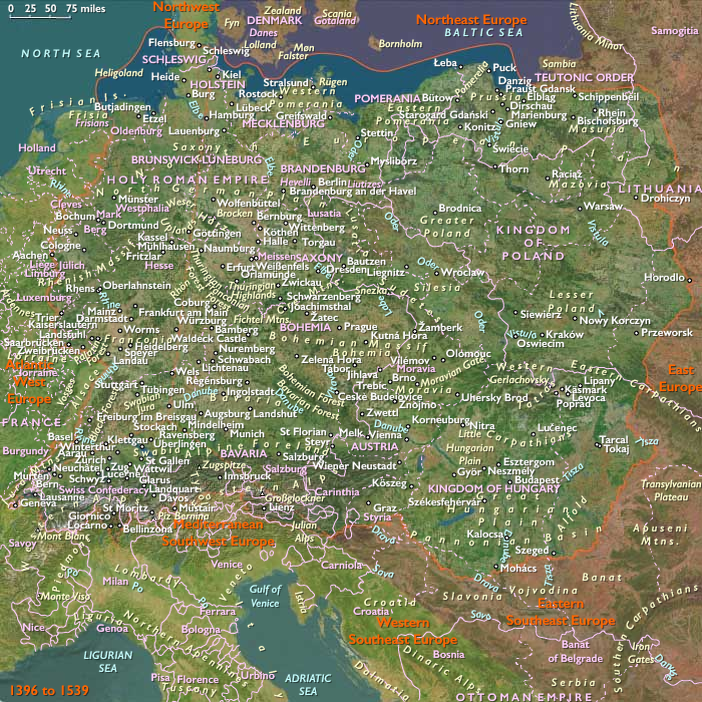
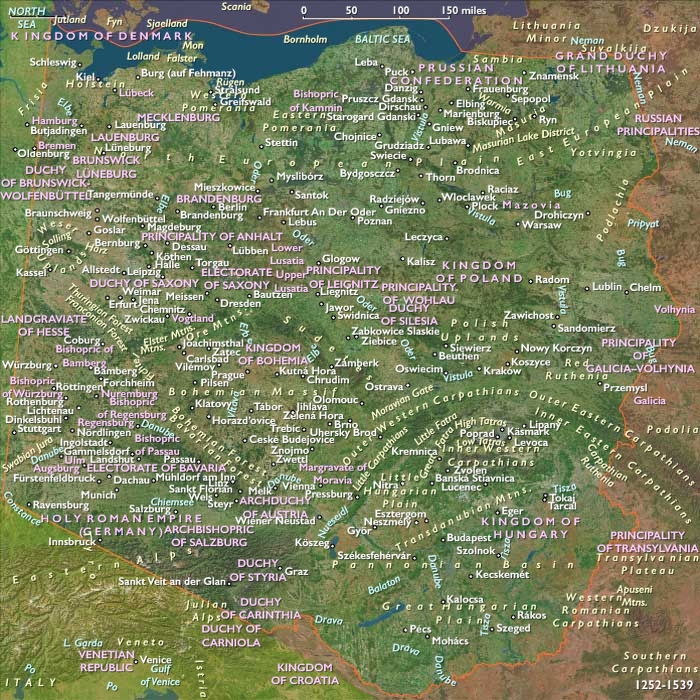
Between 1528 and 1539 CE, East Central Europe—including Poland, Hungary, Czechia, Slovakia, and eastern portions of Germany and Austria—experienced significant political, religious, and social transformations. This era was profoundly shaped by the aftermath of the German Peasants' War (1524–1525)—Europe's largest and most extensive popular uprising before the French Revolution—which decisively reinforced aristocratic dominance, reshaped alliances between secular rulers and reformers, and intensified the confessional divisions emerging from the Protestant Reformation. At the same time, the Habsburg dynasty solidified its rule in Bohemia, Hungary, and Austria, responding both to internal unrest and external Ottoman threats, and setting patterns of governance and religious affiliation with lasting implications.
Political and Military Developments
Aftermath and Consequences of the German Peasants' War
-
Magnitude and Scope:
The German Peasants' War (1524–1525) had involved up to 300,000 peasants, miners, artisans, and urban workers across vast territories in Germany, profoundly affecting East Central European regions, particularly Thuringia, Franconia, parts of Saxony, and areas near Salzburg and Upper Austria. Radical reformers like Thomas Müntzer, who led a fierce and eventually defeated revolt in Thuringia, symbolized the complex interplay of religious radicalism and social grievances. -
Aristocratic Reaction and Consolidation of Noble Power:
The brutal suppression of the uprising by noble and imperial authorities significantly bolstered aristocratic dominance, reinforced serfdom, and restricted peasant rights. Noble leaders emerged strengthened, while peasant and lower-class demands for social and economic reform were violently quashed. This outcome decisively shaped the rural social structure and power relations in the German-speaking regions of East Central Europe for centuries.
Habsburg Authority and Territorial Consolidation
-
Bohemia and Hungary under Ferdinand I:
Ferdinand I of Habsburg (r. 1527–1564), ruler of Austria, Bohemia, and parts of Hungary, reinforced centralized governance and intensified administrative and military reforms to combat internal unrest and external Ottoman threats. His reign provided political stability despite ongoing conflict, especially along Hungary's contested frontiers. -
Ottoman Pressure and Fragmentation of Hungary:
Central Hungary remained divided between Habsburg-controlled Royal Hungary in the west and Ottoman-dominated regions around Buda, creating lasting geopolitical tensions and reinforcing the critical strategic importance of Austrian and Hungarian border fortresses.
Economic and Technological Developments
Disruptions and Adaptations Post-Peasants' War
-
Following the Peasants' War, rural economies, especially in Franconia, Thuringia, Saxony, and parts of Austria, faced temporary disruptions but quickly rebounded under tighter feudal oversight. This led to stricter lord-peasant relationships, stabilizing but severely limiting peasants' economic and social mobility.
-
Mining towns (Joachimsthal, Kutná Hora, Banská Štiavnica) continued their critical role in financing regional economies, enabling rapid post-war economic recovery and supporting the strengthened noble order.
Cultural and Artistic Developments
Protestant Reformation and Lutheran-Catholic Polarization
-
The aftermath of the Peasants' War marked a turning point for the Protestant Reformation. Key reformers, notably Martin Luther, explicitly condemned the rebels, firmly aligning Lutheranism with established political authorities. This move significantly shaped the religious landscape, pushing the Reformation toward conservative, state-supported Protestantism.
-
Throughout German-speaking East Central Europe, Lutheranism gained official adoption in numerous territories, intensifying emerging religious divisions. Prominent princes and cities openly embraced Lutheran doctrines:
-
Lutheran territories included: Electoral Saxony (under Elector John the Steadfast), Landgraviate of Hesse, Duchies of Prussia, Brunswick-Lüneburg, and Saxe-Weimar, as well as important imperial cities such as Nuremberg.
-
Catholic territories, by contrast, included: Austria, Bavaria, and the ecclesiastical principalities (Salzburg, Bamberg, Regensburg, Passau). This growing distinction created political alignments that became increasingly central to regional and imperial politics in the following centuries.
-
Settlement and Urban Development
Fortification and Urban Consolidation
-
Strategic fortifications and urban renewal projects became central priorities, particularly in Habsburg territories along the Ottoman frontier. Cities such as Vienna, Pressburg (Bratislava), and Graz received enhanced fortifications, improved infrastructure, and expanded civic and economic functions.
Social and Religious Developments
Reinforcement of Aristocratic Dominance and Feudal Control
-
The peasants' defeat solidified feudal and aristocratic dominance, cementing stricter serfdom in many territories and sharply limiting lower-class aspirations. This outcome dramatically influenced social hierarchies, creating tensions that lingered into later centuries.
Growing Lutheran-Catholic Divide
-
The period witnessed decisive steps toward institutionalizing the religious division. Lutheran churches and ecclesiastical structures emerged distinctly within territories whose rulers had embraced Protestantism, establishing a lasting Lutheran presence.
-
Conversely, regions remaining Catholic—particularly under the staunchly Catholic Habsburgs—strengthened Counter-Reformation efforts, promoting religious education, monastic revival, and ecclesiastical discipline.
Long-Term Consequences and Historical Significance
The era 1528–1539 CE crucially shaped East Central Europe's social, religious, and political trajectory. The aftermath of the German Peasants' War reinforced aristocratic dominance, intensified social hierarchies, and redirected the Reformation toward conservative alignments with political authorities. The resulting Lutheran-Catholic polarization profoundly influenced the region's political alliances, setting clear distinctions between territories based on confessional affiliations. Habsburg administrative and defensive consolidations established enduring governance structures across Austria, Bohemia, and Hungary, shaping regional stability amid ongoing Ottoman pressures.
These developments provided the political, religious, and social frameworks that shaped East Central Europe throughout the later 16th and into the 17th century, profoundly affecting the dynamics of subsequent conflicts, particularly during the Wars of Religion, Thirty Years' War, and ongoing struggles between Protestant and Catholic states and principalities.
People
- Ferdinand I
- John Frederick of Saxony
- John I Zápolya
- Martin Luther
- Maximilian I of
- Sigismund I (”the Old”) Jagiello
- Suleiman I “the Magnificent”
Groups
- Polytheism (“paganism”)
- Saxons
- Germans
- Hungarian people
- Wends, or Sorbs (West Slavs)
- Christianity, Chalcedonian
- Bavarians (West Germanic tribe)
- Thuringia, Duchy of
- Passau, Bishopric of
- Saxony, Duchy of
- Germany, Kingdom of (within the Holy Roman Empire)
- Holy Roman Empire
- Slovaks (West Slavs)
- Carinthia, Duchy of
- Czechs [formerly Bohemians] (West Slavs)
- Austria, Margravate of
- Hanseatic league (informally organized)
- Hungary, Kingdom of
- Bamberg, Prince-Bishopric of
- Poland, Greater
- Mazovia, Duchy of
- Austria, Archduchy of
- Brandenburg (Ascanian) Margravate of
- Bohemia, Kingdom of
- Styria, Duchy of
- Lübeck, Free City of
- Brunswick-Lüneburg, Duchy of
- Regensburg (Ratisbon), Imperial Free City of
- Cammin, Prince-Bishopric of
- Hungary, Kingdom of
- Regensburg, Prince-Bishopric of
- Anhalt-Zerbst, Principality of
- Anhalt-Bernburg, Principality of
- Holy Roman Empire
- Galicia–Volhynia, Kingdom of
- Brunswick-Wolfenbüttel, Duchy of
- Salzburg, Archbishopric of
- Saxe-Mölln-Bergedorf, Duchy of
- Saxe-Ratzeburg-Lauenburg, Duchy of
- Poland of the later Piasts, Kingdom of
- Lithuania, Grand Duchy of
- Mecklenburg, Duchy of
- Bavaria-Straubing, Wittelsbach Duchy of
- Ottoman Empire
- Bavaria-Landshut, Wittelsbach Duchy of
- Saxony, Electorate of
- Crown of the Kingdom of Poland
- Poland of the Jagiellonians, Kingdom of
- Lithuania, Grand Duchy of
- Bavaria-Ingolstadt, Wittelsbach Duchy of
- Bavaria-Munich, Wittelsbach Duchy of
- Saxe-Lauenburg, Duchy of
- Prussian Confederation
- Transylvania (Hungarian governate)
- Ottoman Empire
- Prussia, Royal (autonomous subject of the Polish Crown)
- Teutonic Knights of Prussia, or Monastic state of the Teutonic Knights (House of the Hospitalers of Saint Mary of the Teutons in Jerusalem)
- Lutheranism
- Hungary, Royal
Topics
Commodoties
Subjects
Regions
Subregions
Related Events
Showing 10 events out of 38215 total
Years: 1528 - 1539
People
- Ferdinand I
- John Frederick of Saxony
- John I Zápolya
- Martin Luther
- Maximilian I of
- Sigismund I (”the Old”) Jagiello
- Suleiman I “the Magnificent”
Groups
- Polytheism (“paganism”)
- Saxons
- Germans
- Hungarian people
- Wends, or Sorbs (West Slavs)
- Christianity, Chalcedonian
- Bavarians (West Germanic tribe)
- Thuringia, Duchy of
- Passau, Bishopric of
- Saxony, Duchy of
- Germany, Kingdom of (within the Holy Roman Empire)
- Holy Roman Empire
- Slovaks (West Slavs)
- Carinthia, Duchy of
- Czechs [formerly Bohemians] (West Slavs)
- Austria, Margravate of
- Hanseatic league (informally organized)
- Hungary, Kingdom of
- Bamberg, Prince-Bishopric of
- Poland, Greater
- Mazovia, Duchy of
- Austria, Archduchy of
- Brandenburg (Ascanian) Margravate of
- Bohemia, Kingdom of
- Styria, Duchy of
- Lübeck, Free City of
- Brunswick-Lüneburg, Duchy of
- Regensburg (Ratisbon), Imperial Free City of
- Cammin, Prince-Bishopric of
- Hungary, Kingdom of
- Regensburg, Prince-Bishopric of
- Anhalt-Zerbst, Principality of
- Anhalt-Bernburg, Principality of
- Holy Roman Empire
- Galicia–Volhynia, Kingdom of
- Brunswick-Wolfenbüttel, Duchy of
- Salzburg, Archbishopric of
- Saxe-Mölln-Bergedorf, Duchy of
- Saxe-Ratzeburg-Lauenburg, Duchy of
- Poland of the later Piasts, Kingdom of
- Lithuania, Grand Duchy of
- Mecklenburg, Duchy of
- Bavaria-Straubing, Wittelsbach Duchy of
- Ottoman Empire
- Bavaria-Landshut, Wittelsbach Duchy of
- Saxony, Electorate of
- Crown of the Kingdom of Poland
- Poland of the Jagiellonians, Kingdom of
- Lithuania, Grand Duchy of
- Bavaria-Ingolstadt, Wittelsbach Duchy of
- Bavaria-Munich, Wittelsbach Duchy of
- Saxe-Lauenburg, Duchy of
- Prussian Confederation
- Transylvania (Hungarian governate)
- Ottoman Empire
- Prussia, Royal (autonomous subject of the Polish Crown)
- Teutonic Knights of Prussia, or Monastic state of the Teutonic Knights (House of the Hospitalers of Saint Mary of the Teutons in Jerusalem)
- Lutheranism
- Hungary, Royal
Topics
Commodoties
Subjects
Regions
Subregions