
East Central Europe (1516–1527 CE): Ottoman Conquest …
Years: 1516 - 1527
East Central Europe (1516–1527 CE): Ottoman Conquest of Hungary, End of the Jagiellonians, and Rise of Habsburg Dominance
Between 1516 and 1527 CE, East Central Europe experienced dramatic geopolitical changes marked by the collapse of Jagiellonian power in Hungary and Bohemia, the devastating Battle of Mohács (1526), and the decisive expansion of Habsburg authority into the region. This era witnessed the irreversible transformation of Hungary’s medieval kingdom, significant shifts in regional alliances, and increasing Ottoman dominance, profoundly reshaping East Central Europe's political landscape.
Political and Military Developments
End of Jagiellonian Rule and the Battle of Mohács (1526)
-
Following the death of Vladislaus II Jagiellon in 1516, his young son Louis II ascended the thrones of Hungary and Bohemia, inheriting weakened royal authority and an unstable kingdom.
-
On 29 August 1526, Hungarian forces suffered catastrophic defeat at the Battle of Mohács against Ottoman Sultan Suleiman the Magnificent (r. 1520–1566). Louis II was killed, leading to Hungary's political fragmentation and subsequent partition.
Fragmentation of Hungary and Ottoman Occupation
-
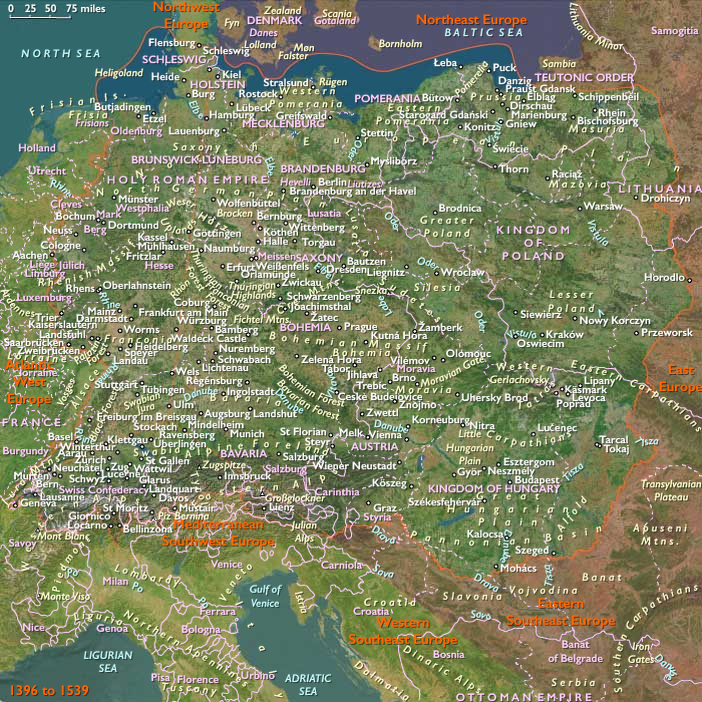
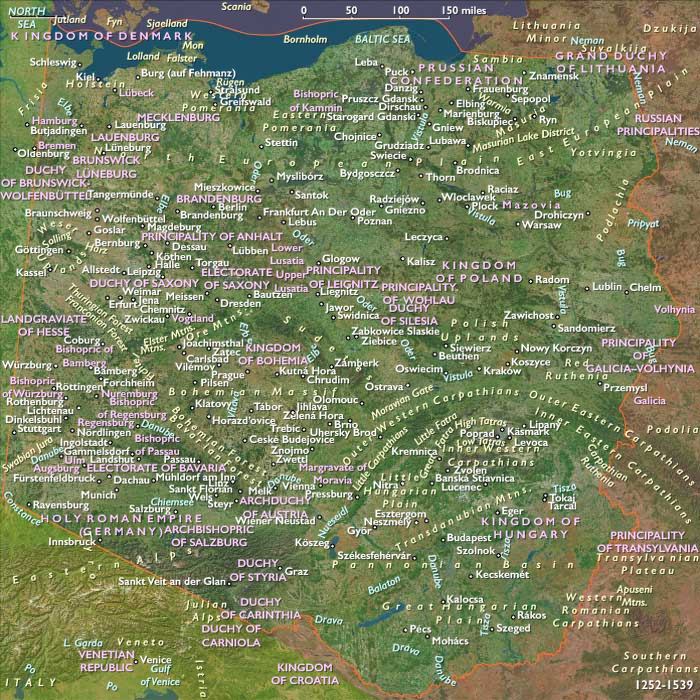
The aftermath of Mohács shattered the medieval Kingdom of Hungary, partitioning it into three parts:
-
Royal Hungary under Habsburg control in the north and west (including parts of modern Slovakia, western Hungary, and Croatia).
-
Ottoman Hungary (central and southern regions), directly administered by the Ottomans.
-
Principality of Transylvania in the east, a semi-autonomous entity under Ottoman suzerainty, governed by Hungarian princes.
-
-
These divisions significantly reshaped Hungary’s political and cultural identity for centuries.
Rise of Habsburg Dominance in Bohemia and Hungary
-
Following Mohács, Ferdinand I of Habsburg (brother of Emperor Charles V and husband of Louis II's sister, Anne Jagiellon) asserted dynastic claims, being crowned King of Bohemia in 1526, and subsequently as King of Hungary in 1527 at Székesfehérvár.
-
Ferdinand’s accession marked a fundamental shift toward long-term Habsburg rule, effectively ending Jagiellonian influence in these key Central European kingdoms.
Polish-Lithuanian Stability under Sigismund I
-
Poland-Lithuania, ruled by Sigismund I the Old (1506–1548), maintained relative stability, successfully repelling external threats, notably from Muscovy and Crimean Tatars, reinforcing Poland’s eastern borders.
Economic and Technological Developments
Economic Disruption and Regional Reorientation
-
Hungary’s partition severely disrupted traditional economic networks, prompting substantial commercial realignments. Trade shifted northward toward Bohemia, Poland-Lithuania, and the Habsburg lands, notably benefiting Vienna, Prague, Kraków, and the northern Hanseatic cities (Gdańsk, Toruń, Elbląg).
-
The collapse of Hungarian control of key southern trade routes to the Balkans and Mediterranean significantly reshaped regional commerce, redirecting flows through safer northern routes.
Cultural and Artistic Developments
Impact of Ottoman Occupation on Hungarian Culture
-
Ottoman occupation deeply impacted Hungarian culture, introducing Islamic and Ottoman architectural and artistic styles in occupied regions, notably in southern Hungarian towns and fortresses.
-
Conversely, regions under Habsburg influence experienced increased cultural alignment with Renaissance Vienna, fostering intensified artistic and intellectual exchanges.
Bohemian and Polish Renaissance Flourishing
-
Bohemia under Ferdinand I and Poland under Sigismund I continued experiencing Renaissance cultural prosperity. Prague and Kraków emerged as prominent cultural centers, promoting humanist scholarship, architectural innovation, and literary production, strongly influenced by Italian and German Renaissance trends.
Settlement and Urban Development
Urban Fortification and Military Infrastructure
-
Cities throughout East Central Europe, particularly along new Ottoman borders (e.g., Vienna, Győr, Esztergom), significantly reinforced defensive infrastructure, reflecting heightened military threats.
-
Kraków, Prague, and major Hanseatic cities continued prospering economically and expanding urban fortifications to secure trade routes against disruptions and regional instability.
Social and Religious Developments
Increased Noble Autonomy and Feudal Fragmentation
-
The collapse of centralized Hungarian royal authority accelerated noble autonomy, particularly in Ottoman Hungary and Transylvania. Local magnates increasingly dominated regional governance, fostering decentralized and feudalized political structures.
-
Polish and Bohemian aristocratic diets maintained significant influence, balancing noble privileges against royal authority, reflecting stable yet decentralized governance patterns.
Religious Resilience and Ecclesiastical Influence
-
The Catholic Church faced significant challenges in Ottoman-occupied regions but maintained strong influence in Habsburg-controlled Bohemia and Royal Hungary, actively supporting religious education, monastic patronage, and ecclesiastical arts.
-
Emerging Protestant Reformation ideas began influencing East Central Europe, notably among urban elites and nobility in Bohemia, Poland, and Royal Hungary, foreshadowing future religious conflicts.
Long-Term Consequences and Historical Significance
The era 1516–1527 CE marked a watershed moment in East Central Europe's historical trajectory, defined by Hungary's devastating defeat at Mohács and the subsequent rise of Habsburg rule. The partition of Hungary profoundly transformed regional geopolitics, embedding long-lasting divisions that endured for centuries. Increased Ottoman threats reshaped military priorities and economic networks, while the Jagiellonian dynasty’s collapse fundamentally realigned political alliances. Concurrently, Polish and Bohemian cultural flourishing continued, reinforcing distinct national identities and intellectual traditions. These complex transformations critically shaped East Central Europe's subsequent development, decisively influencing regional dynamics into the early modern era.
People
- Anne of Bohemia and Hungary
- Charles V, Holy Roman Emperor
- Ferdinand I
- Louis II of Hungary
- Maximilian I of
- Sigismund I (”the Old”) Jagiello
- Suleiman I “the Magnificent”
- Vladislaus II, King of Bohemia and King of Hungary and Croatia
Groups
- Polytheism (“paganism”)
- Saxons
- Germans
- Hungarian people
- Wends, or Sorbs (West Slavs)
- Christianity, Chalcedonian
- Bavarians (West Germanic tribe)
- Thuringia, Duchy of
- Passau, Bishopric of
- Saxony, Duchy of
- Germany, Kingdom of (within the Holy Roman Empire)
- Holy Roman Empire
- Slovaks (West Slavs)
- Carinthia, Duchy of
- Czechs [formerly Bohemians] (West Slavs)
- Austria, Margravate of
- Hanseatic league (informally organized)
- Hungary, Kingdom of
- Bamberg, Prince-Bishopric of
- Poland, Greater
- Mazovia, Duchy of
- Austria, Archduchy of
- Brandenburg (Ascanian) Margravate of
- Bohemia, Kingdom of
- Styria, Duchy of
- Lübeck, Free City of
- Brunswick-Lüneburg, Duchy of
- Regensburg (Ratisbon), Imperial Free City of
- Cammin, Prince-Bishopric of
- Hungary, Kingdom of
- Regensburg, Prince-Bishopric of
- Anhalt-Zerbst, Principality of
- Anhalt-Bernburg, Principality of
- Holy Roman Empire
- Galicia–Volhynia, Kingdom of
- Brunswick-Wolfenbüttel, Duchy of
- Salzburg, Archbishopric of
- Saxe-Mölln-Bergedorf, Duchy of
- Saxe-Ratzeburg-Lauenburg, Duchy of
- Poland of the later Piasts, Kingdom of
- Lithuania, Grand Duchy of
- Mecklenburg, Duchy of
- Bavaria-Straubing, Wittelsbach Duchy of
- Ottoman Empire
- Bavaria-Landshut, Wittelsbach Duchy of
- Saxony, Electorate of
- Poland of the Jagiellonians, Kingdom of
- Crown of the Kingdom of Poland
- Lithuania, Grand Duchy of
- Bavaria-Munich, Wittelsbach Duchy of
- Bavaria-Ingolstadt, Wittelsbach Duchy of
- Saxe-Lauenburg, Duchy of
- Prussian Confederation
- Transylvania (Hungarian governate)
- Ottoman Empire
- Prussia, Royal (autonomous subject of the Polish Crown)
- Teutonic Knights of Prussia, or Monastic state of the Teutonic Knights (House of the Hospitalers of Saint Mary of the Teutons in Jerusalem)
- Hungary, Royal
Topics
Commodoties
Subjects
Regions
Subregions
Years: 1516 - 1527
People
- Anne of Bohemia and Hungary
- Charles V, Holy Roman Emperor
- Ferdinand I
- Louis II of Hungary
- Maximilian I of
- Sigismund I (”the Old”) Jagiello
- Suleiman I “the Magnificent”
- Vladislaus II, King of Bohemia and King of Hungary and Croatia
Groups
- Polytheism (“paganism”)
- Saxons
- Germans
- Hungarian people
- Wends, or Sorbs (West Slavs)
- Christianity, Chalcedonian
- Bavarians (West Germanic tribe)
- Thuringia, Duchy of
- Passau, Bishopric of
- Saxony, Duchy of
- Germany, Kingdom of (within the Holy Roman Empire)
- Holy Roman Empire
- Slovaks (West Slavs)
- Carinthia, Duchy of
- Czechs [formerly Bohemians] (West Slavs)
- Austria, Margravate of
- Hanseatic league (informally organized)
- Hungary, Kingdom of
- Bamberg, Prince-Bishopric of
- Poland, Greater
- Mazovia, Duchy of
- Austria, Archduchy of
- Brandenburg (Ascanian) Margravate of
- Bohemia, Kingdom of
- Styria, Duchy of
- Lübeck, Free City of
- Brunswick-Lüneburg, Duchy of
- Regensburg (Ratisbon), Imperial Free City of
- Cammin, Prince-Bishopric of
- Hungary, Kingdom of
- Regensburg, Prince-Bishopric of
- Anhalt-Zerbst, Principality of
- Anhalt-Bernburg, Principality of
- Holy Roman Empire
- Galicia–Volhynia, Kingdom of
- Brunswick-Wolfenbüttel, Duchy of
- Salzburg, Archbishopric of
- Saxe-Mölln-Bergedorf, Duchy of
- Saxe-Ratzeburg-Lauenburg, Duchy of
- Poland of the later Piasts, Kingdom of
- Lithuania, Grand Duchy of
- Mecklenburg, Duchy of
- Bavaria-Straubing, Wittelsbach Duchy of
- Ottoman Empire
- Bavaria-Landshut, Wittelsbach Duchy of
- Saxony, Electorate of
- Poland of the Jagiellonians, Kingdom of
- Crown of the Kingdom of Poland
- Lithuania, Grand Duchy of
- Bavaria-Munich, Wittelsbach Duchy of
- Bavaria-Ingolstadt, Wittelsbach Duchy of
- Saxe-Lauenburg, Duchy of
- Prussian Confederation
- Transylvania (Hungarian governate)
- Ottoman Empire
- Prussia, Royal (autonomous subject of the Polish Crown)
- Teutonic Knights of Prussia, or Monastic state of the Teutonic Knights (House of the Hospitalers of Saint Mary of the Teutons in Jerusalem)
- Hungary, Royal
Topics
Commodoties
Subjects
Regions
Subregions