
East Central Europe (1504–1515 CE): Jagiellonian-Habsburg Rivalry, …
Years: 1504 - 1515
East Central Europe (1504–1515 CE): Jagiellonian-Habsburg Rivalry, Ottoman Encroachment, and Dynastic Alliances
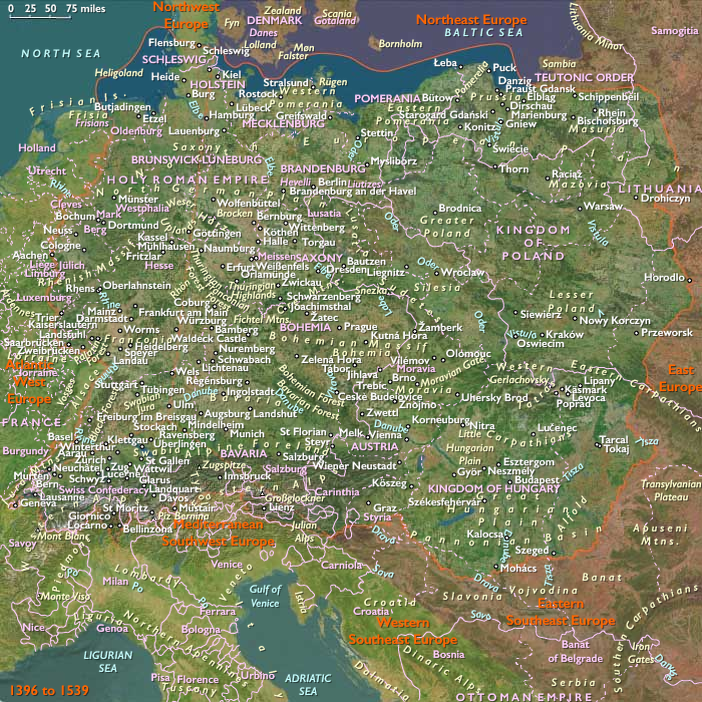
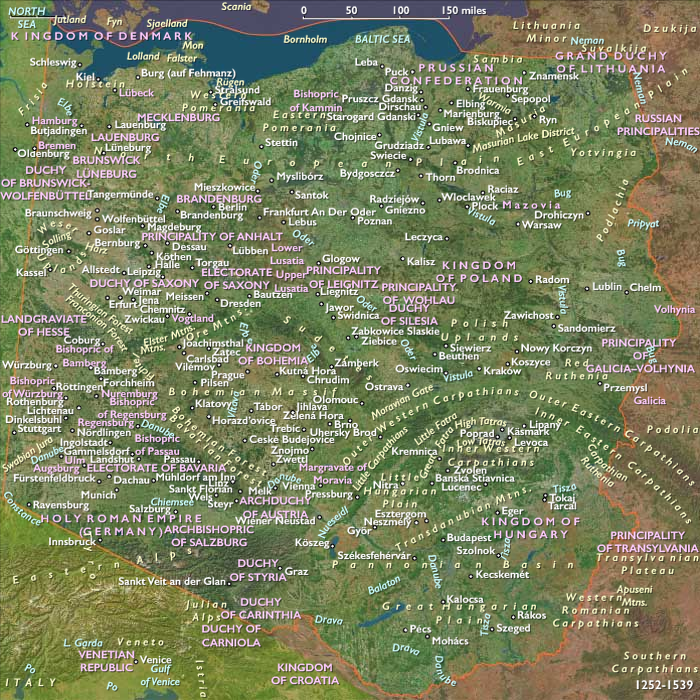
From 1504 to 1515 CE, East Central Europe experienced intense geopolitical shifts driven by escalating rivalry between the Jagiellonian dynasty (in Hungary, Bohemia, and Poland-Lithuania) and the ascendant Habsburg dynasty, as well as growing Ottoman pressures from the south. Diplomatic realignments, including strategic dynastic marriages, reshaped alliances, setting the stage for future Habsburg dominance and enduring regional tensions.
Political and Military Developments
Jagiellonian Rule and Internal Struggles
-
Under Vladislaus II Jagiellon (r. 1490–1516), Hungary and Bohemia increasingly faced internal aristocratic conflicts and weakening royal authority. Vladislaus’s ineffective governance led to greater political fragmentation and noble autonomy.
-
Poland-Lithuania, ruled by Sigismund I the Old (r. 1506–1548), faced continued threats from the Teutonic Order and Moldavia, prompting intensified military and diplomatic efforts to secure eastern and northern frontiers.
Escalation of Jagiellonian-Habsburg Rivalry
-
Habsburg Emperor Maximilian I (r. 1493–1519) pursued an aggressive strategy to assert dominance over Hungarian and Bohemian territories, heightening rivalry with the Jagiellonians.
-
Diplomatic tensions culminated in the First Congress of Vienna (1515), resulting in strategic marriages between the Jagiellonian and Habsburg houses, profoundly influencing future dynastic successions. The treaties at this congress arranged double marriages: Vladislaus’s children, Louis II of Hungary and Bohemia, and Anne Jagiellon, married into the Habsburg dynasty, profoundly reshaping regional alliances.
Increasing Ottoman Threats to Hungary
-
The Ottoman Empire, under Sultan Selim I (r. 1512–1520), intensified its incursions into southern Hungarian territories, significantly straining Hungary’s resources and defenses. Frequent Ottoman raids prompted increased military expenditures and defensive strategies.
Economic and Technological Developments
Continued Urban Prosperity and Trade
-
Economic vitality persisted, particularly within Hanseatic cities (Gdańsk, Toruń, Elbląg, Stettin) and urban centers such as Prague, Kraków, Vienna, and Buda, driven by strong commercial networks trading grain, textiles, metals, and luxury goods.
-
Increased artisanal productivity and expanding mercantile activities significantly enhanced regional economic stability and urban wealth.
Mining and Metallurgical Growth
-
Notably in Hungarian and Slovak mining centers (Banská Štiavnica, Banská Bystrica, Kremnica), robust extraction of precious metals (gold, silver, copper) continued, significantly contributing to regional prosperity and enhancing Hungary’s economic influence.
Cultural and Artistic Developments
Renaissance Flourishing under Jagiellonian and Habsburg Patronage
-
Hungarian Renaissance culture thrived under Vladislaus II, who continued fostering intellectual, artistic, and architectural developments, especially in Buda and Esztergom, further enhancing Hungary’s cultural prestige.
-
Polish cities, notably Kraków under Sigismund I, experienced significant Renaissance cultural patronage, reflected in humanist scholarship, artistic achievements, and architectural innovations.
Bohemian Artistic Continuity
-
Bohemian culture continued blending Gothic and emerging Renaissance influences, particularly in Prague, where royal patronage sustained artistic and architectural projects, despite Vladislaus’s largely absent governance.
Settlement and Urban Development
Defensive Urban Fortification
-
Persistent Ottoman threats and regional conflicts led to enhanced urban fortifications across Hungary, notably Buda, Pest, Székesfehérvár, and along frontier regions, significantly shaping urban development and military infrastructure.
Expansion and Urbanization in Poland and Bohemia
-
Urban centers like Kraków, Lublin, and Prague continued to expand and prosper, driven by robust trade, artisanal activities, and growing populations, reflecting stable urban economies and effective civic governance.
Social and Religious Developments
Nobility’s Growing Power and Influence
-
Aristocratic power significantly expanded, particularly in Hungary, Bohemia, and Poland-Lithuania. Noble diets, notably the Hungarian Diet and Polish Sejm, increasingly dominated royal decision-making, fiscal policy, and regional governance.
-
Nobility’s rising influence contributed to weakened royal authority, internal divisions, and more decentralized governance structures, profoundly shaping regional political dynamics.
Religious Stability and Ecclesiastical Influence
-
The Catholic Church remained influential across East Central Europe, promoting ecclesiastical scholarship, education, and artistic patronage, reinforcing cultural cohesion. Monastic and ecclesiastical institutions notably influenced education, religious practices, and social norms.
Long-Term Consequences and Historical Significance
The era 1504–1515 CE proved pivotal for East Central Europe, significantly reshaped by escalating Jagiellonian-Habsburg rivalry, strategic dynastic marriages from the Congress of Vienna (1515), and intensified Ottoman threats. Diplomatic alliances secured at Vienna laid foundations for eventual Habsburg dominance in Bohemia and Hungary, significantly influencing Central European geopolitics throughout the 16th century. Continued economic vitality and cultural flourishing under Renaissance patronage strengthened regional prosperity, despite rising external threats and internal divisions. These developments profoundly influenced East Central Europe’s trajectory, establishing political and cultural patterns that endured through the early modern period.
People
- Anne of Bohemia and Hungary
- Louis II of Hungary
- Maximilian I of
- Selim I
- Sigismund I (”the Old”) Jagiello
- Vladislaus II, King of Bohemia and King of Hungary and Croatia
Groups
- Polytheism (“paganism”)
- Saxons
- Germans
- Hungarian people
- Wends, or Sorbs (West Slavs)
- Christianity, Chalcedonian
- Bavarians (West Germanic tribe)
- Thuringia, Duchy of
- Passau, Bishopric of
- Saxony, Duchy of
- Germany, Kingdom of (within the Holy Roman Empire)
- Holy Roman Empire
- Slovaks (West Slavs)
- Carinthia, Duchy of
- Czechs [formerly Bohemians] (West Slavs)
- Austria, Margravate of
- Hanseatic league (informally organized)
- Hungary, Kingdom of
- Bamberg, Prince-Bishopric of
- Poland, Greater
- Mazovia, Duchy of
- Austria, Archduchy of
- Brandenburg (Ascanian) Margravate of
- Bohemia, Kingdom of
- Styria, Duchy of
- Lübeck, Free City of
- Brunswick-Lüneburg, Duchy of
- Regensburg (Ratisbon), Imperial Free City of
- Cammin, Prince-Bishopric of
- Regensburg, Prince-Bishopric of
- Anhalt-Zerbst, Principality of
- Anhalt-Bernburg, Principality of
- Holy Roman Empire
- Galicia–Volhynia, Kingdom of
- Brunswick-Wolfenbüttel, Duchy of
- Salzburg, Archbishopric of
- Saxe-Mölln-Bergedorf, Duchy of
- Saxe-Ratzeburg-Lauenburg, Duchy of
- Poland of the later Piasts, Kingdom of
- Lithuania, Grand Duchy of
- Mecklenburg, Duchy of
- Bavaria-Straubing, Wittelsbach Duchy of
- Ottoman Empire
- Bavaria-Landshut, Wittelsbach Duchy of
- Saxony, Electorate of
- Poland of the Jagiellonians, Kingdom of
- Crown of the Kingdom of Poland
- Lithuania, Grand Duchy of
- Bavaria-Ingolstadt, Wittelsbach Duchy of
- Bavaria-Munich, Wittelsbach Duchy of
- Saxe-Lauenburg, Duchy of
- Utraquists, or Calixtines
- Taborites
- Hussites
- Prussian Confederation
- Ottoman Empire
- Prussia, Royal (autonomous subject of the Polish Crown)
- Teutonic Knights of Prussia, or Monastic state of the Teutonic Knights (House of the Hospitalers of Saint Mary of the Teutons in Jerusalem)
Topics
Commodoties
Subjects
Regions
Subregions
Years: 1504 - 1515
People
- Anne of Bohemia and Hungary
- Louis II of Hungary
- Maximilian I of
- Selim I
- Sigismund I (”the Old”) Jagiello
- Vladislaus II, King of Bohemia and King of Hungary and Croatia
Groups
- Polytheism (“paganism”)
- Saxons
- Germans
- Hungarian people
- Wends, or Sorbs (West Slavs)
- Christianity, Chalcedonian
- Bavarians (West Germanic tribe)
- Thuringia, Duchy of
- Passau, Bishopric of
- Saxony, Duchy of
- Germany, Kingdom of (within the Holy Roman Empire)
- Holy Roman Empire
- Slovaks (West Slavs)
- Carinthia, Duchy of
- Czechs [formerly Bohemians] (West Slavs)
- Austria, Margravate of
- Hanseatic league (informally organized)
- Hungary, Kingdom of
- Bamberg, Prince-Bishopric of
- Poland, Greater
- Mazovia, Duchy of
- Austria, Archduchy of
- Brandenburg (Ascanian) Margravate of
- Bohemia, Kingdom of
- Styria, Duchy of
- Lübeck, Free City of
- Brunswick-Lüneburg, Duchy of
- Regensburg (Ratisbon), Imperial Free City of
- Cammin, Prince-Bishopric of
- Regensburg, Prince-Bishopric of
- Anhalt-Zerbst, Principality of
- Anhalt-Bernburg, Principality of
- Holy Roman Empire
- Galicia–Volhynia, Kingdom of
- Brunswick-Wolfenbüttel, Duchy of
- Salzburg, Archbishopric of
- Saxe-Mölln-Bergedorf, Duchy of
- Saxe-Ratzeburg-Lauenburg, Duchy of
- Poland of the later Piasts, Kingdom of
- Lithuania, Grand Duchy of
- Mecklenburg, Duchy of
- Bavaria-Straubing, Wittelsbach Duchy of
- Ottoman Empire
- Bavaria-Landshut, Wittelsbach Duchy of
- Saxony, Electorate of
- Poland of the Jagiellonians, Kingdom of
- Crown of the Kingdom of Poland
- Lithuania, Grand Duchy of
- Bavaria-Ingolstadt, Wittelsbach Duchy of
- Bavaria-Munich, Wittelsbach Duchy of
- Saxe-Lauenburg, Duchy of
- Utraquists, or Calixtines
- Taborites
- Hussites
- Prussian Confederation
- Ottoman Empire
- Prussia, Royal (autonomous subject of the Polish Crown)
- Teutonic Knights of Prussia, or Monastic state of the Teutonic Knights (House of the Hospitalers of Saint Mary of the Teutons in Jerusalem)
Topics
Commodoties
Subjects
Regions
Subregions