
East Central Europe (160–171 CE): From Antonine …
Years: 160 - 171
East Central Europe (160–171 CE): From Antonine Stability to Growing Frontier Tensions
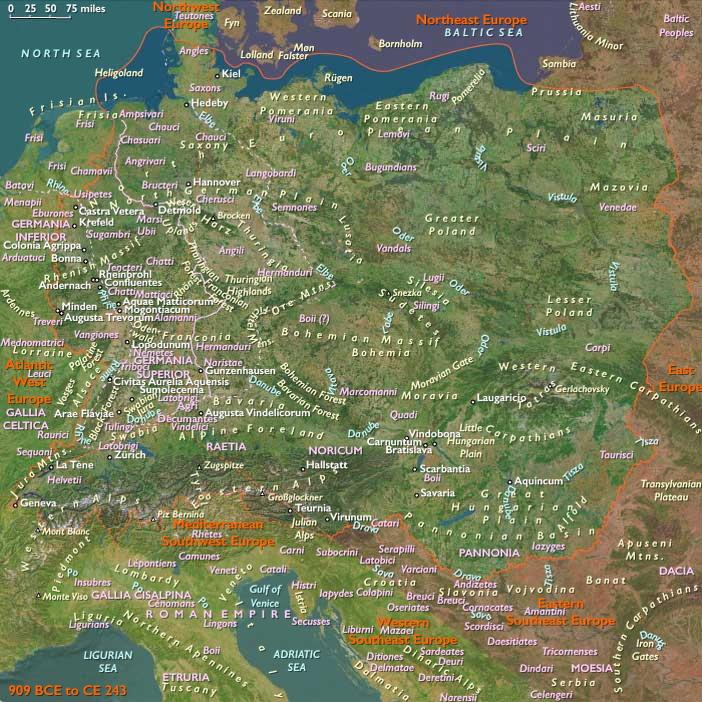
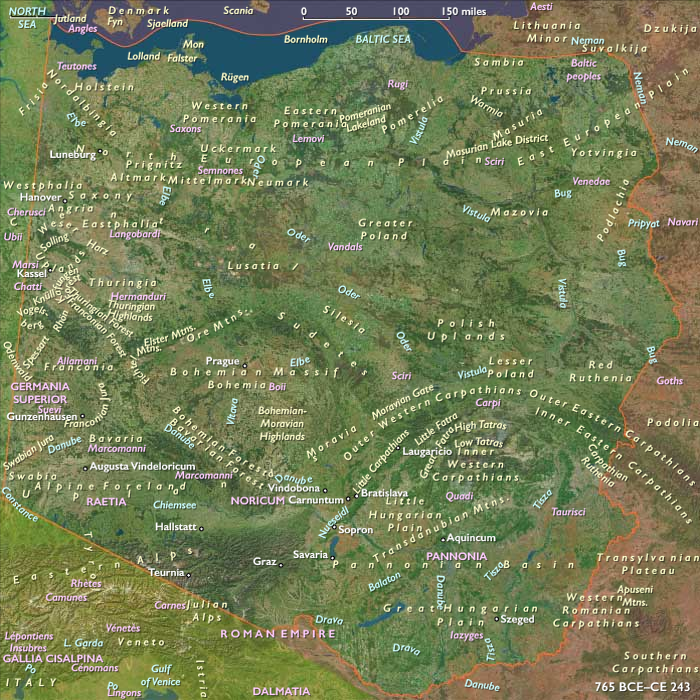
Between 160 and 171 CE, East Central Europe—encompassing Poland, Czechia, Slovakia, Hungary, and those portions of Germany and Austria lying east of 10°E and north of a line stretching from roughly 48.2°N at 10°E southeastward to the Austro-Slovenian border near 46.7°N, 15.4°E—transitioned from a sustained era of stability under Emperor Antoninus Pius into a period of growing tension during the early reign of Emperor Marcus Aurelius. Increasingly strained relations with Germanic tribes, particularly the Marcomanni, Quadi, and the Sarmatian Iazyges, foreshadowed imminent conflict and disruption along the Roman frontier.
Political and Military Developments
Final Years of Antonine Stability
-
The last year of Emperor Antoninus Pius’s reign (160–161 CE) saw continued frontier stability along the Danube, sustained by the well-established Roman defensive system.
Accession of Marcus Aurelius and Early Frontier Challenges
-
Upon Emperor Marcus Aurelius’s accession (161 CE), Roman provinces of Pannonia Superior, Pannonia Inferior, and Noricum faced increased tension from neighboring Germanic and Sarmatian tribes.
-
Early signs of unrest and dissatisfaction emerged, particularly among the Marcomanni, Quadi, and Iazyges, driven by population pressures, economic disparities, and shifting tribal alliances.
Increased Frontier Military Activity
-
Between 166 and 171 CE, initial raids and skirmishes along the Danube frontier increased noticeably, prompting a stronger Roman military presence and preparations for a larger-scale confrontation.
Economic and Technological Developments
Economic Pressures and Shifting Trade
-
Growing frontier tensions slightly disrupted trade routes between Roman provinces and tribal territories. Despite this, economic activity—trading Roman manufactured goods for Germanic and Sarmatian resources—continued, though with increased risks.
Continued Technological Exchange
-
Even amidst growing political and military uncertainty, technological exchanges persisted. Roman metallurgical and agricultural methods continued to influence regional tribes, maintaining productivity despite rising tensions.
Cultural and Artistic Developments
Cultural Continuity Amid Rising Uncertainty
-
The era still witnessed a vibrant hybrid cultural environment along the frontier, with artifacts and material culture reflecting Roman-Germanic interactions.
-
However, the increasing tensions began subtly influencing regional art and craftsmanship, with artifacts increasingly emphasizing military and defensive motifs.
Settlement and Urban Development
Frontier Fortifications Strengthened
-
Anticipating further conflicts, the Romans reinforced frontier fortifications significantly, particularly at key strategic settlements (Carnuntum, Vindobona, Aquincum).
-
This defensive buildup reshaped local urban and military landscapes, preparing the provinces for potential conflict.
Increased Germanic Defensive Settlement Patterns
-
Germanic tribes, particularly the Marcomanni and Quadi, began strengthening their settlements and adopting more defensive structures in anticipation of increased hostilities.
Social and Religious Developments
Tribal Leadership Under Pressure
-
Tribal leadership among the Marcomanni, Quadi, and Iazyges experienced mounting pressure from population growth, economic challenges, and Roman diplomatic maneuvers.
-
Military elites and warrior chieftains gained influence as defensive considerations became increasingly critical.
Religious Practices and Growing Anxiety
-
Traditional Germanic religious practices persisted strongly, but the growing uncertainty and impending conflict likely intensified ritual practices emphasizing war, protection, and tribal solidarity.
Long-Term Consequences and Historical Significance
The period from 160 to 171 CE marked a critical turning point in East Central Europe, transitioning from peaceful frontier stability toward growing conflict and instability. Initial tensions experienced under Marcus Aurelius laid the foundations for the subsequent major conflicts—collectively known as the Marcomannic Wars (166–180 CE)—that would dramatically alter the regional balance of power, reshaping relationships between Roman provinces and surrounding Germanic and Sarmatian tribal societies.
People
Groups
- Iazyges, or Iazygians
- Marcomanni (Germanic tribe)
- Lombards (West Germanic tribe)
- Germans
- Quadi (Germanic tribe)
- Noricum (Roman province)
- Roman Empire (Rome): Nerva-Antonine dynasty
- Pannonia Superior (Roman province)
- Pannonia Inferior (Roman province)
Topics
Commodoties
Subjects
Regions
Subregions
Years: 160 - 171
People
Groups
- Iazyges, or Iazygians
- Marcomanni (Germanic tribe)
- Lombards (West Germanic tribe)
- Germans
- Quadi (Germanic tribe)
- Noricum (Roman province)
- Roman Empire (Rome): Nerva-Antonine dynasty
- Pannonia Superior (Roman province)
- Pannonia Inferior (Roman province)
Topics
Commodoties
Subjects
Regions
Subregions