
East Central Europe (1492–1503 CE): Jagiellonian Consolidation, …
Years: 1492 - 1503
East Central Europe (1492–1503 CE): Jagiellonian Consolidation, Rising Habsburg Influence, Ottoman Threats, and Cultural Flourishing
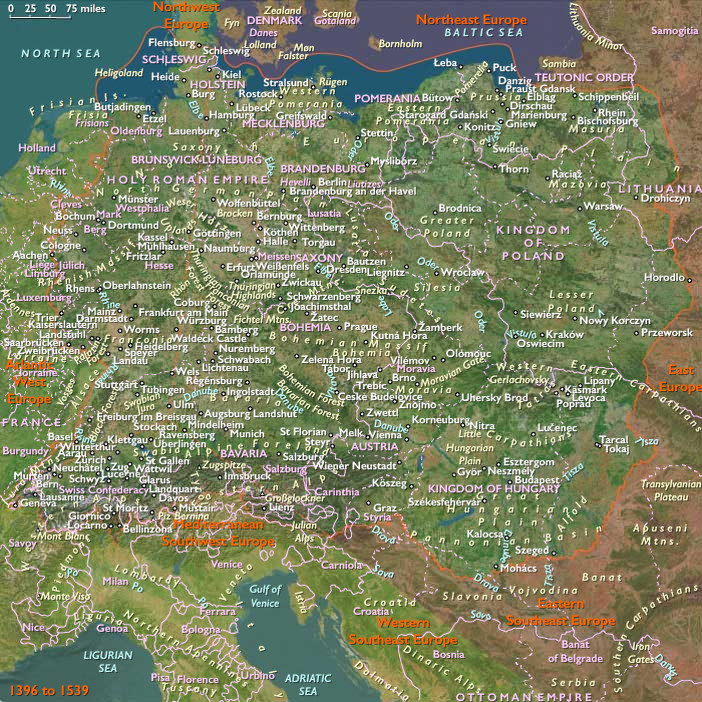
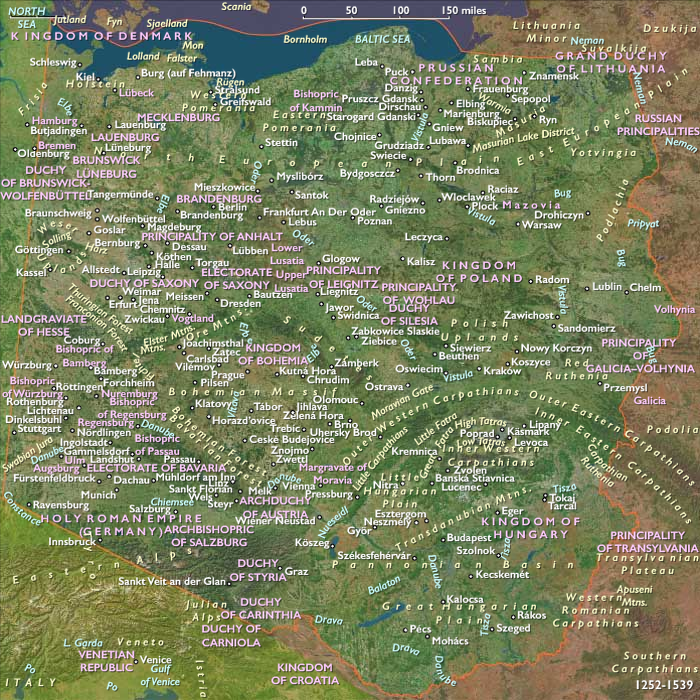
Between 1492 and 1503 CE, East Central Europe underwent significant transformations driven by the growing dominance of the Jagiellonian dynasty in Hungary, Bohemia, and Poland-Lithuania, intensifying Habsburg ambitions, increasing Ottoman pressures, and flourishing cultural and economic development. This era set the stage for early modern geopolitical and cultural dynamics, profoundly shaping regional alliances and rivalries.
Political and Military Developments
Jagiellonian Ascendancy in Central Europe
-
Following the death of King Matthias Corvinus in 1490, Vladislaus II Jagiellon (r. 1490–1516) consolidated his rule over both Hungary and Bohemia, creating a dynastic union that substantially enhanced Jagiellonian influence in Central Europe.
-
Jan I Olbracht (John Albert, r. 1492–1501) succeeded his father Casimir IV as King of Poland, further solidifying Jagiellonian dominance across Poland-Lithuania, Bohemia, and Hungary, significantly reshaping the regional balance of power.
Increasing Habsburg Ambitions and Rivalry
-
The Habsburg dynasty, centered in Austria, actively contested Jagiellonian influence in Hungary and Bohemia, leveraging strategic marriages and diplomatic maneuvering to strengthen its position.
-
In 1496, the marriage of Maximilian I, Holy Roman Emperor, to Bianca Maria Sforza reinforced Habsburg prestige and extended diplomatic influence, intensifying dynastic rivalry with the Jagiellonians over succession and territorial claims.
Ottoman Pressures and Hungarian Defensive Realignments
-
Hungary increasingly faced direct threats from the expanding Ottoman Empire under Sultan Bayezid II (r. 1481–1512), prompting urgent fortification efforts along the southern Hungarian frontier.
-
Ottoman raids into southern Hungary escalated, necessitating substantial military expenditures and defensive realignment, significantly influencing Hungarian domestic policy and regional diplomacy.
Polish-Lithuanian Stability and Moldavian Conflict
-
Poland-Lithuania under John Albert (r. 1492–1501) focused on stabilizing eastern frontiers and managing conflicts with Moldavia. The unsuccessful Polish-Moldavian War (1497–1499) resulted in limited territorial gains but reinforced the necessity of securing eastern borders against Ottoman encroachment and Crimean Tatar incursions.
Economic and Technological Developments
Urban Prosperity and Hanseatic League Influence
-
Hanseatic cities, including Gdańsk, Toruń, and Elbląg, continued thriving as significant trade hubs, facilitating Baltic commerce in grain, timber, amber, and textiles, significantly enhancing urban prosperity in Polish and eastern German territories.
-
Prague, Vienna, Kraków, and Buda experienced notable economic and demographic growth, supported by expanding trade networks linking them to broader European markets.
Advances in Mining and Metallurgy
-
Mining and metallurgical activities intensified, particularly in Hungarian and Slovak regions (Banská Štiavnica, Banská Bystrica), as silver and copper extraction significantly boosted economic prosperity and stimulated regional trade and artisanal industries.
Cultural and Artistic Developments
Hungarian Renaissance Patronage under Vladislaus II
-
Hungarian cultural flourishing continued in the royal courts of Buda and Esztergom under Vladislaus II, who maintained Matthias Corvinus’s tradition of Renaissance patronage, attracting scholars, humanists, and artists who significantly enriched Hungary’s intellectual and artistic landscape.
Bohemian and Polish Cultural Vibrancy
-
Bohemia under Vladislaus II retained vibrant Gothic cultural traditions, exemplified by ongoing construction projects in Prague (e.g., St. Vitus Cathedral), despite the shift in royal residence to Hungary.
-
Polish cities, notably Kraków under John Albert, thrived culturally, fostering literary production, scholarship, and artistic patronage strongly influenced by Renaissance humanism and classical revival.
Increased Literary and Educational Activity
-
Humanist scholars across East Central Europe intensified their efforts to promote educational reforms and literary production, notably in universities and monastic centers such as Prague, Kraków, and Vienna, significantly enriching regional intellectual life.
Settlement and Urban Development
Expansion and Fortification of Urban Centers
-
Cities throughout East Central Europe, particularly in Hungary (Buda, Pest, Esztergom), Poland (Kraków, Gdańsk, Lublin), and Bohemia (Prague, Kutná Hora), strengthened urban fortifications in response to Ottoman threats and internal conflicts, significantly enhancing regional security and urban resilience.
Social and Religious Developments
Increased Aristocratic Influence and Feudal Consolidation
-
Nobility across Bohemia, Hungary, and Poland-Lithuania increasingly consolidated power, significantly influencing royal governance, fiscal policy, and military decision-making. Noble diets and assemblies grew influential, notably the Hungarian Diet and Polish Sejm, institutionalizing aristocratic political influence.
Religious Stability and Ecclesiastical Patronage
-
The Catholic Church maintained significant influence, actively supporting educational initiatives, ecclesiastical art, and scholarship, reinforcing regional cultural cohesion. Ecclesiastical institutions notably influenced politics, culture, and societal values.
Long-Term Consequences and Historical Significance
The period from 1492 to 1503 CE critically shaped East Central Europe's geopolitical and cultural landscapes. Jagiellonian dynastic consolidation profoundly reshaped political alignments and intensified rivalry with the Habsburgs, setting the stage for future dynastic conflicts. The increased Ottoman threat necessitated strategic defensive realignments, significantly influencing Hungarian and Polish political and military priorities. Economic prosperity, cultural flourishing under Renaissance patronage, and strengthened aristocratic authority reinforced regional stability, laying durable foundations for early modern transformations. These dynamics critically influenced East Central Europe’s subsequent trajectory, embedding lasting structures that defined regional history into the sixteenth century.
People
- Bayezid II
- Bianca Maria Sforza
- Casimir IV Jagiellon
- John I Albert
- Maximilian I of
- Vladislaus II, King of Bohemia and King of Hungary and Croatia
Groups
- Polytheism (“paganism”)
- Saxons
- Germans
- Hungarian people
- Wends, or Sorbs (West Slavs)
- Christianity, Chalcedonian
- Bavarians (West Germanic tribe)
- Thuringia, Duchy of
- Passau, Bishopric of
- Saxony, Duchy of
- Germany, Kingdom of (within the Holy Roman Empire)
- Holy Roman Empire
- Slovaks (West Slavs)
- Carinthia, Duchy of
- Czechs [formerly Bohemians] (West Slavs)
- Austria, Margravate of
- Hanseatic league (informally organized)
- Hungary, Kingdom of
- Bamberg, Prince-Bishopric of
- Poland, Greater
- Mazovia, Duchy of
- Austria, Archduchy of
- Brandenburg (Ascanian) Margravate of
- Bohemia, Kingdom of
- Styria, Duchy of
- Lübeck, Free City of
- Brunswick-Lüneburg, Duchy of
- Regensburg (Ratisbon), Imperial Free City of
- Cammin, Prince-Bishopric of
- Regensburg, Prince-Bishopric of
- Anhalt-Zerbst, Principality of
- Anhalt-Bernburg, Principality of
- Holy Roman Empire
- Galicia–Volhynia, Kingdom of
- Brunswick-Wolfenbüttel, Duchy of
- Salzburg, Archbishopric of
- Saxe-Mölln-Bergedorf, Duchy of
- Saxe-Ratzeburg-Lauenburg, Duchy of
- Poland of the later Piasts, Kingdom of
- Lithuania, Grand Duchy of
- Mecklenburg, Duchy of
- Bavaria-Straubing, Wittelsbach Duchy of
- Ottoman Empire
- Bavaria-Landshut, Wittelsbach Duchy of
- Saxony, Electorate of
- Poland of the Jagiellonians, Kingdom of
- Crown of the Kingdom of Poland
- Lithuania, Grand Duchy of
- Bavaria-Ingolstadt, Wittelsbach Duchy of
- Bavaria-Munich, Wittelsbach Duchy of
- Saxe-Lauenburg, Duchy of
- Utraquists, or Calixtines
- Taborites
- Hussites
- Prussian Confederation
- Ottoman Empire
- Prussia, Royal (autonomous subject of the Polish Crown)
- Teutonic Knights of Prussia, or Monastic state of the Teutonic Knights (House of the Hospitalers of Saint Mary of the Teutons in Jerusalem)
Topics
Commodoties
Subjects
Regions
Subregions
Related Events
Showing 10 events out of 85 total
Years: 1492 - 1503
People
- Bayezid II
- Bianca Maria Sforza
- Casimir IV Jagiellon
- John I Albert
- Maximilian I of
- Vladislaus II, King of Bohemia and King of Hungary and Croatia
Groups
- Polytheism (“paganism”)
- Saxons
- Germans
- Hungarian people
- Wends, or Sorbs (West Slavs)
- Christianity, Chalcedonian
- Bavarians (West Germanic tribe)
- Thuringia, Duchy of
- Passau, Bishopric of
- Saxony, Duchy of
- Germany, Kingdom of (within the Holy Roman Empire)
- Holy Roman Empire
- Slovaks (West Slavs)
- Carinthia, Duchy of
- Czechs [formerly Bohemians] (West Slavs)
- Austria, Margravate of
- Hanseatic league (informally organized)
- Hungary, Kingdom of
- Bamberg, Prince-Bishopric of
- Poland, Greater
- Mazovia, Duchy of
- Austria, Archduchy of
- Brandenburg (Ascanian) Margravate of
- Bohemia, Kingdom of
- Styria, Duchy of
- Lübeck, Free City of
- Brunswick-Lüneburg, Duchy of
- Regensburg (Ratisbon), Imperial Free City of
- Cammin, Prince-Bishopric of
- Regensburg, Prince-Bishopric of
- Anhalt-Zerbst, Principality of
- Anhalt-Bernburg, Principality of
- Holy Roman Empire
- Galicia–Volhynia, Kingdom of
- Brunswick-Wolfenbüttel, Duchy of
- Salzburg, Archbishopric of
- Saxe-Mölln-Bergedorf, Duchy of
- Saxe-Ratzeburg-Lauenburg, Duchy of
- Poland of the later Piasts, Kingdom of
- Lithuania, Grand Duchy of
- Mecklenburg, Duchy of
- Bavaria-Straubing, Wittelsbach Duchy of
- Ottoman Empire
- Bavaria-Landshut, Wittelsbach Duchy of
- Saxony, Electorate of
- Poland of the Jagiellonians, Kingdom of
- Crown of the Kingdom of Poland
- Lithuania, Grand Duchy of
- Bavaria-Ingolstadt, Wittelsbach Duchy of
- Bavaria-Munich, Wittelsbach Duchy of
- Saxe-Lauenburg, Duchy of
- Utraquists, or Calixtines
- Taborites
- Hussites
- Prussian Confederation
- Ottoman Empire
- Prussia, Royal (autonomous subject of the Polish Crown)
- Teutonic Knights of Prussia, or Monastic state of the Teutonic Knights (House of the Hospitalers of Saint Mary of the Teutons in Jerusalem)
Topics
Commodoties
Subjects
Regions
Subregions