
East Central Europe (1480–1491 CE): Matthias Corvinus’s …
Years: 1480 - 1491
East Central Europe (1480–1491 CE): Matthias Corvinus’s Hegemony, Jagiellonian Consolidation, and Shifting Regional Dynamics
Between 1480 and 1491 CE, East Central Europe saw significant geopolitical realignments and strengthened dynastic rivalries. King Matthias Corvinus of Hungary solidified his dominance over substantial territories, the Jagiellonian dynasty stabilized its rule in Bohemia and Poland-Lithuania, and internal tensions within the Holy Roman Empire influenced regional stability. This period marked the culmination of Matthias Corvinus's ambitious reign and set the stage for subsequent dynastic shifts and regional consolidation.
Political and Military Developments
Matthias Corvinus’s Hungarian Hegemony
-
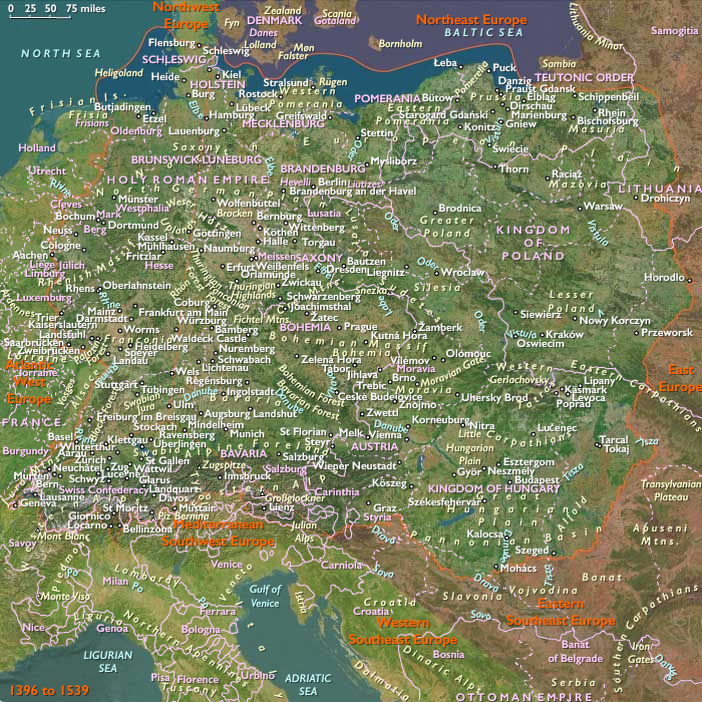
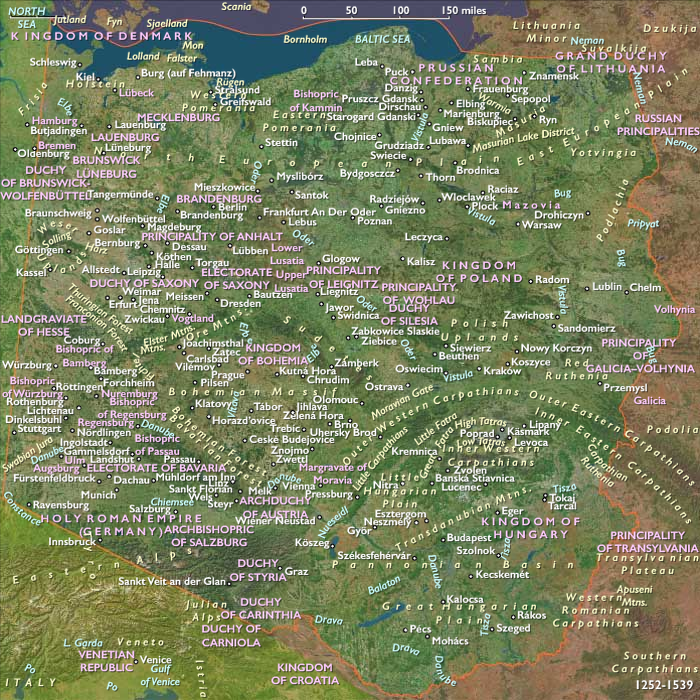
Matthias Corvinus (r. 1458–1490) continued consolidating Hungarian authority over Moravia, Silesia, Lusatia, and parts of Lower Austria, cementing Hungary as a dominant regional power.
-
He maintained a powerful standing army (the famed Black Army), effectively defended against Ottoman incursions, and enforced stability across occupied Bohemian territories, significantly influencing regional geopolitics.
Jagiellonian Stability in Bohemia and Poland-Lithuania
-
Vladislaus II Jagiellon (r. 1471–1516) stabilized Bohemian governance, strengthened aristocratic alliances, and maintained peaceful coexistence with Matthias Corvinus post–Peace of Olomouc (1479).
-
Under King Casimir IV Jagiellon (r. 1447–1492), Poland-Lithuania maintained internal cohesion and political stability, despite growing pressures along its eastern and southern borders.
Habsburg Ascendance and Austrian Rivalries
-
The House of Habsburg intensified its territorial ambitions, increasingly contesting Matthias’s control over Lower Austria and actively positioning itself as the leading rival to Hungarian hegemony.
-
Habsburg claims and diplomacy foreshadowed significant future conflicts over succession and control of Bohemian and Hungarian territories.
Death of Matthias Corvinus (1490) and Dynastic Transition
-
Matthias Corvinus’s death in 1490 marked a crucial turning point, abruptly ending Hungarian regional dominance. His extensive territories fragmented, initiating succession conflicts that involved the Jagiellonian dynasty, Habsburg interests, and Hungarian nobility.
-
Vladislaus II Jagiellon succeeded Matthias as king of Hungary (1490), effectively uniting Bohemia and Hungary under Jagiellonian rule and shifting the balance of regional power.
Economic and Technological Developments
Economic Prosperity under Matthias’s Rule
-
Matthias Corvinus’s territories, particularly Silesia, Moravia, and urban centers in Hungary and Lower Austria, benefited from relative stability and flourishing trade, boosted by robust urban commerce and improved infrastructure.
-
Increased extraction of precious metals (silver, gold) notably in Hungary, Slovakia, and Silesia under Matthias’s centralized governance significantly bolstered regional economies.
Cultural and Artistic Developments
Hungarian Renaissance Flourishing
-
Matthias’s court in Buda remained a vibrant Renaissance center, drawing artists, architects, scholars, and humanists from across Europe. His renowned royal library, the Bibliotheca Corviniana, became one of the largest and most celebrated collections in Renaissance Europe.
-
Artistic and architectural patronage significantly advanced Hungarian and broader Central European cultural landscapes, emphasizing Renaissance humanism and learning.
Bohemian Cultural Continuity
-
Bohemia under Vladislaus II Jagiellon preserved its rich Gothic heritage, supported by sustained aristocratic and ecclesiastical patronage, particularly in Prague, where cultural vitality persisted despite diminished regional political influence.
Settlement and Urban Development
Urban Expansion and Stability
-
Under stable Hungarian governance, cities in Moravia, Silesia, and Hungary flourished economically and demographically. Urban infrastructure—markets, fortifications, and civic buildings—expanded significantly, reflecting the region’s prosperity and political stability.
-
Bohemian and Silesian towns such as Prague, Brno, and Wrocław maintained steady urban growth, benefiting from strengthened trade networks and administrative consolidation.
Social and Religious Developments
Strengthened Aristocratic Influence
-
Aristocratic classes in Bohemia, Hungary, and Poland significantly enhanced their political influence during the period’s dynastic transitions. Hungarian and Bohemian nobility leveraged Matthias’s death to reinforce local privileges and authority.
-
The Polish-Lithuanian nobility under Casimir IV similarly consolidated economic and political control, setting durable patterns for future governance structures.
Religious Stability and Patronage
-
The Catholic Church maintained influential positions across Hungary, Bohemia, and Poland-Lithuania, promoting ecclesiastical scholarship, artistic patronage, and maintaining social cohesion amid political shifts.
-
Moderate Hussitism persisted in Bohemia, though increasingly overshadowed by Catholic influences under Vladislaus II’s conciliatory rule.
Long-Term Consequences and Historical Significance
The era 1480–1491 CE proved pivotal for East Central Europe, reflecting Matthias Corvinus’s regional dominance, subsequent dynastic realignments following his death, and the strengthening of Jagiellonian rule across Bohemia and Hungary. Economic prosperity, cultural flourishing, and urban development under Matthias’s rule profoundly shaped regional identities and infrastructures. His death significantly altered geopolitical dynamics, paving the way for intensified Habsburg-Jagiellonian rivalry that dominated Central European politics in subsequent decades. These transformations firmly established the foundations for the complex political landscape that characterized East Central Europe into the sixteenth century.
People
- Casimir IV Jagiellon
- Matthias Corvinus
- Vladislaus II, King of Bohemia and King of Hungary and Croatia
Groups
- Polytheism (“paganism”)
- Saxons
- Germans
- Hungarian people
- Wends, or Sorbs (West Slavs)
- Christianity, Chalcedonian
- Bavarians (West Germanic tribe)
- Thuringia, Duchy of
- Passau, Bishopric of
- Saxony, Duchy of
- Germany, Kingdom of (within the Holy Roman Empire)
- Holy Roman Empire
- Slovaks (West Slavs)
- Carinthia, Duchy of
- Czechs [formerly Bohemians] (West Slavs)
- Austria, Margravate of
- Hanseatic league (informally organized)
- Hungary, Kingdom of
- Bamberg, Prince-Bishopric of
- Poland, Greater
- Mazovia, Duchy of
- Austria, Archduchy of
- Brandenburg (Ascanian) Margravate of
- Bohemia, Kingdom of
- Styria, Duchy of
- Lübeck, Free City of
- Brunswick-Lüneburg, Duchy of
- Regensburg (Ratisbon), Imperial Free City of
- Cammin, Prince-Bishopric of
- Regensburg, Prince-Bishopric of
- Anhalt-Zerbst, Principality of
- Anhalt-Bernburg, Principality of
- Holy Roman Empire
- Galicia–Volhynia, Kingdom of
- Brunswick-Wolfenbüttel, Duchy of
- Salzburg, Archbishopric of
- Saxe-Mölln-Bergedorf, Duchy of
- Saxe-Ratzeburg-Lauenburg, Duchy of
- Poland of the later Piasts, Kingdom of
- Lithuania, Grand Duchy of
- Mecklenburg, Duchy of
- Bavaria-Straubing, Wittelsbach Duchy of
- Ottoman Empire
- Bavaria-Landshut, Wittelsbach Duchy of
- Saxony, Electorate of
- Crown of the Kingdom of Poland
- Poland of the Jagiellonians, Kingdom of
- Lithuania, Grand Duchy of
- Bavaria-Munich, Wittelsbach Duchy of
- Bavaria-Ingolstadt, Wittelsbach Duchy of
- Saxe-Lauenburg, Duchy of
- Taborites
- Utraquists, or Calixtines
- Hussites
- Prussian Confederation
- Prussia, Royal (autonomous subject of the Polish Crown)
- Teutonic Knights of Prussia, or Monastic state of the Teutonic Knights (House of the Hospitalers of Saint Mary of the Teutons in Jerusalem)
Topics
Commodoties
Subjects
Regions
Subregions
Years: 1480 - 1491
People
- Casimir IV Jagiellon
- Matthias Corvinus
- Vladislaus II, King of Bohemia and King of Hungary and Croatia
Groups
- Polytheism (“paganism”)
- Saxons
- Germans
- Hungarian people
- Wends, or Sorbs (West Slavs)
- Christianity, Chalcedonian
- Bavarians (West Germanic tribe)
- Thuringia, Duchy of
- Passau, Bishopric of
- Saxony, Duchy of
- Germany, Kingdom of (within the Holy Roman Empire)
- Holy Roman Empire
- Slovaks (West Slavs)
- Carinthia, Duchy of
- Czechs [formerly Bohemians] (West Slavs)
- Austria, Margravate of
- Hanseatic league (informally organized)
- Hungary, Kingdom of
- Bamberg, Prince-Bishopric of
- Poland, Greater
- Mazovia, Duchy of
- Austria, Archduchy of
- Brandenburg (Ascanian) Margravate of
- Bohemia, Kingdom of
- Styria, Duchy of
- Lübeck, Free City of
- Brunswick-Lüneburg, Duchy of
- Regensburg (Ratisbon), Imperial Free City of
- Cammin, Prince-Bishopric of
- Regensburg, Prince-Bishopric of
- Anhalt-Zerbst, Principality of
- Anhalt-Bernburg, Principality of
- Holy Roman Empire
- Galicia–Volhynia, Kingdom of
- Brunswick-Wolfenbüttel, Duchy of
- Salzburg, Archbishopric of
- Saxe-Mölln-Bergedorf, Duchy of
- Saxe-Ratzeburg-Lauenburg, Duchy of
- Poland of the later Piasts, Kingdom of
- Lithuania, Grand Duchy of
- Mecklenburg, Duchy of
- Bavaria-Straubing, Wittelsbach Duchy of
- Ottoman Empire
- Bavaria-Landshut, Wittelsbach Duchy of
- Saxony, Electorate of
- Crown of the Kingdom of Poland
- Poland of the Jagiellonians, Kingdom of
- Lithuania, Grand Duchy of
- Bavaria-Munich, Wittelsbach Duchy of
- Bavaria-Ingolstadt, Wittelsbach Duchy of
- Saxe-Lauenburg, Duchy of
- Taborites
- Utraquists, or Calixtines
- Hussites
- Prussian Confederation
- Prussia, Royal (autonomous subject of the Polish Crown)
- Teutonic Knights of Prussia, or Monastic state of the Teutonic Knights (House of the Hospitalers of Saint Mary of the Teutons in Jerusalem)
Topics
Commodoties
Subjects
Regions
Subregions