
East Central Europe (1468–1479 CE): Bohemian–Hungarian War, …
Years: 1468 - 1479
East Central Europe (1468–1479 CE): Bohemian–Hungarian War, Matthias Corvinus's Regional Dominance, Jagiellonian Dynastic Expansion, and Peace of Olomouc
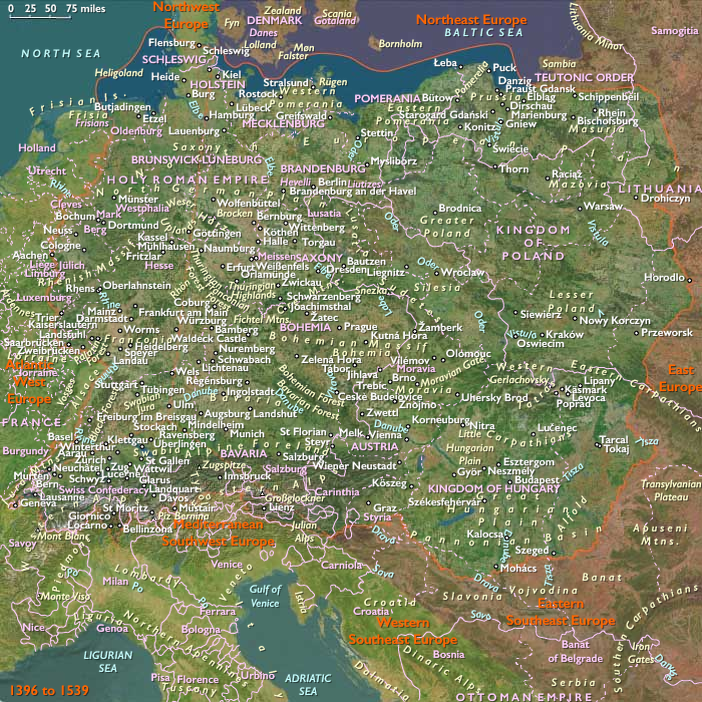
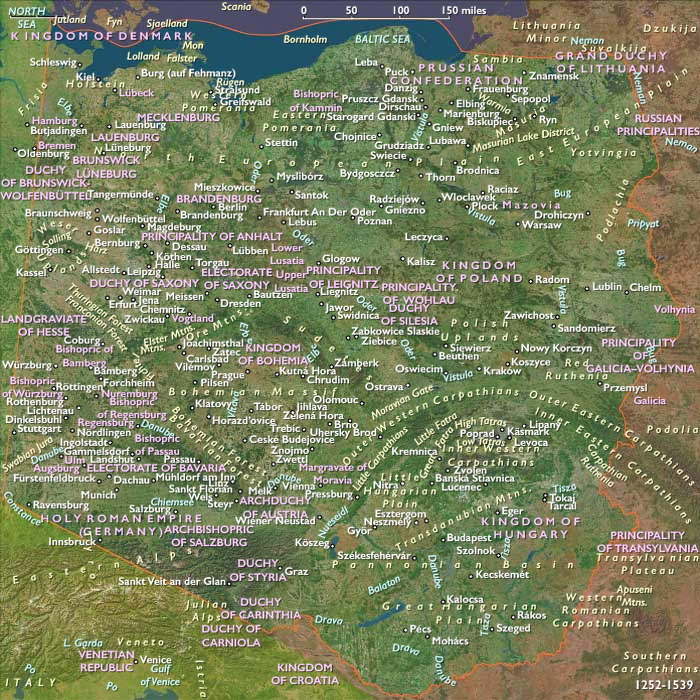
Between 1468 and 1479 CE, East Central Europe experienced intense geopolitical rivalries and significant territorial realignments dominated by the military and diplomatic conflicts between King Matthias Corvinus of Hungary and King George of Poděbrady of Bohemia, the expanding influence of the Jagiellonian dynasty, and evolving power dynamics within the Holy Roman Empire. These developments culminated in the critical Peace of Olomouc (1479), reshaping regional political boundaries and significantly influencing subsequent Central European history.
Political and Military Developments
Bohemian–Hungarian War (1468–1478)
-
The prolonged conflict between Matthias Corvinus of Hungary (r. 1458–1490) and George of Poděbrady of Bohemia (r. 1458–1471) erupted primarily due to religious tensions and competing dynastic ambitions. Matthias, backed by Papal support opposing George's moderate Hussite sympathies, invaded Bohemia in 1468, initiating over a decade of destructive warfare.
-
The war significantly destabilized Bohemia, undermined Poděbrady’s rule, and severely impacted economic prosperity, despite George's persistent efforts to consolidate internal unity and defense.
Jagiellonian Dynasty and Bohemian Succession
-
Following George of Poděbrady’s death in 1471, Vladislaus II Jagiellon (r. 1471–1516), son of Polish King Kazimierz IV, was elected King of Bohemia, significantly extending the Jagiellonian dynasty's influence beyond Poland-Lithuania.
-
Vladislaus’s accession established a dynastic rivalry with Matthias Corvinus, exacerbating regional tensions and leading to protracted struggles over control of Moravia, Silesia, and Lusatia.
Matthias Corvinus’s Territorial Expansion and Control
-
Despite prolonged conflicts, Matthias Corvinus successfully asserted Hungarian dominance over substantial Bohemian territories, notably Moravia, Silesia, and Lusatia, controlling them through effective administration and military occupation.
-
Matthias’s expanded control reinforced Hungarian regional hegemony, bolstered his international prestige, and significantly reshaped East Central Europe’s geopolitical landscape.
Peace of Olomouc (1479)
-
After intense negotiations, Matthias Corvinus and Vladislaus II Jagiellon concluded the Peace of Olomouc (1479), partitioning Bohemian lands. Matthias retained control over Moravia, Silesia, and Lusatia, while Vladislaus maintained sovereignty over Bohemia proper.
-
The treaty significantly stabilized regional politics, ending direct Hungarian-Bohemian warfare and solidifying Hungarian dominance over key strategic territories.
Teutonic Order’s Subordination (Second Treaty of Thorn, 1466)
-
The Second Peace of Thorn (1466), concluding the Thirteen Years' War (1454–1466), officially subordinated the Teutonic Order to Polish-Lithuanian authority, with western Prussia (Royal Prussia) becoming a Polish dependency and significantly reshaping Baltic geopolitical dynamics.
Economic and Technological Developments
Post-War Economic Recovery and Growth
-
Despite severe disruptions from military conflicts, Bohemia and Hungary gradually recovered economically, driven by improved agricultural productivity, renewed mining activities (silver, gold, copper), and revitalized trade routes linking the Baltic, Mediterranean, and Western Europe.
-
Moravian and Silesian towns, notably Olomouc and Breslau (Wrocław), recovered economically under Matthias Corvinus’s administration, benefiting from enhanced infrastructure, stable governance, and increased trade.
Cultural and Artistic Developments
Hungarian Renaissance under Matthias Corvinus
-
Matthias Corvinus continued promoting significant cultural patronage, transforming Hungary into a flourishing Renaissance center. His capital, Buda, attracted prominent scholars, artists, and architects, significantly enhancing Hungary’s cultural and intellectual prominence in Europe.
Cultural Stability and Recovery in Bohemia
-
Despite war-induced disruptions, Bohemian cultural and artistic life gradually recovered under Vladislaus Jagiellon’s rule, sustaining Gothic artistic traditions, literary production, and ecclesiastical patronage, especially centered around Prague.
Settlement and Urban Development
Fortifications and Defensive Infrastructure
-
Prolonged conflicts necessitated substantial improvements in defensive fortifications throughout East Central Europe, particularly in Bohemian territories, Moravia, and Silesia. Key cities, including Olomouc, Brno, Breslau, and Prague, strengthened their defensive infrastructure, significantly enhancing regional security.
Urban Revitalization Post-War
-
With regional stabilization following the Peace of Olomouc, towns and cities across Bohemia, Moravia, Silesia, and Hungary experienced significant revitalization and renewed urban development, reflecting improved economic conditions and governance stability.
Social and Religious Developments
Religious Tensions and Moderate Hussitism
-
Religious tensions persisted notably in Bohemia, balancing moderate Hussitism against Catholic orthodoxy. Vladislaus II navigated complex religious dynamics, maintaining relative religious tolerance while reinforcing the Catholic presence, reshaping Bohemian religious life.
Strengthened Aristocratic Privileges
-
Aristocratic classes in Bohemia, Hungary, and Poland-Lithuania significantly increased their political and economic influence, leveraging royal dependencies and wartime instabilities to secure expanded privileges, local autonomy, and strengthened governance roles.
Long-Term Consequences and Historical Significance
The era 1468–1479 CE critically reshaped East Central Europe's medieval political landscape. Matthias Corvinus’s successful expansion, culminating in the Peace of Olomouc, reinforced Hungary's regional hegemony, permanently altering Bohemian territorial dynamics. The accession of Vladislaus II Jagiellon in Bohemia significantly expanded Jagiellonian dynastic influence, deeply affecting future regional alignments and diplomatic interactions. Economic recovery, cultural flourishing under Hungarian Renaissance patronage, and increased aristocratic power solidified societal transformations, influencing East Central Europe's subsequent medieval trajectory. These events profoundly shaped the region’s political, cultural, and social identities, laying foundational structures for future early modern transformations.
People
- George of Poděbrady
- Matthias Corvinus
- Vladislaus II, King of Bohemia and King of Hungary and Croatia
- Wladyslaw III
Groups
- Polytheism (“paganism”)
- Saxons
- Germans
- Hungarian people
- Wends, or Sorbs (West Slavs)
- Christianity, Chalcedonian
- Bavarians (West Germanic tribe)
- Thuringia, Duchy of
- Passau, Bishopric of
- Saxony, Duchy of
- Germany, Kingdom of (within the Holy Roman Empire)
- Holy Roman Empire
- Slovaks (West Slavs)
- Carinthia, Duchy of
- Czechs [formerly Bohemians] (West Slavs)
- Austria, Margravate of
- Hanseatic league (informally organized)
- Hungary, Kingdom of
- Bamberg, Prince-Bishopric of
- Poland, Greater
- Mazovia, Duchy of
- Austria, Archduchy of
- Brandenburg (Ascanian) Margravate of
- Bohemia, Kingdom of
- Styria, Duchy of
- Lübeck, Free City of
- Brunswick-Lüneburg, Duchy of
- Regensburg (Ratisbon), Imperial Free City of
- Cammin, Prince-Bishopric of
- Regensburg, Prince-Bishopric of
- Anhalt-Zerbst, Principality of
- Anhalt-Bernburg, Principality of
- Holy Roman Empire
- Galicia–Volhynia, Kingdom of
- Brunswick-Wolfenbüttel, Duchy of
- Salzburg, Archbishopric of
- Saxe-Mölln-Bergedorf, Duchy of
- Saxe-Ratzeburg-Lauenburg, Duchy of
- Poland of the later Piasts, Kingdom of
- Lithuania, Grand Duchy of
- Mecklenburg, Duchy of
- Bavaria-Straubing, Wittelsbach Duchy of
- Ottoman Empire
- Bavaria-Landshut, Wittelsbach Duchy of
- Saxony, Electorate of
- Crown of the Kingdom of Poland
- Poland of the Jagiellonians, Kingdom of
- Lithuania, Grand Duchy of
- Bavaria-Munich, Wittelsbach Duchy of
- Bavaria-Ingolstadt, Wittelsbach Duchy of
- Saxe-Lauenburg, Duchy of
- Taborites
- Utraquists, or Calixtines
- Hussites
- Prussian Confederation
- Prussia, Royal (autonomous subject of the Polish Crown)
- Teutonic Knights of Prussia, or Monastic state of the Teutonic Knights (House of the Hospitalers of Saint Mary of the Teutons in Jerusalem)
Topics
Commodoties
Subjects
Regions
Subregions
Years: 1468 - 1479
People
- George of Poděbrady
- Matthias Corvinus
- Vladislaus II, King of Bohemia and King of Hungary and Croatia
- Wladyslaw III
Groups
- Polytheism (“paganism”)
- Saxons
- Germans
- Hungarian people
- Wends, or Sorbs (West Slavs)
- Christianity, Chalcedonian
- Bavarians (West Germanic tribe)
- Thuringia, Duchy of
- Passau, Bishopric of
- Saxony, Duchy of
- Germany, Kingdom of (within the Holy Roman Empire)
- Holy Roman Empire
- Slovaks (West Slavs)
- Carinthia, Duchy of
- Czechs [formerly Bohemians] (West Slavs)
- Austria, Margravate of
- Hanseatic league (informally organized)
- Hungary, Kingdom of
- Bamberg, Prince-Bishopric of
- Poland, Greater
- Mazovia, Duchy of
- Austria, Archduchy of
- Brandenburg (Ascanian) Margravate of
- Bohemia, Kingdom of
- Styria, Duchy of
- Lübeck, Free City of
- Brunswick-Lüneburg, Duchy of
- Regensburg (Ratisbon), Imperial Free City of
- Cammin, Prince-Bishopric of
- Regensburg, Prince-Bishopric of
- Anhalt-Zerbst, Principality of
- Anhalt-Bernburg, Principality of
- Holy Roman Empire
- Galicia–Volhynia, Kingdom of
- Brunswick-Wolfenbüttel, Duchy of
- Salzburg, Archbishopric of
- Saxe-Mölln-Bergedorf, Duchy of
- Saxe-Ratzeburg-Lauenburg, Duchy of
- Poland of the later Piasts, Kingdom of
- Lithuania, Grand Duchy of
- Mecklenburg, Duchy of
- Bavaria-Straubing, Wittelsbach Duchy of
- Ottoman Empire
- Bavaria-Landshut, Wittelsbach Duchy of
- Saxony, Electorate of
- Crown of the Kingdom of Poland
- Poland of the Jagiellonians, Kingdom of
- Lithuania, Grand Duchy of
- Bavaria-Munich, Wittelsbach Duchy of
- Bavaria-Ingolstadt, Wittelsbach Duchy of
- Saxe-Lauenburg, Duchy of
- Taborites
- Utraquists, or Calixtines
- Hussites
- Prussian Confederation
- Prussia, Royal (autonomous subject of the Polish Crown)
- Teutonic Knights of Prussia, or Monastic state of the Teutonic Knights (House of the Hospitalers of Saint Mary of the Teutons in Jerusalem)
Topics
Commodoties
Subjects
Regions
Subregions