
East Central Europe (1444–1455 CE): Ottoman Confrontation, …
Years: 1444 - 1455
East Central Europe (1444–1455 CE): Ottoman Confrontation, Hungarian Leadership under Hunyadi, Polish-Lithuanian Dynamics, and Bohemian Stabilization
Between 1444 and 1455 CE, East Central Europe experienced significant geopolitical upheaval marked by renewed Ottoman incursions, the rise of John Hunyadi as Hungary's military leader, critical developments within the Polish-Lithuanian Union, and continued stabilization efforts in post-Hussite Bohemia. These developments profoundly shaped the region's late medieval political landscape, underscoring persistent external threats and internal realignments that redefined East Central European politics and society.
Political and Military Developments
Battle of Varna and Death of Władysław III (1444)
-
In 1444, a major European crusade against the Ottoman Empire ended disastrously at the Battle of Varna, resulting in the death of King Władysław III of Poland and Hungary. This catastrophic defeat severely destabilized Hungary and plunged Poland into a dynastic crisis.
John Hunyadi’s Ascendancy and Regency in Hungary (1446–1453)
-
Following the battle, Hungarian noble John Hunyadi emerged as the kingdom's de facto ruler, becoming regent for the underage Ladislaus the Posthumous (1440–1457), son of Albert II. Hunyadi consolidated his authority, reorganized Hungary’s military forces, and strengthened defenses against Ottoman advances.
-
In 1453, after Ladislaus came of age, Hunyadi relinquished the regency but retained significant influence as Hungary’s foremost military commander and political leader.
Ottoman Pressure and Battle of Kosovo (1448)
-
Ottoman threats persisted relentlessly, culminating in another major conflict at the Second Battle of Kosovo (1448). Despite Hunyadi’s strategic skill, his army suffered defeat against Sultan Murad II, underscoring Ottoman military supremacy and deepening Hungary's defensive vulnerability.
Polish-Lithuanian Union: Dynastic Transition and Kazimierz IV (1447–1492)
-
In 1447, following a three-year interregnum, Kazimierz IV Jagiellon (Casimir IV) ascended to the Polish throne. His accession reinforced the Jagiellonian dynasty, stabilizing Poland-Lithuania politically and strengthening its international standing.
-
Kazimierz IV prioritized internal reforms, improved royal governance, and cautiously balanced external diplomacy, especially managing relations with Hungary, Bohemia, and the Teutonic Order.
Bohemian Stability and George of Poděbrady
-
Post-Hussite Bohemia gradually stabilized, especially under the rising influence of Czech nobleman George of Poděbrady. Appointed governor in 1452, he effectively governed Bohemia on behalf of the young Ladislaus the Posthumous, emphasizing internal peace, economic recovery, and moderate religious tolerance.
Economic and Technological Developments
Hungarian and Polish Economic Recovery
-
Despite continuous Ottoman threats, Hungary under Hunyadi and Poland under Kazimierz IV enjoyed periods of cautious economic recovery, benefiting from revived agricultural productivity, growing commercial trade, and renewed urban prosperity.
-
Key urban centers, including Kraków, Gdańsk, and Buda, regained prominence, strengthening their roles in regional and international trade networks.
Hanseatic League and Baltic Trade Expansion
-
Northern trade networks flourished as Hanseatic cities like Lübeck, Gdańsk, and Toruń deepened commercial ties, profiting significantly from the stability and economic expansion of the Polish-Lithuanian Union.
Cultural and Artistic Developments
Bohemian Renaissance and Cultural Flourishing
-
Bohemia experienced cultural revival under George of Poděbrady’s governorship, emphasizing literacy, vernacular literature, and intellectual exchanges shaped by moderate Hussite religious legacies.
-
Gothic architecture and artistic patronage remained vibrant, particularly in Prague and Kutná Hora, highlighting sustained cultural prosperity despite recent conflicts.
Polish-Lithuanian Royal Patronage
-
Under Kazimierz IV, Poland-Lithuania saw significant cultural and artistic patronage. Kraków thrived as a major intellectual and artistic hub, home to flourishing universities, courtly literature, and ecclesiastical art.
Settlement and Urban Development
Defensive Infrastructure and Fortifications
-
Heightened Ottoman threats led Hungary to substantially fortify frontier regions, reinforcing border castles, fortresses, and urban defenses, significantly enhancing defensive capabilities.
-
Cities across Bohemia and Poland continued urban expansion, improved civic infrastructure, and strengthened defenses, contributing to urban resilience and demographic growth.
Social and Religious Developments
Continued Religious Diversity and Hussite Influence
-
Bohemia maintained religious diversity, integrating moderate Hussite traditions into local religious practice, sustaining religious tolerance and shaping distinctive cultural and religious identities.
Social Realignment and Noble Power
-
Throughout the region, especially in Hungary and Poland-Lithuania, the nobility leveraged dynastic crises and royal dependency on aristocratic support, significantly strengthening noble privileges, local autonomy, and political influence.
Long-Term Consequences and Historical Significance
The era 1444–1455 CE represented a pivotal period for East Central Europe, defined by dramatic geopolitical shifts and internal consolidation. The devastating Battle of Varna altered the region’s political trajectory, prompting Hungarian military reforms under Hunyadi and reshaping Polish-Lithuanian dynastic structures under Kazimierz IV. Persistent Ottoman threats necessitated significant defensive innovations, fundamentally shaping Hungary’s political and social landscape. Simultaneously, Bohemian stabilization under George of Poděbrady consolidated internal peace and cultural revival, laying foundations for future political and cultural transformations that deeply influenced East Central Europe through the late medieval and early modern eras.
People
- Albert II of Germany
- Casimir IV Jagiellon
- George of Poděbrady
- John Hunyadi
- Ladislaus the Posthumous
- Murad II
- Wladyslaw III
Groups
- Polytheism (“paganism”)
- Germans
- Saxons
- Hungarian people
- Wends, or Sorbs (West Slavs)
- Christianity, Chalcedonian
- Bavarians (West Germanic tribe)
- Thuringia, Duchy of
- Passau, Bishopric of
- Saxony, Duchy of
- Germany, Kingdom of (within the Holy Roman Empire)
- Holy Roman Empire
- Slovaks (West Slavs)
- Carinthia, Duchy of
- Czechs [formerly Bohemians] (West Slavs)
- Austria, Margravate of
- Hanseatic league (informally organized)
- Hungary, Kingdom of
- Bamberg, Prince-Bishopric of
- Poland, Greater
- Mazovia, Duchy of
- Austria, Archduchy of
- Brandenburg (Ascanian) Margravate of
- Bohemia, Kingdom of
- Styria, Duchy of
- Ordensstaat (Monastic state of the Teutonic Knights)
- Lübeck, Free City of
- Brunswick-Lüneburg, Duchy of
- Regensburg (Ratisbon), Imperial Free City of
- Cammin, Prince-Bishopric of
- Anhalt-Zerbst, Principality of
- Anhalt-Bernburg, Principality of
- Regensburg, Prince-Bishopric of
- Holy Roman Empire
- Galicia–Volhynia, Kingdom of
- Brunswick-Wolfenbüttel, Duchy of
- Salzburg, Archbishopric of
- Saxe-Mölln-Bergedorf, Duchy of
- Saxe-Ratzeburg-Lauenburg, Duchy of
- Poland of the later Piasts, Kingdom of
- Lithuania, Grand Duchy of
- Mecklenburg, Duchy of
- Bavaria-Straubing, Wittelsbach Duchy of
- Ottoman Empire
- Bavaria-Landshut, Wittelsbach Duchy of
- Saxony, Electorate of
- Crown of the Kingdom of Poland
- Poland of the Jagiellonians, Kingdom of
- Lithuania, Grand Duchy of
- Bavaria-Ingolstadt, Wittelsbach Duchy of
- Bavaria-Munich, Wittelsbach Duchy of
- Saxe-Lauenburg, Duchy of
- Utraquists, or Calixtines
- Taborites
- Hussites
Topics
Commodoties
Subjects
Regions
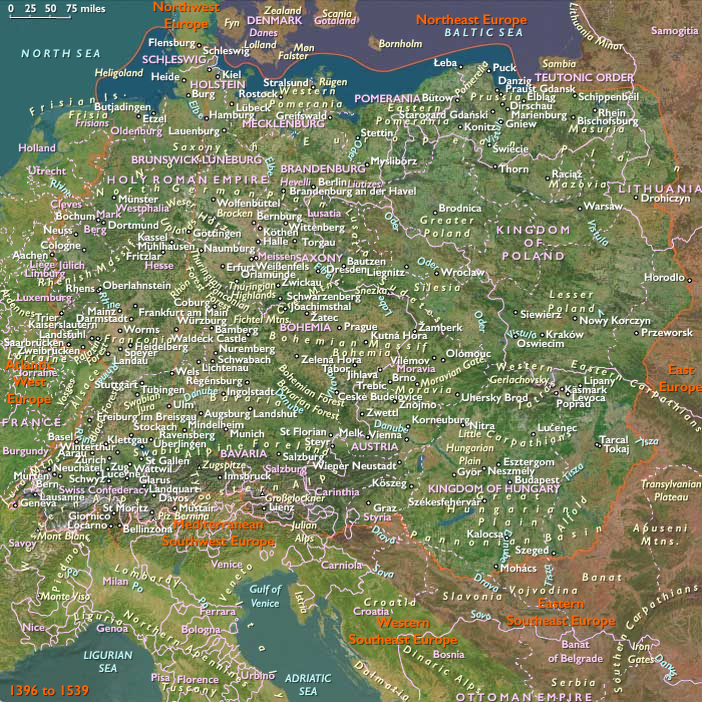
Subregions
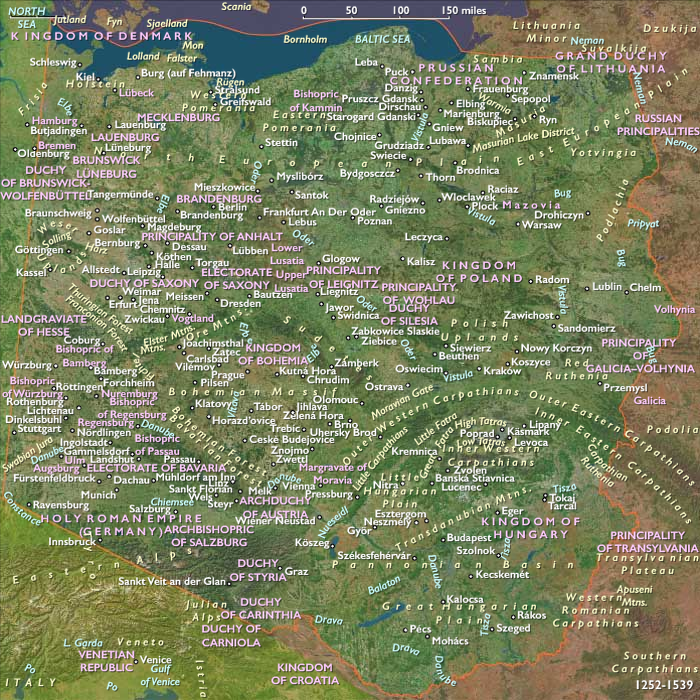
Related Events
Showing 10 events out of 41742 total
Years: 1444 - 1455
People
- Albert II of Germany
- Casimir IV Jagiellon
- George of Poděbrady
- John Hunyadi
- Ladislaus the Posthumous
- Murad II
- Wladyslaw III
Groups
- Polytheism (“paganism”)
- Germans
- Saxons
- Hungarian people
- Wends, or Sorbs (West Slavs)
- Christianity, Chalcedonian
- Bavarians (West Germanic tribe)
- Thuringia, Duchy of
- Passau, Bishopric of
- Saxony, Duchy of
- Germany, Kingdom of (within the Holy Roman Empire)
- Holy Roman Empire
- Slovaks (West Slavs)
- Carinthia, Duchy of
- Czechs [formerly Bohemians] (West Slavs)
- Austria, Margravate of
- Hanseatic league (informally organized)
- Hungary, Kingdom of
- Bamberg, Prince-Bishopric of
- Poland, Greater
- Mazovia, Duchy of
- Austria, Archduchy of
- Brandenburg (Ascanian) Margravate of
- Bohemia, Kingdom of
- Styria, Duchy of
- Ordensstaat (Monastic state of the Teutonic Knights)
- Lübeck, Free City of
- Brunswick-Lüneburg, Duchy of
- Regensburg (Ratisbon), Imperial Free City of
- Cammin, Prince-Bishopric of
- Anhalt-Zerbst, Principality of
- Anhalt-Bernburg, Principality of
- Regensburg, Prince-Bishopric of
- Holy Roman Empire
- Galicia–Volhynia, Kingdom of
- Brunswick-Wolfenbüttel, Duchy of
- Salzburg, Archbishopric of
- Saxe-Mölln-Bergedorf, Duchy of
- Saxe-Ratzeburg-Lauenburg, Duchy of
- Poland of the later Piasts, Kingdom of
- Lithuania, Grand Duchy of
- Mecklenburg, Duchy of
- Bavaria-Straubing, Wittelsbach Duchy of
- Ottoman Empire
- Bavaria-Landshut, Wittelsbach Duchy of
- Saxony, Electorate of
- Crown of the Kingdom of Poland
- Poland of the Jagiellonians, Kingdom of
- Lithuania, Grand Duchy of
- Bavaria-Ingolstadt, Wittelsbach Duchy of
- Bavaria-Munich, Wittelsbach Duchy of
- Saxe-Lauenburg, Duchy of
- Utraquists, or Calixtines
- Taborites
- Hussites
Topics
Commodoties
Subjects
Regions
Subregions