
East Central Europe (1432–1443 CE): Hussite Negotiations, …
Years: 1432 - 1443
East Central Europe (1432–1443 CE): Hussite Negotiations, Ottoman Pressures, and Internal Consolidation
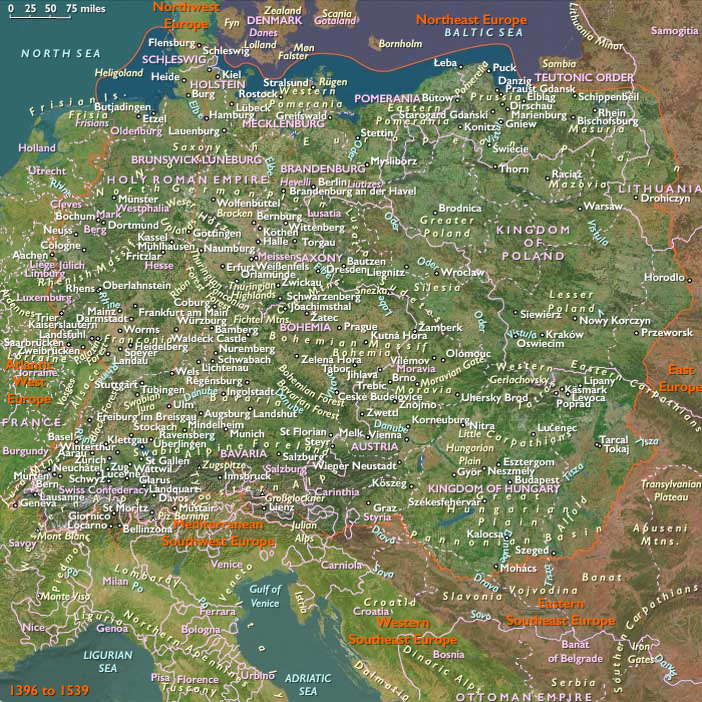
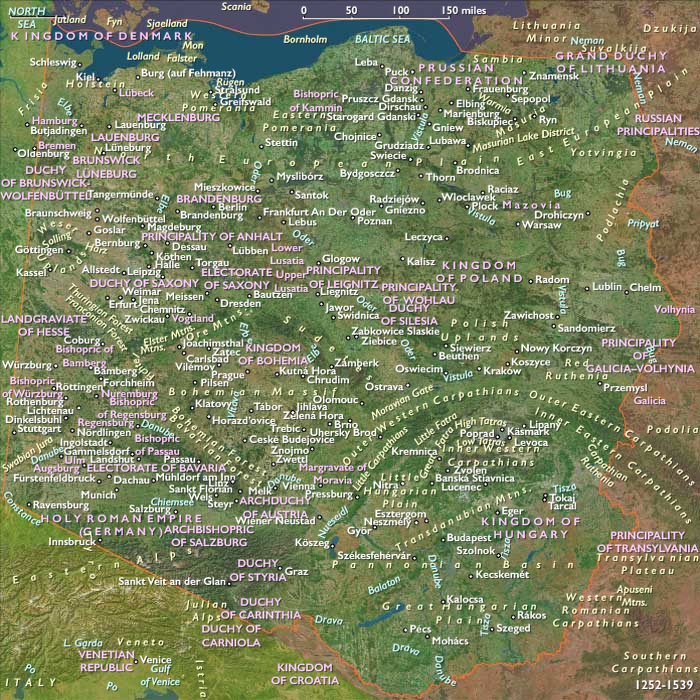
Between 1432 and 1443 CE, East Central Europe entered a phase of cautious recovery, diplomatic maneuvering, and internal consolidation following the intense conflicts of the Hussite Wars. The Council of Basel (1431–1449) sought compromise with Hussite Bohemia, gradually ending the period of open warfare. Meanwhile, the Kingdom of Hungary, under Sigismund of Luxemburg and his successor Albert II, grappled with escalating Ottoman threats, while the Polish-Lithuanian Union managed internal dynastic stability and economic growth, asserting regional influence.
Political and Military Developments
Council of Basel and Hussite Compromise (1431–1436)
-
Initiated in 1431, the Council of Basel negotiated intensively with moderate Hussites, known as the Utraquists, culminating in the Compactata of Basel (1436), which allowed communion under both species (bread and wine), effectively legitimizing Hussite religious reforms.
-
This agreement restored relative peace in Bohemia, facilitating the return of Emperor Sigismund as King of Bohemia in 1436. However, radical Hussite factions, particularly the Taborites, remained dissatisfied, weakening internal stability.
Death of Sigismund and Succession of Albert II (1437)
-
Sigismund of Luxemburg died in 1437, ending a complex reign marked by imperial ambitions, Hussite conflicts, and Hungarian internal struggles. He was succeeded by his son-in-law Albert II of Habsburg (r.1437–1439), briefly unifying the crowns of Hungary, Bohemia, and the German kingship.
-
Albert II's sudden death in 1439 prompted a dynastic crisis, exacerbating political fragmentation across Hungary and Bohemia, and intensifying regional instability.
Ottoman Incursions and Hungarian Defense
-
The Kingdom of Hungary increasingly confronted Ottoman incursions along its southern borders, culminating in frequent raids and heightened military preparedness under governors like John Hunyadi, who emerged as a significant military leader by the early 1440s.
Polish-Lithuanian Stability and Dynastic Continuity
-
In Poland-Lithuania, King Władysław III (r.1434–1444), successor to Władysław II Jagiełło, oversaw internal stability and diplomatic balancing acts, strengthening the union's regional standing while cautiously addressing external threats, particularly from the Teutonic Order.
Economic and Technological Developments
Post-War Economic Recovery
-
Following prolonged conflicts, Bohemia experienced cautious economic recovery after 1436, benefiting from restored peace, revitalized trade routes, and returning population stability.
-
Polish-Lithuanian cities like Kraków, Lublin, and Vilnius thrived economically, profiting from stable governance, expanding Baltic trade networks, and internal market growth.
Trade Realignments and Northern Prosperity
-
Hanseatic cities—including Lübeck, Rostock, Toruń, and Gdańsk—continued to flourish, expanding Baltic maritime trade, which compensated for disruptions elsewhere, further enhancing their economic importance and autonomy.
Cultural and Artistic Developments
Hussite Cultural Influence and Legacy
-
The Hussite movement left lasting impacts on Czech culture, strengthening vernacular literature, popular religious practice, and education, shaping Bohemia’s distinctive intellectual and religious identity.
-
Artistic and literary works in Bohemia increasingly incorporated Hussite themes, reflecting evolving religious attitudes and emphasizing Czech linguistic and cultural identity.
Courtly Culture in Hungary and Poland
-
Hungarian and Polish royal courts continued to patronize vibrant cultural and artistic activities. Gothic architecture, illuminated manuscripts, and chivalric literature flourished under aristocratic patronage, particularly in Kraków and Buda.
Settlement and Urban Development
Urban Revival and Fortification
-
Towns and cities across Bohemia, Hungary, and Poland recovered gradually from wartime disruptions. Reconstruction of urban centers such as Prague, Kutná Hora, and Pressburg (Bratislava) restored prosperity and improved fortifications.
-
Border towns and frontier fortresses in Hungary received particular attention, significantly improving defenses against Ottoman raids and incursions.
Social and Religious Developments
Religious Compromise and Hussite Legacy
-
The Compactata of Basel introduced a moderate religious settlement in Bohemia, integrating Hussite practices into official ecclesiastical structures and reducing religious tensions, though radical groups remained marginalized.
-
Hussite-inspired religious attitudes persisted, significantly influencing future religious reforms and social transformations within Bohemia.
Strengthened Aristocratic Authority
-
Throughout Hungary and Poland-Lithuania, the aristocracy solidified its political and economic influence, leveraging dynastic instability and weakened central authority to reinforce local autonomy and privileges.
Long-Term Consequences and Historical Significance
The era 1432–1443 CE represented a critical transitional phase in East Central European history. The diplomatic resolution of the Hussite Wars through the Council of Basel established lasting religious reforms and social realignments in Bohemia. In Hungary, Albert II's brief reign underscored increasing dynastic instability and escalating Ottoman threats, foreshadowing significant future conflicts. Meanwhile, Polish-Lithuanian stability under Władysław III solidified regional influence, providing a crucial foundation for subsequent economic prosperity and political strength, shaping East Central Europe's trajectory through the late medieval period.
People
Groups
- Polytheism (“paganism”)
- Germans
- Saxons
- Hungarian people
- Wends, or Sorbs (West Slavs)
- Christianity, Chalcedonian
- Bavarians (West Germanic tribe)
- Thuringia, Duchy of
- Passau, Bishopric of
- Saxony, Duchy of
- Germany, Kingdom of (within the Holy Roman Empire)
- Holy Roman Empire
- Slovaks (West Slavs)
- Carinthia, Duchy of
- Czechs [formerly Bohemians] (West Slavs)
- Austria, Margravate of
- Hanseatic league (informally organized)
- Hungary, Kingdom of
- Bamberg, Prince-Bishopric of
- Poland, Greater
- Mazovia, Duchy of
- Austria, Archduchy of
- Brandenburg (Ascanian) Margravate of
- Bohemia, Kingdom of
- Styria, Duchy of
- Ordensstaat (Monastic state of the Teutonic Knights)
- Lübeck, Free City of
- Brunswick-Lüneburg, Duchy of
- Regensburg (Ratisbon), Imperial Free City of
- Cammin, Prince-Bishopric of
- Anhalt-Zerbst, Principality of
- Anhalt-Bernburg, Principality of
- Regensburg, Prince-Bishopric of
- Holy Roman Empire
- Galicia–Volhynia, Kingdom of
- Brunswick-Wolfenbüttel, Duchy of
- Salzburg, Archbishopric of
- Saxe-Mölln-Bergedorf, Duchy of
- Saxe-Ratzeburg-Lauenburg, Duchy of
- Poland of the later Piasts, Kingdom of
- Lithuania, Grand Duchy of
- Mecklenburg, Duchy of
- Bavaria-Straubing, Wittelsbach Duchy of
- Ottoman Empire
- Bavaria-Landshut, Wittelsbach Duchy of
- Saxony, Electorate of
- Crown of the Kingdom of Poland
- Poland of the Jagiellonians, Kingdom of
- Lithuania, Grand Duchy of
- Bavaria-Ingolstadt, Wittelsbach Duchy of
- Bavaria-Munich, Wittelsbach Duchy of
- Saxe-Lauenburg, Duchy of
- Utraquists, or Calixtines
- Taborites
- Hussites
Topics
- Humanism, Renaissance
- Renaissance Architecture
- Hussite Wars
- Vítkov Hill, Battle of
- Hussite Civil War
Commodoties
Subjects
Regions
Subregions
Years: 1432 - 1443
People
Groups
- Polytheism (“paganism”)
- Germans
- Saxons
- Hungarian people
- Wends, or Sorbs (West Slavs)
- Christianity, Chalcedonian
- Bavarians (West Germanic tribe)
- Thuringia, Duchy of
- Passau, Bishopric of
- Saxony, Duchy of
- Germany, Kingdom of (within the Holy Roman Empire)
- Holy Roman Empire
- Slovaks (West Slavs)
- Carinthia, Duchy of
- Czechs [formerly Bohemians] (West Slavs)
- Austria, Margravate of
- Hanseatic league (informally organized)
- Hungary, Kingdom of
- Bamberg, Prince-Bishopric of
- Poland, Greater
- Mazovia, Duchy of
- Austria, Archduchy of
- Brandenburg (Ascanian) Margravate of
- Bohemia, Kingdom of
- Styria, Duchy of
- Ordensstaat (Monastic state of the Teutonic Knights)
- Lübeck, Free City of
- Brunswick-Lüneburg, Duchy of
- Regensburg (Ratisbon), Imperial Free City of
- Cammin, Prince-Bishopric of
- Anhalt-Zerbst, Principality of
- Anhalt-Bernburg, Principality of
- Regensburg, Prince-Bishopric of
- Holy Roman Empire
- Galicia–Volhynia, Kingdom of
- Brunswick-Wolfenbüttel, Duchy of
- Salzburg, Archbishopric of
- Saxe-Mölln-Bergedorf, Duchy of
- Saxe-Ratzeburg-Lauenburg, Duchy of
- Poland of the later Piasts, Kingdom of
- Lithuania, Grand Duchy of
- Mecklenburg, Duchy of
- Bavaria-Straubing, Wittelsbach Duchy of
- Ottoman Empire
- Bavaria-Landshut, Wittelsbach Duchy of
- Saxony, Electorate of
- Crown of the Kingdom of Poland
- Poland of the Jagiellonians, Kingdom of
- Lithuania, Grand Duchy of
- Bavaria-Ingolstadt, Wittelsbach Duchy of
- Bavaria-Munich, Wittelsbach Duchy of
- Saxe-Lauenburg, Duchy of
- Utraquists, or Calixtines
- Taborites
- Hussites
Topics
- Humanism, Renaissance
- Renaissance Architecture
- Hussite Wars
- Vítkov Hill, Battle of
- Hussite Civil War
Commodoties
Subjects
Regions
Subregions