
East Central Europe (1408–1419 CE): Battle of …
Years: 1408 - 1419
East Central Europe (1408–1419 CE): Battle of Grunwald, Hussite Revolution, and Regional Realignments
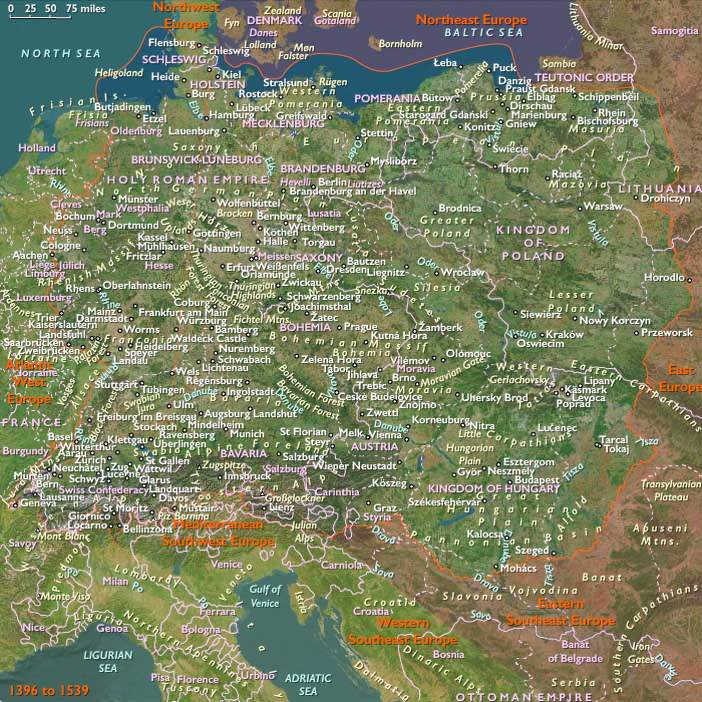
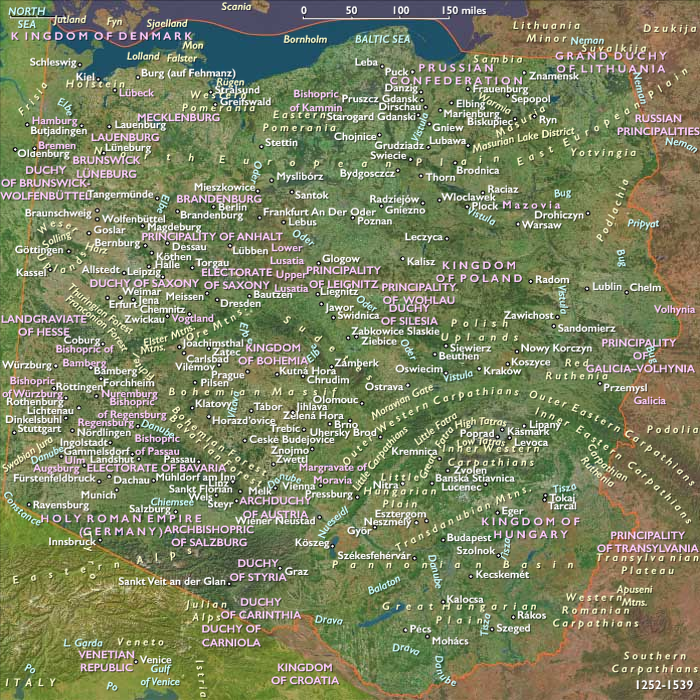
Between 1408 and 1419 CE, East Central Europe witnessed pivotal events that fundamentally reshaped the political, religious, and cultural landscape. The monumental Battle of Grunwald (Tannenberg) in 1410 decisively altered power relations, elevating the Polish-Lithuanian Union to regional prominence and weakening the Teutonic Order. Concurrently, Bohemia descended into profound religious and social upheaval following the execution of reformer Jan Hus (1415), igniting the Hussite Revolution, and significantly challenging ecclesiastical and imperial authority. Meanwhile, the Hungarian realm continued to face internal political struggles under King Sigismund of Luxemburg, grappling with aristocratic unrest and increasing Ottoman threats.
Political and Military Developments
Battle of Grunwald and the Decline of the Teutonic Order (1410)
-
In July 1410, Polish-Lithuanian forces under King Władysław II Jagiełło and Lithuanian Grand Duke Vytautas decisively defeated the Teutonic Knights at the Battle of Grunwald, weakening Teutonic political and military power significantly.
-
The victory bolstered Polish-Lithuanian territorial influence in Prussia and the Baltic region, profoundly shifting regional geopolitics and solidifying Jagiełło’s reign.
Council of Constance and Execution of Jan Hus (1415)
-
The Council of Constance executed Bohemian religious reformer Jan Hus, sparking widespread outrage and rebellion throughout Bohemia.
-
Hus’s death galvanized popular opposition to imperial and ecclesiastical authority, igniting a sustained period of religious and political upheaval known as the Hussite Wars.
Outbreak of the Hussite Wars (1419)
-
In 1419, Bohemia plunged into open rebellion after the First Defenestration of Prague, marking the start of prolonged conflict between Hussite factions and imperial Catholic forces.
-
Hussite forces soon dominated Bohemian politics, challenging the Luxemburg dynasty and dramatically altering regional stability.
Continued Hungarian Instability under Sigismund
-
King Sigismund of Luxemburg (1387–1437) faced ongoing challenges from powerful Hungarian aristocrats, weakening central royal authority and complicating defense against Ottoman incursions.
Economic and Technological Developments
Impact of Grunwald on Baltic Trade
-
Following Grunwald, Polish-Lithuanian control over vital trade routes and cities such as Gdańsk (Danzig), Toruń (Thorn), and Elbląg significantly enhanced their commercial prosperity.
-
The Teutonic Knights’ defeat weakened their monopolies, shifting regional economic power toward Polish and Lithuanian cities.
Bohemian Economic Disruption
-
The early stages of the Hussite wars disrupted Bohemian economic life, affecting trade, agriculture, and urban commerce, notably in Prague and major towns like Kutná Hora.
Cultural and Artistic Developments
Cultural Renaissance in Poland and Lithuania
-
Following Grunwald, Polish and Lithuanian courtly culture flourished, supported by enhanced royal and aristocratic patronage, expanding artistic and intellectual networks linked to Western and Southern Europe.
Hussite Movement and Cultural Radicalism
-
The Hussite movement radically influenced Bohemian cultural and intellectual life, promoting vernacular literacy, religious reforms, and challenging traditional ecclesiastical practices.
-
Jan Hus’s legacy became central to Bohemian cultural identity, significantly impacting regional intellectual traditions.
Settlement and Urban Development
Urban Growth in Polish-Lithuanian Territories
-
Polish and Lithuanian cities, notably Kraków, Vilnius, and Lublin, thrived economically and expanded significantly in the aftermath of Grunwald, reflecting increased political stability and commercial prosperity.
Fortification and Defensive Infrastructure
-
Following regional conflicts, urban fortifications across Bohemia, Hungary, and northern Polish territories saw significant improvements, responding to heightened military threats and local unrest.
Social and Religious Developments
Hussite Revolution and Social Unrest
-
Hussite religious reform rapidly evolved into broader social revolution, challenging noble privileges, ecclesiastical wealth, and imperial authority, dramatically altering Bohemian society.
Increased Aristocratic Autonomy
-
Throughout Hungary and Bohemia, powerful aristocratic families exploited weakening royal authority, enhancing their own local governance, autonomy, and privileges, deeply influencing regional politics and stability.
Advancement of Christianization in Lithuania
-
Christianization in Lithuania continued steadily, supported by Polish ecclesiastical structures, deeply integrating Lithuanian society into Western Christendom.
Long-Term Consequences and Historical Significance
The era 1408–1419 CE profoundly shaped East Central Europe’s subsequent historical trajectory. The Battle of Grunwald significantly elevated Polish-Lithuanian power while initiating the decline of Teutonic dominance. Simultaneously, the execution of Jan Hus and the ensuing Hussite Wars triggered lasting religious, social, and political upheaval in Bohemia, prefiguring broader European Reformation trends. Continued Hungarian instability under Sigismund foreshadowed future vulnerabilities to Ottoman expansion, setting the stage for profound geopolitical transformations.
People
Groups
- Polytheism (“paganism”)
- Saxons
- Germans
- Hungarian people
- Wends, or Sorbs (West Slavs)
- Christianity, Chalcedonian
- Bavarians (West Germanic tribe)
- Thuringia, Duchy of
- Passau, Bishopric of
- Saxony, Duchy of
- Germany, Kingdom of (within the Holy Roman Empire)
- Holy Roman Empire
- Slovaks (West Slavs)
- Carinthia, Duchy of
- Austria, Margravate of
- Czechs [formerly Bohemians] (West Slavs)
- Hanseatic league (informally organized)
- Hungary, Kingdom of
- Bamberg, Prince-Bishopric of
- Poland, Greater
- Mazovia, Duchy of
- Austria, Archduchy of
- Brandenburg (Ascanian) Margravate of
- Bohemia, Kingdom of
- Styria, Duchy of
- Ordensstaat (Monastic state of the Teutonic Knights)
- Lübeck, Free City of
- Brunswick-Lüneburg, Duchy of
- Regensburg (Ratisbon), Imperial Free City of
- Cammin, Prince-Bishopric of
- Anhalt-Zerbst, Principality of
- Anhalt-Bernburg, Principality of
- Regensburg, Prince-Bishopric of
- Holy Roman Empire
- Galicia–Volhynia, Kingdom of
- Brunswick-Wolfenbüttel, Duchy of
- Salzburg, Archbishopric of
- Saxe-Mölln-Bergedorf, Duchy of
- Saxe-Ratzeburg-Lauenburg, Duchy of
- Poland of the later Piasts, Kingdom of
- Lithuania, Grand Duchy of
- Mecklenburg, Duchy of
- Bavaria-Straubing, Wittelsbach Duchy of
- Ottoman Empire
- Bavaria-Landshut, Wittelsbach Duchy of
- Saxony, Electorate of
- Crown of the Kingdom of Poland
- Poland of the Jagiellonians, Kingdom of
- Lithuania, Grand Duchy of
- Bavaria-Munich, Wittelsbach Duchy of
- Bavaria-Ingolstadt, Wittelsbach Duchy of
- Saxe-Lauenburg, Duchy of
Topics
Commodoties
Subjects
Regions
Subregions
Years: 1408 - 1419
People
Groups
- Polytheism (“paganism”)
- Saxons
- Germans
- Hungarian people
- Wends, or Sorbs (West Slavs)
- Christianity, Chalcedonian
- Bavarians (West Germanic tribe)
- Thuringia, Duchy of
- Passau, Bishopric of
- Saxony, Duchy of
- Germany, Kingdom of (within the Holy Roman Empire)
- Holy Roman Empire
- Slovaks (West Slavs)
- Carinthia, Duchy of
- Austria, Margravate of
- Czechs [formerly Bohemians] (West Slavs)
- Hanseatic league (informally organized)
- Hungary, Kingdom of
- Bamberg, Prince-Bishopric of
- Poland, Greater
- Mazovia, Duchy of
- Austria, Archduchy of
- Brandenburg (Ascanian) Margravate of
- Bohemia, Kingdom of
- Styria, Duchy of
- Ordensstaat (Monastic state of the Teutonic Knights)
- Lübeck, Free City of
- Brunswick-Lüneburg, Duchy of
- Regensburg (Ratisbon), Imperial Free City of
- Cammin, Prince-Bishopric of
- Anhalt-Zerbst, Principality of
- Anhalt-Bernburg, Principality of
- Regensburg, Prince-Bishopric of
- Holy Roman Empire
- Galicia–Volhynia, Kingdom of
- Brunswick-Wolfenbüttel, Duchy of
- Salzburg, Archbishopric of
- Saxe-Mölln-Bergedorf, Duchy of
- Saxe-Ratzeburg-Lauenburg, Duchy of
- Poland of the later Piasts, Kingdom of
- Lithuania, Grand Duchy of
- Mecklenburg, Duchy of
- Bavaria-Straubing, Wittelsbach Duchy of
- Ottoman Empire
- Bavaria-Landshut, Wittelsbach Duchy of
- Saxony, Electorate of
- Crown of the Kingdom of Poland
- Poland of the Jagiellonians, Kingdom of
- Lithuania, Grand Duchy of
- Bavaria-Munich, Wittelsbach Duchy of
- Bavaria-Ingolstadt, Wittelsbach Duchy of
- Saxe-Lauenburg, Duchy of
Topics
Commodoties
Subjects
Regions
Subregions