
East Central Europe (1396–1407 CE): Luxemburg Dynastic …
Years: 1408 - 1419
East Central Europe (1396–1407 CE): Luxemburg Dynastic Challenges, Teutonic Tensions, and Consolidation of the Polish-Lithuanian Union
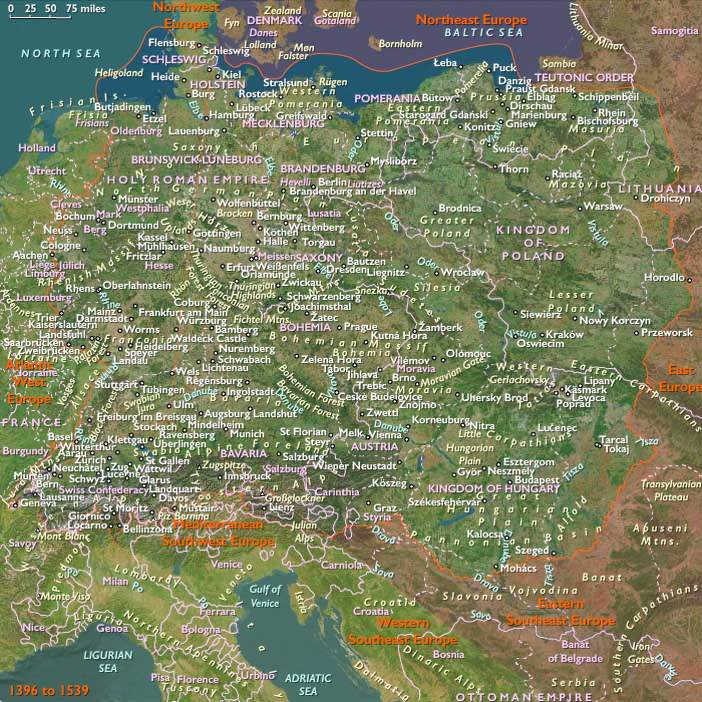
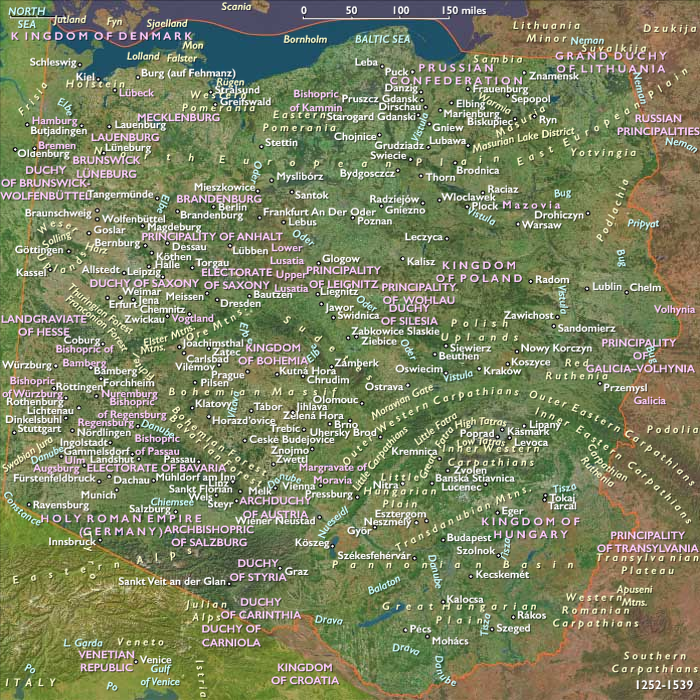
Between 1396 and 1407 CE, East Central Europe—covering modern-day Poland, Czechia, Slovakia, Hungary, and the eastern portions of Germany and Austria east of 10°E—continued to experience significant political realignments, intensified military conflicts, and ongoing economic and cultural prosperity. The period was marked by rising tensions between the Teutonic Order and the strengthening Polish-Lithuanian Union, internal instability within Luxemburg-ruled Bohemia and Hungary, continued prominence of regional duchies and principalities, and sustained economic activity driven by flourishing Hanseatic trade.
Political and Military Developments
Rising Polish-Lithuanian Power and Conflict with the Teutonic Order
-
Under King Władysław II Jagiełło (Jogaila, r. 1386–1434), the Polish-Lithuanian Union continued consolidating power, strengthening its military and political structures.
-
Increased hostilities emerged with the Teutonic Order, particularly over disputed territories in Prussia and Samogitia. These tensions set the stage for heightened military conflict, eventually leading to the decisive Battle of Grunwald (1410) in subsequent years.
Luxemburg Dynastic Challenges: Hungary and Bohemia under Sigismund and Wenceslaus IV
-
In Hungary, King Sigismund of Luxemburg (r. 1387–1437) continued fortifying defenses against the Ottomans, though his significant defeat at the Battle of Nicopolis (1396) against the Ottoman Sultan Bayezid I strained Hungarian resources, temporarily undermining his political authority.
-
In Bohemia, King Wenceslaus IV struggled with internal political discord among nobility and urban factions, resulting in diminished royal authority and increasing regional fragmentation and unrest.
Continued Significance of the Electorate of Saxony and Saxe-Lauenburg
-
The Electorate of Saxony, created by Emperor Charles IV’s Golden Bull of 1356, maintained prominence, wielding considerable influence in imperial elections and central European politics, impacting East Central Europe through its alliances and regional strategies.
-
The neighboring Duchy of Saxe-Lauenburg continued consolidating local authority, navigating regional rivalries and cooperating intermittently with the Electorate of Saxony and Hanseatic cities.
Brunswick–Lüneburg’s Regional Economic and Political Influence
-
The Duchy of Brunswick–Lüneburg, especially the Principality of Lüneburg (Celle), retained substantial economic influence due to its dominance in the salt trade. This economic prosperity reinforced its political leverage within regional and imperial contexts.
Mecklenburg-Stargard’s Continued Independence
-
The Duchy of Mecklenburg-Stargard remained independent, maintaining local stability and influencing broader Mecklenburg politics, reinforcing its regional presence in northern East Central Europe.
Economic and Technological Developments
Continued Hanseatic Economic Expansion
-
Hanseatic League cities (Gdańsk, Lübeck, Rostock, Toruń, Elbląg, Stettin) continued robust trade activities, securing regional economic prosperity through extensive trade networks dealing in grain, timber, salt, amber, and textiles.
-
Ongoing urban and economic growth was bolstered by improving infrastructure, including fortifications, warehouses, and marketplaces, significantly enhancing the economic vitality of these cities.
Impact of Brunswick–Lüneburg’s Salt Trade
-
The Principality of Lüneburg continued benefiting from its thriving salt industry, a key commodity in Hanseatic commerce, ensuring its economic prominence and further enriching the Duchy of Brunswick–Lüneburg.
Cultural and Artistic Developments
Luxemburg-Bohemian Cultural Patronage
-
Despite political instability under Wenceslaus IV, Prague maintained cultural prominence through ongoing artistic, architectural, and intellectual pursuits, notably in architecture and manuscript illumination.
Polish-Lithuanian Cultural Integration and Patronage
-
Kraków emerged further as a center of culture, scholarship, and religious activity under Jagiełło’s patronage, facilitating cultural integration between Poland and Lithuania, including significant Christian missionary activities in Lithuanian territories.
Hanseatic Urban Cultural Dynamism
-
Hanseatic cities continued to flourish culturally, driven by urban wealth, merchant patronage, and vibrant civic institutions, resulting in distinctive architectural styles, urban planning, and artistic patronage throughout their territories.
Settlement and Urban Development
Ongoing Urban Expansion and Development
-
Urban growth persisted strongly in key regional cities—Prague, Kraków, Gdańsk, Toruń, Lüneburg, Lübeck, Rostock, and Stettin—fueled by sustained commercial prosperity, increased population density, and improved civic infrastructure.
Fortification and Regional Stability
-
New fortifications, castles, and urban defenses arose throughout East Central Europe, particularly in border regions facing military threats from the Ottomans in Hungary and from the Teutonic Order in Poland-Lithuania.
Social and Religious Developments
Strengthened Aristocratic and Noble Privileges
-
In Poland-Lithuania and Bohemia, aristocratic privileges and influence strengthened significantly, often at the expense of royal centralization, shaping internal governance and political structures profoundly.
Ecclesiastical Institutions and Christianization
-
Continued Christian missionary activities significantly advanced the integration of Lithuania into Latin Christendom, supported by ecclesiastical authorities and monastic orders across East Central Europe.
Social Structures and Labor Conditions
-
Post-plague demographic recovery improved labor conditions, empowering urban artisans, merchants, and rural peasants, reshaping social dynamics and stimulating regional economies.
Long-Term Consequences and Historical Significance
The era 1396–1407 CE represented a crucial period in the evolution of East Central Europe. Dynastic unions and political alliances, particularly the strengthened Polish-Lithuanian relationship, deeply reshaped regional politics, while rising tensions with the Teutonic Order anticipated major military conflicts. Luxemburg authority in Bohemia and Hungary faced growing internal and external pressures, signaling future upheaval. The continued economic strength of Hanseatic trade, driven by urban prosperity and Brunswick–Lüneburg’s salt industry, significantly enriched regional economic and cultural life. Collectively, these developments established lasting political, economic, and cultural foundations, setting the stage for East Central Europe's trajectory into the 15th century and beyond.
People
Groups
- Germans
- Hungarian people
- Wends, or Sorbs (West Slavs)
- Christianity, Chalcedonian
- Bavarians (West Germanic tribe)
- Polans, Western (West Slavic tribe)
- Germany, Kingdom of (within the Holy Roman Empire)
- German, or Ottonian (Roman) Empire
- Holy Roman Empire
- Hanseatic league (informally organized)
- Carinthia, Duchy of
- Czechs [formerly Bohemians] (West Slavs)
- Austria, Margravate of
- Slovaks (West Slavs)
- Cuman people, or Western Kipchaks, also called Polovtsy, Polovtsians)
- Hungary, Kingdom of
- Mongols
- Mazovia, Duchy of
- Poland, Greater
- Austria, Archduchy of
- Brandenburg (Ascanian) Margravate of
- Bohemia, Kingdom of
- Styria, Duchy of
- Mongol Empire
- Ordensstaat (Monastic state of the Teutonic Knights)
- Lübeck, Free City of
- Brunswick-Lüneburg, Duchy of
- Regensburg, Prince-Bishopric of
- Holy Roman Empire
- Galicia–Volhynia, Kingdom of
- Saxe-Ratzeburg-Lauenburg, Duchy of
- Poland of the later Piasts, Kingdom of
- Bavaria, Wittelsbach Duchy of
- Lithuania, Grand Duchy of
- Mecklenburg, Duchy of
- Saxony, Electorate of
- Poland of the Jagiellonians, Kingdom of
- Lithuania, Grand Duchy of
- Saxe-Lauenburg, Duchy of
Topics
Commodoties
Subjects
Regions
Subregions
Related Events
Showing 10 events out of 42493 total
Years: 1408 - 1419
People
Groups
- Germans
- Hungarian people
- Wends, or Sorbs (West Slavs)
- Christianity, Chalcedonian
- Bavarians (West Germanic tribe)
- Polans, Western (West Slavic tribe)
- Germany, Kingdom of (within the Holy Roman Empire)
- German, or Ottonian (Roman) Empire
- Holy Roman Empire
- Hanseatic league (informally organized)
- Carinthia, Duchy of
- Czechs [formerly Bohemians] (West Slavs)
- Austria, Margravate of
- Slovaks (West Slavs)
- Cuman people, or Western Kipchaks, also called Polovtsy, Polovtsians)
- Hungary, Kingdom of
- Mongols
- Mazovia, Duchy of
- Poland, Greater
- Austria, Archduchy of
- Brandenburg (Ascanian) Margravate of
- Bohemia, Kingdom of
- Styria, Duchy of
- Mongol Empire
- Ordensstaat (Monastic state of the Teutonic Knights)
- Lübeck, Free City of
- Brunswick-Lüneburg, Duchy of
- Regensburg, Prince-Bishopric of
- Holy Roman Empire
- Galicia–Volhynia, Kingdom of
- Saxe-Ratzeburg-Lauenburg, Duchy of
- Poland of the later Piasts, Kingdom of
- Bavaria, Wittelsbach Duchy of
- Lithuania, Grand Duchy of
- Mecklenburg, Duchy of
- Saxony, Electorate of
- Poland of the Jagiellonians, Kingdom of
- Lithuania, Grand Duchy of
- Saxe-Lauenburg, Duchy of
Topics
Commodoties
Subjects
Regions
Subregions