
East Central Europe (1372–1383 CE): Dynastic Unions, …
Years: 1372 - 1383
East Central Europe (1372–1383 CE): Dynastic Unions, Bohemian Prestige, Hungarian-Polish Union, and Imperial Fragmentation
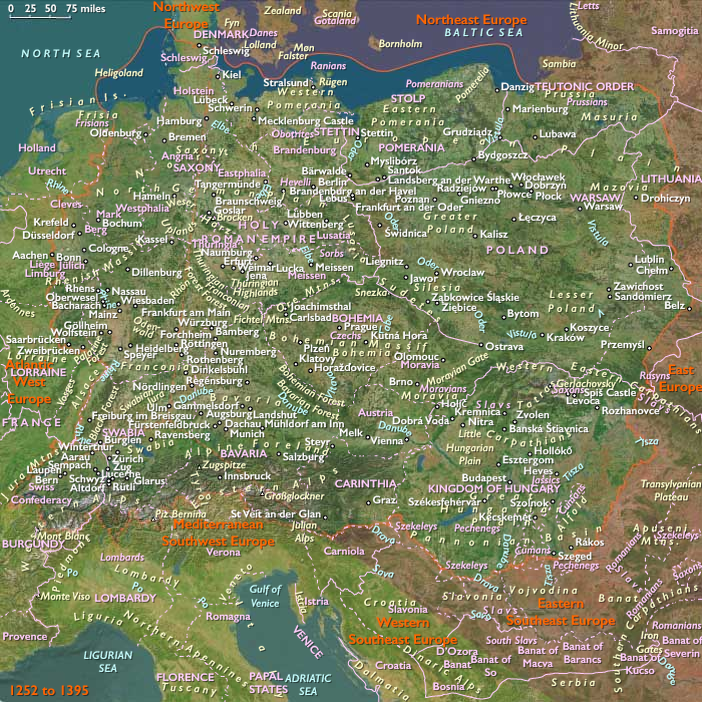
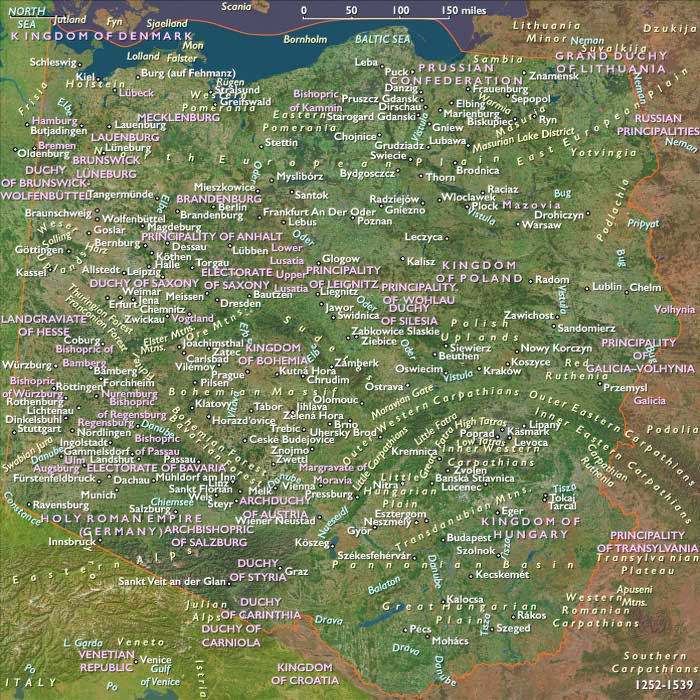
Between 1372 and 1383 CE, East Central Europe experienced significant dynastic transformations, highlighted by the personal union of Hungary and Poland under Louis I, continued Bohemian prestige under Emperor Charles IV, and deepening rivalries among the Habsburg, Luxembourg, and Wittelsbach dynasties. Imperial fragmentation intensified as regional states and cities pursued greater autonomy, reshaping political alignments. Meanwhile, cultural and economic life flourished, driven by urban growth and expanded trade networks connecting the Hanseatic cities of the Baltic to wider European markets.
Political and Military Developments
Hungarian-Polish Personal Union under Louis I
-
In 1370, following the death of Poland’s Casimir III, Louis I of Hungary assumed the Polish throne, establishing a dynastic union between Hungary and Poland. Although his rule over Poland proved complicated by powerful local nobility and differing political traditions, this union substantially altered regional geopolitical dynamics.
-
Louis’s administrative reforms strengthened centralized monarchy in Hungary, reinforcing its position as a major European power.
Bohemian Prestige under Charles IV
-
Emperor Charles IV of Luxembourg (r. Holy Roman Emperor 1355–1378; King of Bohemia 1346–1378) maintained Bohemia’s cultural and political prestige within Europe. Under his patronage, Prague flourished as an imperial capital, cultural center, and diplomatic hub.
-
The end of Charles’s reign (1378) introduced new uncertainties, setting the stage for future conflicts, notably between his sons, Wenceslaus IV and Sigismund.
Intensified Imperial Rivalries and Fragmentation
-
Imperial rivalries among the dynasties of the Holy Roman Empire intensified, particularly between the Luxembourgs in Bohemia, the Habsburgs in Austria, and the Wittelsbachs in Bavaria. Fragmentation and competition among these dynasties reshaped alliances and destabilized regional politics.
-
In Austria, Habsburg territories saw increased internal consolidation, setting the foundation for future Austrian prominence.
Brandenburg, Mecklenburg, and Northern Principalities
-
The Margraviate of Brandenburg, ruled by the House of Luxembourg after 1373, experienced strategic territorial consolidations and administrative reforms.
-
Northern principalities, such as the Duchy of Mecklenburg and the Principality of Brunswick-Wolfenbüttel, retained political stability, experiencing moderate growth and greater economic integration within the Hanseatic trade networks.
Thuringian Succession and Territorial Stability
-
The aftermath of the earlier War of the Thuringian Succession stabilized the political landscape in central Germany, allowing the Duchy of Thuringia to recover economically and politically, while still influencing regional politics within the empire.
Economic and Technological Developments
Expansion of Hanseatic Commerce
-
Economic growth intensified across the Baltic and North Sea regions, driven by the robust trade activities of Hanseatic cities such as Lübeck, Gdańsk, Wrocław, Toruń, and Kraków. This growth supported urban prosperity and reinforced economic links throughout northern and central Europe.
Urban Infrastructure and Technological Improvements
-
Continued urbanization and infrastructure improvements supported trade and economic development, with notable expansions in Prague, Vienna, Kraków, Bratislava, and Wrocław.
-
Technological innovations, especially in textile production, metalworking, and agriculture, further stimulated regional economies, supporting recovery from earlier demographic crises.
Cultural and Artistic Developments
Prague’s Continued Cultural Prominence
-
Under Charles IV’s late reign, Prague solidified its position as a major cultural and intellectual center, characterized by significant Gothic architectural projects and flourishing literary and artistic production.
-
After Charles IV’s death (1378), Prague’s cultural vitality continued, although political uncertainties introduced greater instability.
Polish and Hungarian Artistic Flourishing
-
Polish territories under the brief Hungarian union experienced notable artistic and architectural developments, evident in the expansion of royal and ecclesiastical structures, illuminated manuscripts, and Gothic architectural projects in Kraków and Gniezno.
-
Hungarian territories under Louis I saw continued cultural patronage, particularly through church-building, castle construction, and artistic commissions in Buda and Visegrád.
Ecclesiastical Influence and Patronage
-
Ecclesiastical institutions such as the Archbishopric of Salzburg and prominent bishoprics like Passau, Regensburg, and Bamberg remained significant cultural patrons, supporting extensive artistic and scholarly activities.
Settlement and Urban Development
Increased Urbanization and Economic Stability
-
Urban centers, notably Prague, Vienna, Kraków, Lübeck, Toruń, Bratislava, and Gdańsk, grew significantly, supported by increased trade, improved infrastructure, and strengthened fortifications. These developments promoted regional economic stability and resilience.
Continued Germanic Migration (Ostsiedlung)
-
Germanic settlement continued reshaping regional demographics, especially in Brandenburg, Silesia, Lusatia, and Mecklenburg, further influencing cultural integration, urban development, and economic productivity.
Social and Religious Developments
Aristocratic Power and Feudal Stability
-
Aristocratic and noble power structures remained robust, adapting to demographic and economic shifts. Feudal arrangements continued evolving, stabilizing regional governance despite broader imperial fragmentation and dynastic tensions.
Ecclesiastical Authority and Religious Culture
-
Powerful ecclesiastical institutions maintained substantial social, economic, and cultural influence, fostering religious education, charity, artistic production, and reinforcing societal cohesion during periods of dynastic and political uncertainty.
Long-Term Consequences and Historical Significance
The era 1372–1383 CE was marked by significant dynastic unions and shifts in East Central Europe. The Hungarian-Polish personal union under Louis I profoundly reshaped regional political alliances and governance structures. The enduring cultural prestige of Bohemia under Charles IV underscored Prague’s continued importance in Central Europe. Simultaneously, intensified imperial rivalries among the Habsburg, Luxembourg, and Wittelsbach dynasties contributed to regional fragmentation and set the stage for prolonged dynastic conflicts. Economic prosperity and cultural vitality fostered resilience, enabling urban and rural societies to stabilize and flourish. Collectively, these developments significantly influenced East Central Europe’s subsequent historical trajectory, defining political alignments and cultural identities for centuries to come.
People
- Casimir III the Great
- Charles IV, Holy Roman Emperor
- Louis I of Hungary
- Sigismund
- Wenceslaus IV of Bohemia
Groups
- Saxons
- Germans
- Hungarian people
- Wends, or Sorbs (West Slavs)
- Christianity, Chalcedonian
- Bavarians (West Germanic tribe)
- Thuringia, Duchy of
- Germany, Kingdom of (within the Holy Roman Empire)
- Holy Roman Empire
- Hanseatic league (informally organized)
- Slovaks (West Slavs)
- Czechs [formerly Bohemians] (West Slavs)
- Carinthia, Duchy of
- Hungary, Kingdom of
- Bamberg, Prince-Bishopric of
- Poland, Greater
- Mazovia, Duchy of
- Austria, Archduchy of
- Brandenburg (Ascanian) Margravate of
- Bohemia, Kingdom of
- Styria, Duchy of
- Ordensstaat (Monastic state of the Teutonic Knights)
- Brunswick-Lüneburg, Duchy of
- Regensburg (Ratisbon), Imperial Free City of
- Cammin, Prince-Bishopric of
- Anhalt-Bernburg, Principality of
- Regensburg, Prince-Bishopric of
- Anhalt-Zerbst, Principality of
- Holy Roman Empire
- Galicia–Volhynia, Kingdom of
- Brunswick-Wolfenbüttel, Duchy of
- Salzburg, Archbishopric of
- Saxe-Mölln-Bergedorf, Duchy of
- Saxe-Ratzeburg-Lauenburg, Duchy of
- Poland of the later Piasts, Kingdom of
- Mecklenburg, Duchy of
- Bavaria-Straubing, Wittelsbach Duchy of
- Bavaria-Landshut, Wittelsbach Duchy of
- Saxony, Electorate of
Topics
Commodoties
Subjects
Regions
Subregions
Years: 1372 - 1383
People
- Casimir III the Great
- Charles IV, Holy Roman Emperor
- Louis I of Hungary
- Sigismund
- Wenceslaus IV of Bohemia
Groups
- Saxons
- Germans
- Hungarian people
- Wends, or Sorbs (West Slavs)
- Christianity, Chalcedonian
- Bavarians (West Germanic tribe)
- Thuringia, Duchy of
- Germany, Kingdom of (within the Holy Roman Empire)
- Holy Roman Empire
- Hanseatic league (informally organized)
- Slovaks (West Slavs)
- Czechs [formerly Bohemians] (West Slavs)
- Carinthia, Duchy of
- Hungary, Kingdom of
- Bamberg, Prince-Bishopric of
- Poland, Greater
- Mazovia, Duchy of
- Austria, Archduchy of
- Brandenburg (Ascanian) Margravate of
- Bohemia, Kingdom of
- Styria, Duchy of
- Ordensstaat (Monastic state of the Teutonic Knights)
- Brunswick-Lüneburg, Duchy of
- Regensburg (Ratisbon), Imperial Free City of
- Cammin, Prince-Bishopric of
- Anhalt-Bernburg, Principality of
- Regensburg, Prince-Bishopric of
- Anhalt-Zerbst, Principality of
- Holy Roman Empire
- Galicia–Volhynia, Kingdom of
- Brunswick-Wolfenbüttel, Duchy of
- Salzburg, Archbishopric of
- Saxe-Mölln-Bergedorf, Duchy of
- Saxe-Ratzeburg-Lauenburg, Duchy of
- Poland of the later Piasts, Kingdom of
- Mecklenburg, Duchy of
- Bavaria-Straubing, Wittelsbach Duchy of
- Bavaria-Landshut, Wittelsbach Duchy of
- Saxony, Electorate of
Topics
Commodoties
Subjects
Regions
Subregions