
East Central Europe (148–159 CE): Late Antonine …
Years: 148 - 159
East Central Europe (148–159 CE): Late Antonine Stability and Deepening Roman-Germanic Engagement
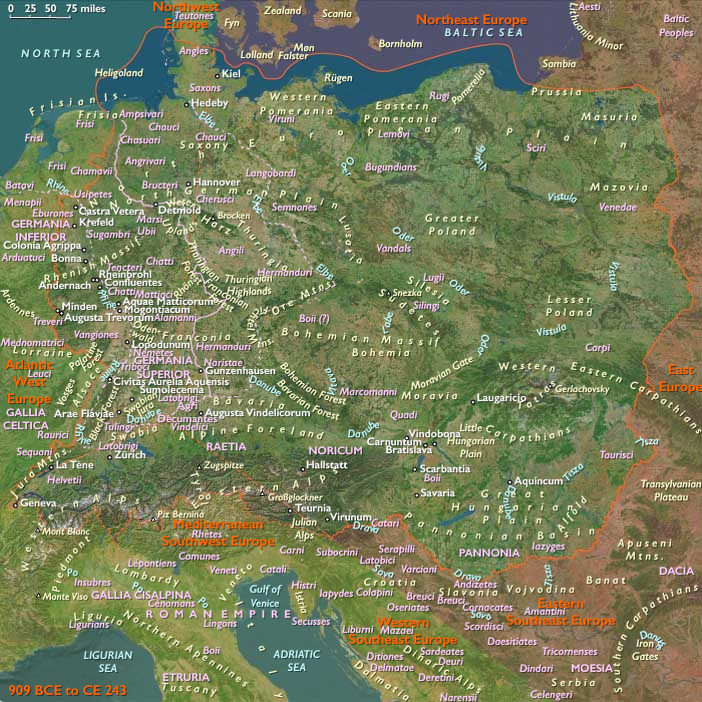
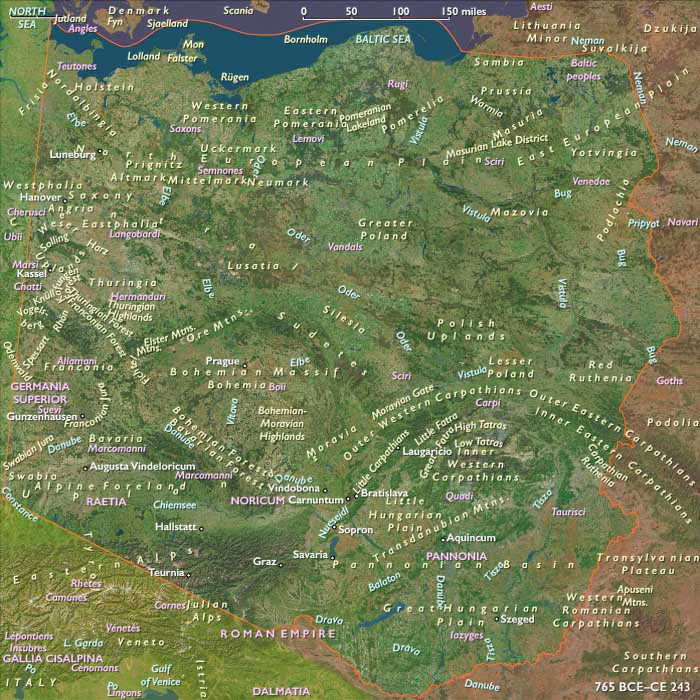
Between 148 and 159 CE, East Central Europe—covering Poland, Czechia, Slovakia, Hungary, and those portions of Germany and Austria lying east of 10°E and north of a line stretching from roughly 48.2°N at 10°E southeastward to the Austro-Slovenian border near 46.7°N, 15.4°E—continued to experience peaceful and prosperous conditions due to sustained Roman frontier policies. Emperor Antoninus Pius maintained stability, ensuring a secure and well-defended Danube frontier. Trade flourished, diplomatic ties became more sophisticated, and regional cultural integration deepened, further strengthening ties between Roman provinces (Pannonia Superior, Pannonia Inferior, and Noricum) and Germanic tribal societies.
Political and Military Developments
Continued Frontier Stability under Antoninus Pius
-
Emperor Antoninus Pius continued to reinforce and maintain frontier defenses along the Danube, safeguarding the Roman provinces of Pannonia Superior, Pannonia Inferior, and Noricum.
-
The Roman frontier remained secure, supported by a well-maintained network of legionary camps, forts, and watchtowers, allowing for sustained peace and diplomatic exchange.
Diplomatic Complexity with Germanic Tribes
-
Diplomatic interactions with the prominent Germanic tribes—particularly the Marcomanni and Quadi, occupying modern Czechia, Slovakia, and parts of southern Poland—became more nuanced, involving complex negotiations to maintain stability.
-
The Langobardi (Lombards) continued consolidating their position north and northeast of the frontier, increasingly interacting economically and diplomatically with Roman provincial authorities.
Economic and Technological Developments
Flourishing Cross-Border Trade
-
Economic prosperity continued to rise, supported by extensive and stable trade networks between Roman frontier settlements and Germanic tribes. Roman goods, including coins, pottery, glass, and textiles, exchanged extensively for local commodities such as amber, grain, iron tools, livestock, and fur.
-
Roman coinage facilitated widespread monetary transactions, promoting economic integration across the region.
Agricultural Innovations and Technological Exchange
-
Germanic communities continued adopting Roman agricultural techniques, increasing productivity, and stabilizing food supply and local economies.
-
Technological exchanges in ironworking, pottery, and craftsmanship advanced local industry, enhancing economic specialization within Germanic societies.
Cultural and Artistic Developments
Increasing Cultural Integration
-
Material culture from this era, including pottery, jewelry, and metalwork, reflected an intensified fusion of Roman artistic influences and Germanic traditional motifs, signaling deeper cultural integration across the frontier.
Artistic Refinement and Craftsmanship
-
Germanic artisans and craftsmen, benefiting from sustained economic interactions, produced increasingly sophisticated artifacts, combining local artistic traditions with Roman styles, materials, and techniques.
Settlement and Urban Development
Growth of Roman Frontier Towns
-
Roman settlements along the frontier—particularly Carnuntum, Vindobona, and Aquincum—continued thriving as administrative, economic, and cultural hubs, significantly influencing regional development.
Stability of Germanic Agricultural Communities
-
North of the Roman provinces, Germanic settlements continued to expand modestly, remaining stable agricultural villages characterized by communal farming practices, localized economies, and improved prosperity due to steady trade with Roman settlements.
Social and Religious Developments
Tribal Leadership Stability
-
Tribal social structures remained robust, led by warrior elites and chieftains whose political influence relied heavily on trade, military prowess, and diplomatic ties with Roman frontier authorities.
Persistent Religious Traditions and Syncretism
-
Traditional religious practices among Germanic tribes continued strongly, emphasizing ancestor worship, nature deities, and community rituals. Increased interactions with Romans brought about gradual cultural and religious syncretism.
Long-Term Consequences and Historical Significance
The era from 148 to 159 CE, marked by Emperor Antoninus Pius's sustained policies, reinforced frontier stability, enhanced regional prosperity, and deepened Roman-Germanic cultural and economic integration. Continued peaceful relations enabled productive trade, technological advancement, and cultural exchanges, reinforcing social structures within Germanic communities and laying solid foundations for further developments. These dynamics significantly influenced the subsequent historical trajectory of East Central Europe, shaping enduring political, economic, and cultural identities.
People
Groups
- Marcomanni (Germanic tribe)
- Lombards (West Germanic tribe)
- Quadi (Germanic tribe)
- Germans
- Noricum (Roman province)
- Roman Empire (Rome): Nerva-Antonine dynasty
- Pannonia Superior (Roman province)
- Pannonia Inferior (Roman province)
Topics
Commodoties
Subjects
Regions
Subregions
Years: 148 - 159
People
Groups
- Marcomanni (Germanic tribe)
- Lombards (West Germanic tribe)
- Quadi (Germanic tribe)
- Germans
- Noricum (Roman province)
- Roman Empire (Rome): Nerva-Antonine dynasty
- Pannonia Superior (Roman province)
- Pannonia Inferior (Roman province)
Topics
Commodoties
Subjects
Regions
Subregions