
East Central Europe (1360–1371 CE): Bohemian Golden …
Years: 1360 - 1371
East Central Europe (1360–1371 CE): Bohemian Golden Age, Polish Consolidation, Hungarian Dominance under Louis I, and Imperial Realignments
Between 1360 and 1371 CE, East Central Europe entered a phase of cultural flourishing, dynastic stability, and intensified imperial rivalries. Under the reign of Charles IV, Bohemia enjoyed unprecedented cultural and political prestige, while in Poland, Casimir III the Great solidified governance and territorial integrity. Louis I of Hungary sustained Hungary’s political dominance, extending influence across Central Europe and the Balkans. Meanwhile, tensions within the Holy Roman Empire grew, notably among the Habsburg, Luxembourg, and Wittelsbach dynasties, reshaping the region's geopolitical landscape.
Political and Military Developments
Charles IV and the Bohemian Golden Age
-
Charles IV of Luxembourg (Holy Roman Emperor, 1355–1378) continued consolidating his authority as emperor and King of Bohemia. Under his rule, Prague thrived as a political and cultural capital, marked by extensive urban growth and architectural developments, notably the Charles Bridge (begun in 1357).
-
The Golden Bull of 1356 continued shaping imperial politics, solidifying Bohemia’s status as an electorate and granting significant autonomy to imperial princes, reshaping Central European political dynamics.
Polish Territorial and Institutional Consolidation under Casimir III
-
Casimir III the Great (r. 1333–1370) completed his extensive reform and territorial consolidation efforts, notably in Greater Poland, Galicia, and Volhynia. His legal reforms, urban charters, and educational initiatives profoundly strengthened Polish governance.
-
The succession crisis following Casimir’s lack of direct heirs increasingly influenced regional politics, ultimately leading to the personal union with Hungary in 1370 under Louis I.
Louis I’s Hungarian Dominance
-
Louis I of Hungary (r. 1342–1382) maintained and expanded Hungarian dominance, strengthening royal authority through administrative reforms, military campaigns, and diplomatic alliances. Hungary’s territorial reach and political influence extended significantly into the Balkans, Poland, and neighboring regions.
-
Louis’s accession to the Polish throne in 1370 after Casimir’s death marked the beginning of a brief but significant Hungarian-Polish union, significantly reshaping regional political relationships.
Intensified Imperial Rivalries
-
Rivalries intensified among leading imperial dynasties: the Luxembourgs in Bohemia, the Habsburgs in Austria, and the Wittelsbachs in Bavaria. These rivalries produced shifting alliances, territorial disputes, and complex political maneuvering across East Central Europe.
-
The territorial consolidation of Habsburg Austria, under Duke Rudolf IV (r. 1358–1365), notably through the forging of the Privilegium Maius (1359), established the groundwork for future Habsburg dominance within the region.
Stability in Brunswick-Wolfenbüttel and Northern Principalities
-
The Principality of Brunswick-Wolfenbüttel, under Magnus the Pious (r. 1344–1369) and successors, maintained regional political stability and economic prosperity, reinforcing its role as an influential northern polity within the fragmented imperial landscape.
Economic and Technological Developments
Renewed Economic Prosperity and Urban Growth
-
Hanseatic League cities—including Lübeck, Rostock, Gdańsk, Kraków, Toruń, and Wrocław—experienced renewed economic prosperity, driven by revived trade and improved productivity following post-plague recoveries.
-
Urban centers benefited from extensive infrastructure investments, strengthened fortifications, and enhanced market organization, significantly supporting regional economic stability.
Agricultural Innovations and Rural Recovery
-
Continued innovations in agriculture, such as better crop rotations, advanced plowing technologies, and improved drainage, supported rural recovery and demographic growth, stabilizing and boosting economic resilience.
Cultural and Artistic Developments
Bohemian Renaissance and Prague’s Cultural Flourishing
-
Under Charles IV, Prague became a prominent European cultural center, home to flourishing courtly literature, illuminated manuscripts, Gothic architecture, and the renowned establishment of Charles University (1348), which expanded significantly during this period.
Polish Cultural Patronage under Casimir III
-
Casimir III’s patronage fostered a Polish cultural renaissance, evident in extensive Gothic architectural projects, legal and scholarly writings, and ecclesiastical art in Kraków, Gniezno, and Poznań, deeply shaping Polish cultural identity.
Hungarian Artistic and Ecclesiastical Achievements
-
Hungary under Louis I experienced continued ecclesiastical and artistic vitality, marked by significant construction projects such as churches, fortifications, and royal palaces, notably in Buda and Esztergom, reflecting Angevin royal patronage.
Settlement and Urban Development
Urban Revival and Expansion
-
Cities like Prague, Kraków, Vienna, Bratislava, Gdańsk, Lübeck, Toruń, and Wrocław expanded substantially, improving urban infrastructure, fortifications, and administrative facilities, thereby reinforcing their roles as regional economic and administrative hubs.
Ongoing Ostsiedlung and Demographic Shifts
-
Germanic settlement (Ostsiedlung) continued reshaping demographic and economic landscapes, particularly in Silesia, Lusatia, Brandenburg, Mecklenburg, and northern Poland, enhancing economic productivity and cultural diversity.
Social and Religious Developments
Ecclesiastical Authority and Cultural Patronage
-
Ecclesiastical institutions, notably the Archbishopric of Salzburg, and influential bishoprics such as Passau, Regensburg, and Bamberg, sustained their significant social, economic, and cultural influence, promoting educational initiatives, artistic projects, and religious devotion.
Aristocratic Adaptation and Feudal Stability
-
Aristocratic elites maintained their dominant positions across Hungary, Poland, Bohemia, and German territories, adapting to post-plague labor and economic conditions. Feudal structures evolved, maintaining stability but adjusting to demographic shifts and changing social dynamics.
Long-Term Consequences and Historical Significance
The era 1360–1371 CE marked a significant consolidation and cultural flourishing in East Central Europe, characterized by Bohemian ascendancy under Charles IV, Polish territorial integrity and institutional reforms under Casimir III, and Hungarian political dominance under Louis I. These developments established enduring structures that shaped the region’s later medieval trajectory. Intensified imperial rivalries among the Habsburg, Luxembourg, and Wittelsbach dynasties reshaped political alliances, laying the groundwork for future power dynamics. Cultural patronage, urban prosperity, and economic innovation facilitated regional resilience and demographic recovery from the Black Death. Collectively, these developments profoundly influenced East Central Europe’s subsequent historical evolution.
People
Groups
- Saxons
- Germans
- Hungarian people
- Wends, or Sorbs (West Slavs)
- Christianity, Chalcedonian
- Bavarians (West Germanic tribe)
- Thuringia, Duchy of
- Passau, Bishopric of
- Holy Roman Empire
- German, or Ottonian (Roman) Empire
- Germany, Kingdom of (within the Holy Roman Empire)
- Carinthia, Duchy of
- Slovaks (West Slavs)
- Hanseatic league (informally organized)
- Czechs [formerly Bohemians] (West Slavs)
- Hungary, Kingdom of
- Bamberg, Prince-Bishopric of
- Poland, Greater
- Mazovia, Duchy of
- Austria, Archduchy of
- Brandenburg (Ascanian) Margravate of
- Bohemia, Kingdom of
- Styria, Duchy of
- Ordensstaat (Monastic state of the Teutonic Knights)
- Lübeck, Free City of
- Brunswick-Lüneburg, Duchy of
- Regensburg (Ratisbon), Imperial Free City of
- Cammin, Prince-Bishopric of
- Anhalt-Zerbst, Principality of
- Anhalt-Bernburg, Principality of
- Regensburg, Prince-Bishopric of
- Holy Roman Empire
- Galicia–Volhynia, Kingdom of
- Brunswick-Wolfenbüttel, Duchy of
- Saxe-Ratzeburg-Lauenburg, Duchy of
- Saxe-Mölln-Bergedorf, Duchy of
- Poland of the later Piasts, Kingdom of
- Bavaria, Wittelsbach Duchy of
- Mecklenburg, Duchy of
- Bavaria-Straubing, Wittelsbach Duchy of
- Bavaria-Landshut, Wittelsbach Duchy of
- Saxony, Electorate of
Topics
- Ostsiedlung (German: Settlement in the East), a.k.a. German eastward expansion
- Western Architecture: 1252 to 1396
Commodoties
Subjects
Regions
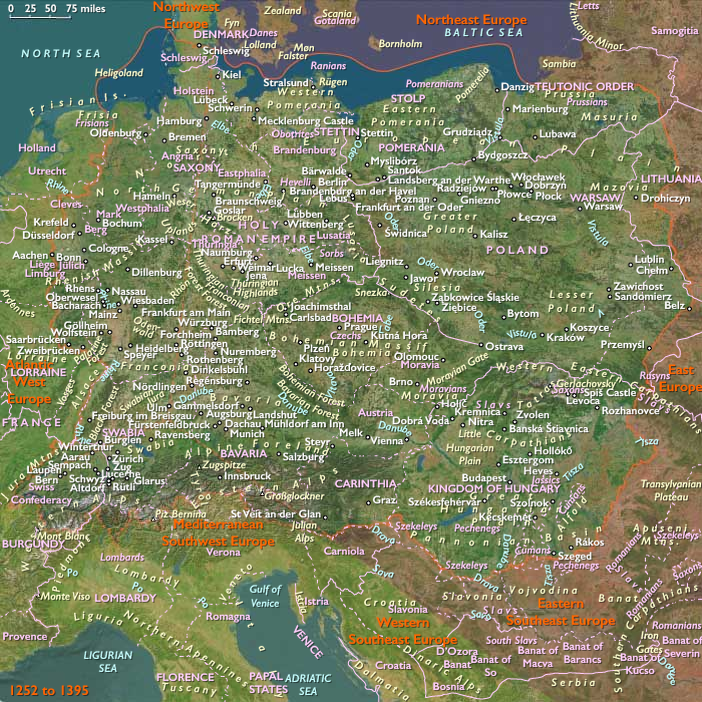
Subregions
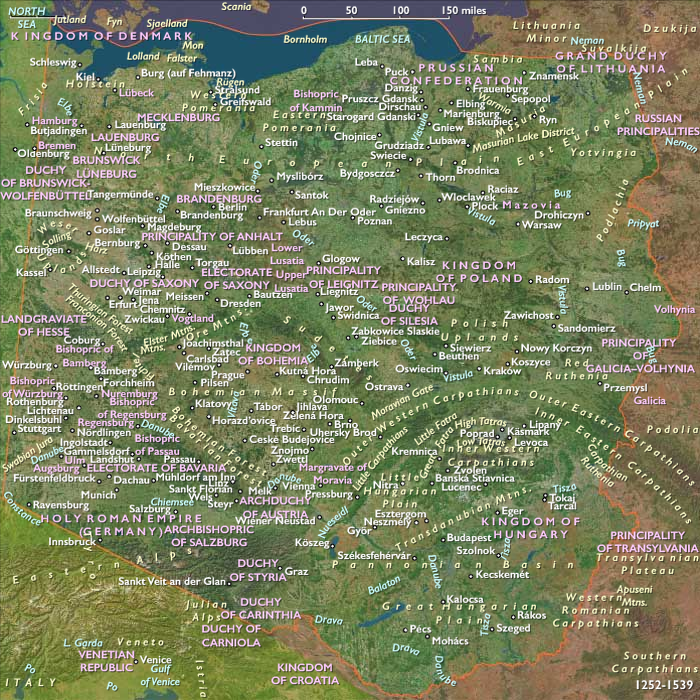
Related Events
Showing 10 events out of 44045 total
Years: 1360 - 1371
People
Groups
- Saxons
- Germans
- Hungarian people
- Wends, or Sorbs (West Slavs)
- Christianity, Chalcedonian
- Bavarians (West Germanic tribe)
- Thuringia, Duchy of
- Passau, Bishopric of
- Holy Roman Empire
- German, or Ottonian (Roman) Empire
- Germany, Kingdom of (within the Holy Roman Empire)
- Carinthia, Duchy of
- Slovaks (West Slavs)
- Hanseatic league (informally organized)
- Czechs [formerly Bohemians] (West Slavs)
- Hungary, Kingdom of
- Bamberg, Prince-Bishopric of
- Poland, Greater
- Mazovia, Duchy of
- Austria, Archduchy of
- Brandenburg (Ascanian) Margravate of
- Bohemia, Kingdom of
- Styria, Duchy of
- Ordensstaat (Monastic state of the Teutonic Knights)
- Lübeck, Free City of
- Brunswick-Lüneburg, Duchy of
- Regensburg (Ratisbon), Imperial Free City of
- Cammin, Prince-Bishopric of
- Anhalt-Zerbst, Principality of
- Anhalt-Bernburg, Principality of
- Regensburg, Prince-Bishopric of
- Holy Roman Empire
- Galicia–Volhynia, Kingdom of
- Brunswick-Wolfenbüttel, Duchy of
- Saxe-Ratzeburg-Lauenburg, Duchy of
- Saxe-Mölln-Bergedorf, Duchy of
- Poland of the later Piasts, Kingdom of
- Bavaria, Wittelsbach Duchy of
- Mecklenburg, Duchy of
- Bavaria-Straubing, Wittelsbach Duchy of
- Bavaria-Landshut, Wittelsbach Duchy of
- Saxony, Electorate of
Topics
- Ostsiedlung (German: Settlement in the East), a.k.a. German eastward expansion
- Western Architecture: 1252 to 1396
Commodoties
Subjects
Regions
Subregions