
East Central Europe (1348–1359 CE): The Black …
Years: 1348 - 1359
East Central Europe (1348–1359 CE): The Black Death, Reign of Charles IV, Golden Age of Bohemia, and Continued Hanseatic Prosperity
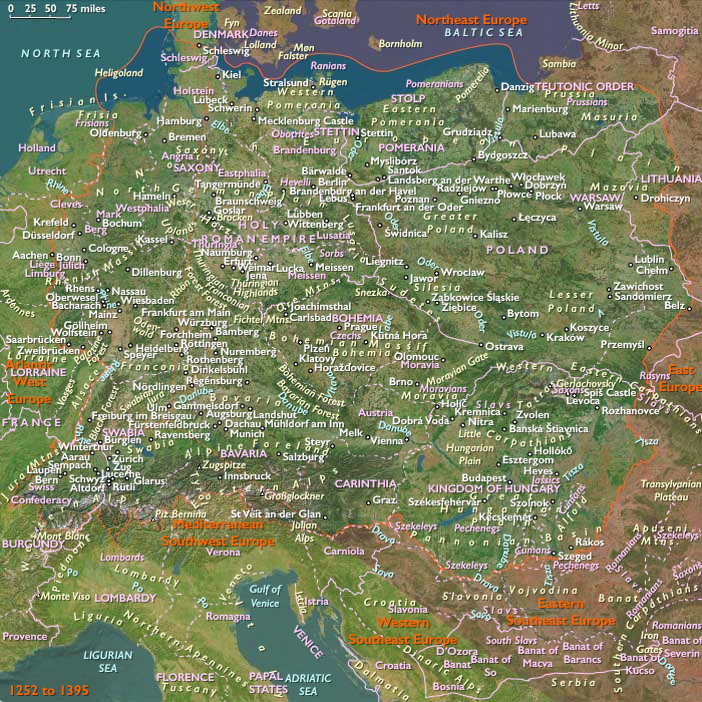
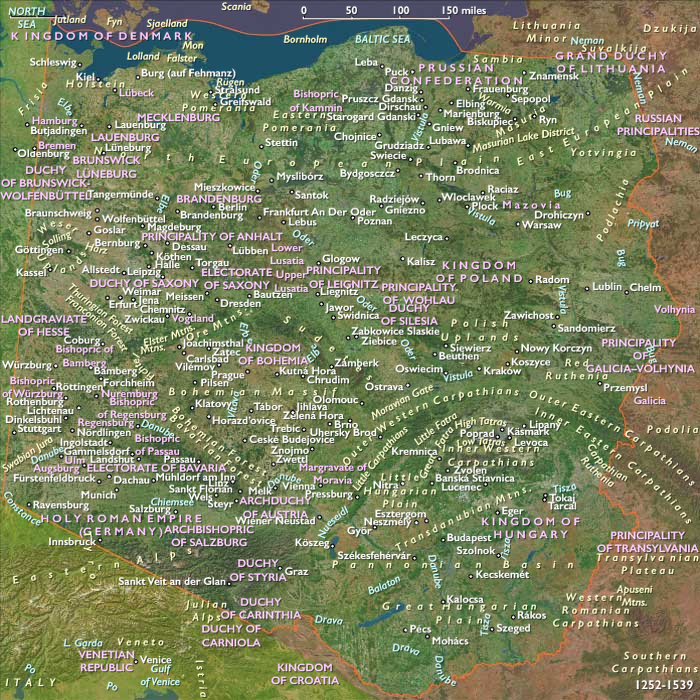
Between 1348 and 1359 CE, East Central Europe—encompassing modern-day Poland, Czechia, Slovakia, Hungary, and eastern parts of Germany and Austria east of 10°E and north of the defined boundary—experienced transformative political, economic, and demographic changes. The devastating Black Death (1347–1351) profoundly impacted populations, economies, and societies across the region. Simultaneously, this period marked the emergence of the Golden Age of Bohemia under the reign of Emperor Charles IV (r. 1346–1378) of the Luxemburg dynasty, significant internal reforms and stability in Poland under Casimir III, continuing Hungarian strength under Louis I, and sustained prosperity of the Hanseatic League cities despite the pandemic’s disruption.
Political and Military Developments
Charles IV and the Golden Age of Bohemia
-
In 1346, following his father John of Luxemburg’s death at Crécy (1346), Charles IV became King of Bohemia and was crowned Holy Roman Emperor in 1355. His reign significantly elevated Prague as a leading political, economic, and cultural center, marking the pinnacle of medieval Bohemian influence.
-
Charles IV established the University of Prague (Charles University) in 1348, strengthening intellectual life and making Prague a major European educational center.
Casimir III’s Continued Polish Consolidation
-
Casimir III the Great (r. 1333–1370) continued extensive legal, administrative, and economic reforms. Despite Poland’s fragmentation into duchies, Casimir significantly centralized royal authority, promoted urban growth, fortified borders, and solidified stable governance structures.
-
Casimir’s diplomatic skills secured stable frontiers with Bohemia and Hungary, notably through treaties like the Visegrád agreements, stabilizing regional relationships.
Hungarian Power under Louis the Great
-
After ascending the throne in 1342, Louis I of Hungary (Louis the Great, r. 1342–1382) continued policies of his father, Charles Robert, consolidating central royal authority, economic strength, and territorial expansion. Louis maintained Hungary as a significant regional power.
Impact of the Black Death (1347–1351)
-
East Central Europe experienced the devastating arrival of the Black Death from 1347–1351, profoundly impacting population density, disrupting economic patterns, and leading to societal transformations. Cities, monasteries, and rural areas experienced severe demographic declines, altering social and economic structures significantly.
Bavarian Stability under the Reunited Wittelsbach Duchy
-
Following reunification in 1340, Bavaria under Wittelsbach rule maintained internal stability and economic prosperity despite demographic disruptions from the plague, consolidating Munich’s status as a key regional city.
Teutonic Order’s Continued Strength in Prussia
-
Despite demographic losses from the plague, the Teutonic Order retained military strength and administrative efficiency, further consolidating power in Prussia and maintaining aggressive Baltic territorial expansion.
Economic and Technological Developments
Hanseatic League’s Continued Prosperity
-
Despite the plague’s demographic impact, major Hanseatic League cities such as Lübeck, Hamburg, Rostock, Stralsund, Wismar, Gdańsk, Toruń, Elbląg, and Stettin recovered relatively swiftly, benefiting from established maritime commerce and strong regional trade networks.
-
Their continued economic vitality and commercial resilience sustained regional prosperity and fostered recovery from pandemic disruptions.
Post-Plague Economic Realignment
-
Labor shortages caused by the Black Death altered economic patterns significantly, leading to increased wages, improved conditions for artisans and merchants, and the reorganization of rural agriculture, reshaping social and economic structures profoundly.
Cultural and Artistic Developments
Bohemian Cultural Flourishing under Charles IV
-
Prague under Charles IV became a premier European cultural hub, marked by vibrant artistic patronage, the flourishing of Gothic architecture, manuscript illumination, and courtly literary traditions. Major projects like St. Vitus Cathedral (begun 1344) demonstrated imperial ambition and cultural prestige.
Urban Cultural Resilience
-
Despite demographic shocks, cultural vitality persisted in prominent urban centers (Kraków, Wrocław, Lübeck, Hamburg, Vienna, Nuremberg, Augsburg), where resilient economic foundations enabled continued patronage of arts, education, and architecture.
Ecclesiastical Cultural Influence
-
Ecclesiastical territories (Salzburg, Passau, Bamberg, Regensburg, Kammin) continued significant cultural investment, supporting manuscript production, religious art, educational institutions, and architectural projects, bolstering regional cultural identity.
Settlement and Urban Development
Urban Recovery and Expansion Post-Plague
-
Despite severe losses, cities recovered quickly post-1351, stimulated by economic resilience. Notably, Prague flourished dramatically under Charles IV’s patronage, experiencing rapid growth, enhanced infrastructure, and monumental construction.
Hanseatic League Cities’ Continued Urban Vitality
-
Hanseatic cities, especially Baltic trading hubs (Gdańsk, Toruń, Lübeck, Hamburg, Stettin), maintained strong urban economies and infrastructure, swiftly rebounding from plague-induced disruptions due to robust maritime trade and mercantile organization.
Continued Ostsiedlung Settlement Patterns
-
Germanic settlement continued across Silesia, Brandenburg, Mecklenburg, Lusatia, and parts of Hungary and Poland, bolstering economic productivity, agricultural innovation, and urbanization despite demographic shocks.
Social and Religious Developments
Societal Transformations Post-Plague
-
The Black Death significantly reshaped social hierarchies, empowering surviving peasants and artisans through increased demand for labor, leading to improved conditions and greater social mobility.
-
Simultaneously, the nobility and clergy adjusted to new economic realities, prompting shifts in land tenure and economic organization.
Continued Christian Institutional Strength
-
Despite demographic decline, ecclesiastical institutions retained significant influence, guiding social recovery efforts, managing charitable activities, and continuing religious and educational patronage across the region.
Long-Term Consequences and Historical Significance
The era 1348–1359 CE profoundly reshaped East Central Europe. The catastrophic Black Death dramatically altered demographic patterns, economic structures, and social hierarchies, ultimately fostering economic transformation and social mobility. Under Charles IV’s Luxemburg-Bohemian rule, Prague experienced unprecedented cultural, intellectual, and urban flourishing, significantly shaping regional identity. Casimir III’s reforms stabilized Polish governance, while Hungary maintained strength under Louis the Great. The Hanseatic League’s resilience significantly bolstered regional recovery and prosperity. Collectively, these developments critically influenced East Central Europe’s later medieval trajectory, laying essential foundations for regional recovery, cultural vibrancy, and sustained political and economic strength.
People
Groups
- Saxons
- Germans
- Hungarian people
- Wends, or Sorbs (West Slavs)
- Christianity, Chalcedonian
- Bavarians (West Germanic tribe)
- Thuringia, Duchy of
- Germany, Kingdom of (within the Holy Roman Empire)
- Holy Roman Empire
- Hanseatic league (informally organized)
- Slovaks (West Slavs)
- Czechs [formerly Bohemians] (West Slavs)
- Carinthia, Duchy of
- Hungary, Kingdom of
- Bamberg, Prince-Bishopric of
- Poland, Greater
- Mazovia, Duchy of
- Austria, Archduchy of
- Brandenburg (Ascanian) Margravate of
- Bohemia, Kingdom of
- Styria, Duchy of
- Ordensstaat (Monastic state of the Teutonic Knights)
- Lübeck, Free City of
- Brunswick-Lüneburg, Duchy of
- Regensburg (Ratisbon), Imperial Free City of
- Cammin, Prince-Bishopric of
- Anhalt-Zerbst, Principality of
- Anhalt-Bernburg, Principality of
- Regensburg, Prince-Bishopric of
- Bavaria, Upper, Duchy of
- Bavaria, Lower, Duchy of
- Galicia–Volhynia, Kingdom of
- Brunswick-Wolfenbüttel, Duchy of
- Salzburg, Archbishopric of
- Saxe-Wittenberg, Duchy of
- Saxe-Ratzeburg-Lauenburg, Duchy of
- Saxe-Mölln-Bergedorf, Duchy of
- Poland of the later Piasts, Kingdom of
- Bavaria, Wittelsbach Duchy of
- Mecklenburg, Duchy of
- Saxony, Electorate of
Topics
Subjects
Regions
Subregions
Years: 1348 - 1359
People
Groups
- Saxons
- Germans
- Hungarian people
- Wends, or Sorbs (West Slavs)
- Christianity, Chalcedonian
- Bavarians (West Germanic tribe)
- Thuringia, Duchy of
- Germany, Kingdom of (within the Holy Roman Empire)
- Holy Roman Empire
- Hanseatic league (informally organized)
- Slovaks (West Slavs)
- Czechs [formerly Bohemians] (West Slavs)
- Carinthia, Duchy of
- Hungary, Kingdom of
- Bamberg, Prince-Bishopric of
- Poland, Greater
- Mazovia, Duchy of
- Austria, Archduchy of
- Brandenburg (Ascanian) Margravate of
- Bohemia, Kingdom of
- Styria, Duchy of
- Ordensstaat (Monastic state of the Teutonic Knights)
- Lübeck, Free City of
- Brunswick-Lüneburg, Duchy of
- Regensburg (Ratisbon), Imperial Free City of
- Cammin, Prince-Bishopric of
- Anhalt-Zerbst, Principality of
- Anhalt-Bernburg, Principality of
- Regensburg, Prince-Bishopric of
- Bavaria, Upper, Duchy of
- Bavaria, Lower, Duchy of
- Galicia–Volhynia, Kingdom of
- Brunswick-Wolfenbüttel, Duchy of
- Salzburg, Archbishopric of
- Saxe-Wittenberg, Duchy of
- Saxe-Ratzeburg-Lauenburg, Duchy of
- Saxe-Mölln-Bergedorf, Duchy of
- Poland of the later Piasts, Kingdom of
- Bavaria, Wittelsbach Duchy of
- Mecklenburg, Duchy of
- Saxony, Electorate of
Topics
Subjects
Regions
Subregions