
East Central Europe (1336–1347 CE): Height of …
Years: 1336 - 1347
East Central Europe (1336–1347 CE): Height of Luxemburg-Bohemian Influence, Casimir III’s Reforms in Poland, Bavarian Reunification, and Prosperity of the Hanseatic League
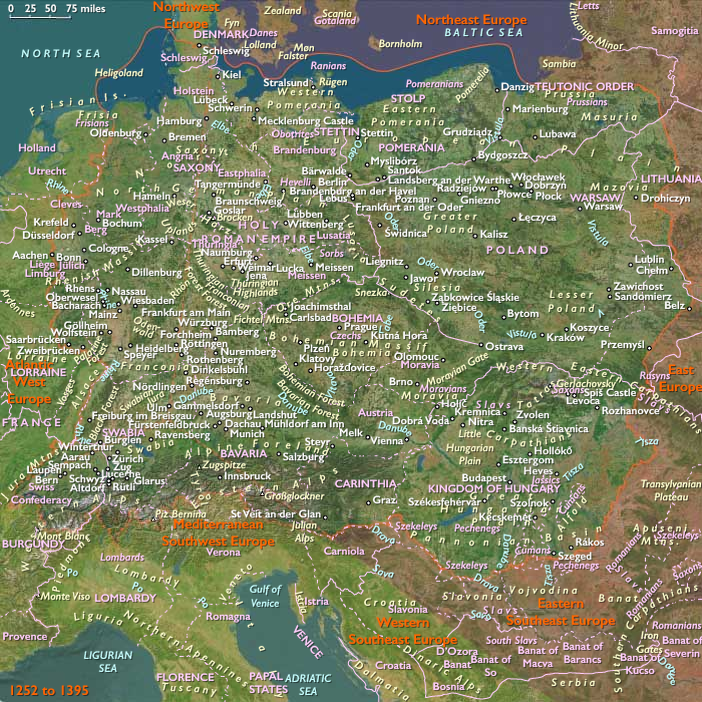
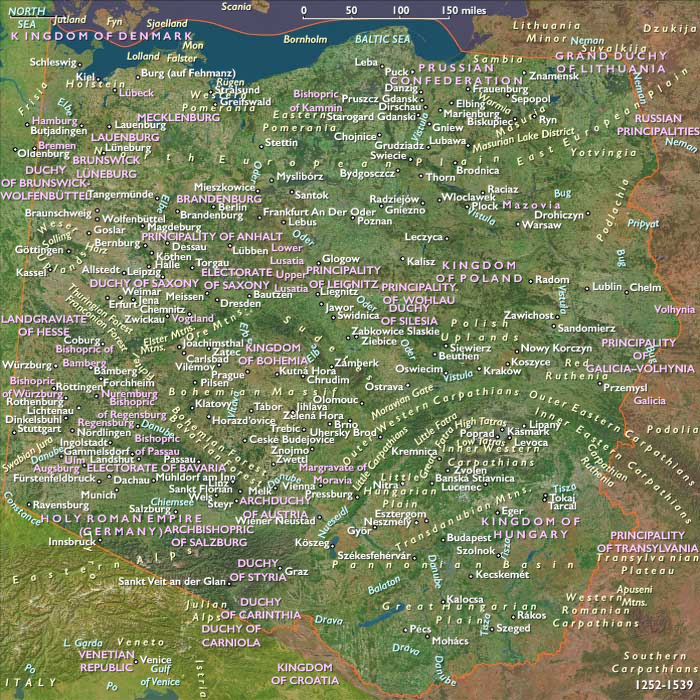
Between 1336 and 1347 CE, East Central Europe—encompassing modern-day Poland, Czechia, Slovakia, Hungary, and eastern parts of Germany and Austria east of 10°E and north of the defined boundary—experienced significant political consolidation, notable cultural achievements, and sustained economic prosperity. This era featured the peak of the Luxemburg dynasty’s political and cultural influence under John of Luxemburg, profound reforms and stabilization under Poland’s Casimir III the Great, the critical reunification of Upper and Lower Bavaria, continued stability in Hungary under the Anjou dynasty, and thriving economic activity driven by the increasingly powerful Hanseatic League cities.
Political and Military Developments
Peak of Luxemburg Influence in Bohemia under John of Luxemburg
-
King John of Luxemburg continued to enhance Bohemia’s prominence, expanding territorial influence, particularly in Silesia and Poland. His military campaigns, while often abroad, notably elevated Bohemian prestige within European dynastic politics.
-
His son, the future Emperor Charles IV (r. 1346–1378), increasingly participated in governance, laying groundwork for Bohemia’s later Golden Age.
Casimir III’s Reforms and Consolidation of Poland
-
Casimir III the Great (r. 1333–1370) profoundly reshaped Polish governance, administration, and legal systems, centralizing authority and significantly stabilizing the fragmented kingdom. He enacted comprehensive legal codes (Statutes of Casimir), promoted urbanization, fortified strategic towns, and supported educational institutions, including founding the University of Kraków (1364).
-
Casimir’s diplomatic acumen solidified Poland’s regional position, stabilizing borders with Bohemia and Hungary established at the 1335 Congress of Visegrád.
Reunification of Bavaria (1340)
-
In 1340, the previously divided Wittelsbach duchies of Upper Bavaria (Oberbayern) and Lower Bavaria (Niederbayern) were formally reunited, significantly strengthening Bavaria’s political coherence and restoring it as an influential player within the Holy Roman Empire.
-
The reunified Duchy of Bavaria, ruled from Munich, reestablished stable governance, strengthening internal administration and regional economic prosperity.
Continued Stability and Prosperity in Hungary
-
Under Charles Robert of Anjou (until 1342), Hungary maintained political stability, economic prosperity, and effective governance. After his death, his son, Louis I of Hungary (Louis the Great, r. 1342–1382), continued his policies, reinforcing Hungary’s regional power and central authority.
Strengthened Teutonic Order in Prussia
-
The Teutonic Order’s State in Prussia fortified its territories, expanded aggressively against Lithuanian pagan tribes, and increased economic productivity through trade alliances with Hanseatic cities, consolidating its dominance along the southern Baltic.
Economic and Technological Developments
Hanseatic League’s Economic Prosperity and Expansion
-
Hanseatic League cities such as Lübeck, Hamburg, Rostock, Stralsund, Wismar, Greifswald, and critical regional trading hubs Gdańsk (Danzig), Toruń (Thorn), Elbląg (Elbing), and Stettin (Szczecin) flourished economically, bolstered by robust Baltic maritime trade networks and growing regional commerce.
-
Prosperity in these cities fostered significant urban expansion, infrastructure enhancements, and the development of sophisticated financial and commercial institutions.
Technological and Agricultural Advancements
-
Agricultural productivity advanced further through systematic crop rotation, improved plowing technologies, and better farming implements. Urban markets expanded due to increased agricultural surplus, fueling regional prosperity and demographic growth.
Cultural and Artistic Developments
Luxemburg-Bohemian Cultural Flourishing
-
Bohemia under the Luxemburgs continued flourishing culturally and artistically, notably in Prague, where Gothic architecture, illuminated manuscripts, courtly poetry, and music thrived, laying a robust cultural foundation for future expansion under Charles IV.
Ecclesiastical Cultural Patronage
-
Influential ecclesiastical territories such as Salzburg, Passau, Bamberg, Regensburg, and Kammin actively sponsored educational initiatives, manuscript production, religious art, and monumental Gothic architectural projects, significantly shaping regional cultural identities.
Urban Cultural Prosperity in Hanseatic and Imperial Free Cities
-
Prominent Hanseatic and Imperial Free Cities (Nuremberg, Augsburg, Lübeck, Hamburg, Kraków, Wrocław, Toruń) fostered vibrant cultural environments through patronage of the arts, architecture, education, and commercial institutions, significantly enhancing urban intellectual and cultural life.
Settlement and Urban Development
Luxemburg-Bohemian and Bavarian Urban Expansion
-
Prague continued robust urban development under Luxemburg influence, enhancing its status as a cultural and economic center. The reunification of Bavaria in 1340 significantly strengthened Munich as the duchy’s primary urban center, spurring further demographic and economic growth.
Prosperity of Hanseatic League Cities
-
Prosperous trade significantly boosted urban growth and infrastructure improvements in critical Hanseatic cities (Gdańsk, Lübeck, Hamburg, Toruń, Rostock, Elbląg, Stettin), reinforcing their role as regional economic powerhouses and centers of commerce.
Continued Germanic (Ostsiedlung) Expansion
-
Continued Germanic settlement throughout Silesia, Brandenburg, Mecklenburg, Lusatia, and parts of Poland and Hungary further supported economic productivity, agricultural efficiency, and urbanization.
Social and Religious Developments
Strengthened Royal Authority and Noble Influence
-
Casimir III’s reign notably strengthened royal authority in Poland, balancing the influence of powerful noble families and reinforcing centralized governance. Similarly, Hungarian and Bohemian royal power limited aristocratic dominance, improving internal stability.
Ecclesiastical Institutional Influence and Expansion
-
Ecclesiastical institutions such as the Archbishopric of Salzburg, Bishoprics of Passau, Bamberg, Kammin, and Regensburg expanded their social and cultural influence through education, charity, religious life, and patronage of the arts, firmly establishing them as pillars of regional cultural and intellectual life.
Long-Term Consequences and Historical Significance
The era 1336–1347 CE was pivotal for East Central Europe, marked by significant political consolidation, cultural flourishing, and economic prosperity. The reunification of Bavaria strengthened regional coherence, while Casimir III’s reforms decisively shaped Polish governance and stability. Luxemburg-Bohemian cultural patronage and Hungary’s sustained political strength redefined the region’s cultural and political landscapes. The ongoing expansion of the Hanseatic League significantly enhanced regional commerce and urbanization. These dynamic developments firmly established the medieval structures and identities that defined East Central Europe’s subsequent trajectory, influencing its history profoundly through the Late Middle Ages and beyond.
People
- Casimir III the Great
- Charles I of Hungary
- Charles IV, Holy Roman Emperor
- John of Bohemia
- Louis I of Hungary
Groups
- Saxons
- Germans
- Hungarian people
- Wends, or Sorbs (West Slavs)
- Christianity, Chalcedonian
- Bavarians (West Germanic tribe)
- Polans, Western (West Slavic tribe)
- Thuringia, Duchy of
- Germany, Kingdom of (within the Holy Roman Empire)
- Holy Roman Empire
- German, or Ottonian (Roman) Empire
- Hanseatic league (informally organized)
- Slovaks (West Slavs)
- Czechs [formerly Bohemians] (West Slavs)
- Carinthia, Duchy of
- Hungary, Kingdom of
- Bamberg, Prince-Bishopric of
- Mazovia, Duchy of
- Poland, Greater
- Austria, Archduchy of
- Brandenburg (Ascanian) Margravate of
- Bohemia, Kingdom of
- Mecklenburg, House of
- Styria, Duchy of
- Ordensstaat (Monastic state of the Teutonic Knights)
- Lübeck, Free City of
- Brunswick-Lüneburg, Duchy of
- Regensburg (Ratisbon), Imperial Free City of
- Anhalt-Zerbst, Principality of
- Anhalt-Bernburg, Principality of
- Regensburg, Prince-Bishopric of
- Bavaria, Upper, Duchy of
- Bavaria, Lower, Duchy of
- Galicia–Volhynia, Kingdom of
- Brunswick-Wolfenbüttel, Duchy of
- Salzburg, Archbishopric of
- Saxe-Wittenberg, Duchy of
- Saxe-Ratzeburg-Lauenburg, Duchy of
- Saxe-Mölln-Bergedorf, Duchy of
- Poland of the later Piasts, Kingdom of
- Bavaria, Wittelsbach Duchy of
Topics
Commodoties
Subjects
Regions
Subregions
Years: 1336 - 1347
People
- Casimir III the Great
- Charles I of Hungary
- Charles IV, Holy Roman Emperor
- John of Bohemia
- Louis I of Hungary
Groups
- Saxons
- Germans
- Hungarian people
- Wends, or Sorbs (West Slavs)
- Christianity, Chalcedonian
- Bavarians (West Germanic tribe)
- Polans, Western (West Slavic tribe)
- Thuringia, Duchy of
- Germany, Kingdom of (within the Holy Roman Empire)
- Holy Roman Empire
- German, or Ottonian (Roman) Empire
- Hanseatic league (informally organized)
- Slovaks (West Slavs)
- Czechs [formerly Bohemians] (West Slavs)
- Carinthia, Duchy of
- Hungary, Kingdom of
- Bamberg, Prince-Bishopric of
- Mazovia, Duchy of
- Poland, Greater
- Austria, Archduchy of
- Brandenburg (Ascanian) Margravate of
- Bohemia, Kingdom of
- Mecklenburg, House of
- Styria, Duchy of
- Ordensstaat (Monastic state of the Teutonic Knights)
- Lübeck, Free City of
- Brunswick-Lüneburg, Duchy of
- Regensburg (Ratisbon), Imperial Free City of
- Anhalt-Zerbst, Principality of
- Anhalt-Bernburg, Principality of
- Regensburg, Prince-Bishopric of
- Bavaria, Upper, Duchy of
- Bavaria, Lower, Duchy of
- Galicia–Volhynia, Kingdom of
- Brunswick-Wolfenbüttel, Duchy of
- Salzburg, Archbishopric of
- Saxe-Wittenberg, Duchy of
- Saxe-Ratzeburg-Lauenburg, Duchy of
- Saxe-Mölln-Bergedorf, Duchy of
- Poland of the later Piasts, Kingdom of
- Bavaria, Wittelsbach Duchy of
Topics
Commodoties
Subjects
Regions
Subregions