
East Central Europe (1300–1311 CE): Bohemian Expansion …
Years: 1300 - 1311
East Central Europe (1300–1311 CE): Bohemian Expansion under Wenceslaus II, Hungarian Interregnum, Polish-Czech Realignment, and Strengthened Position of the Teutonic Order
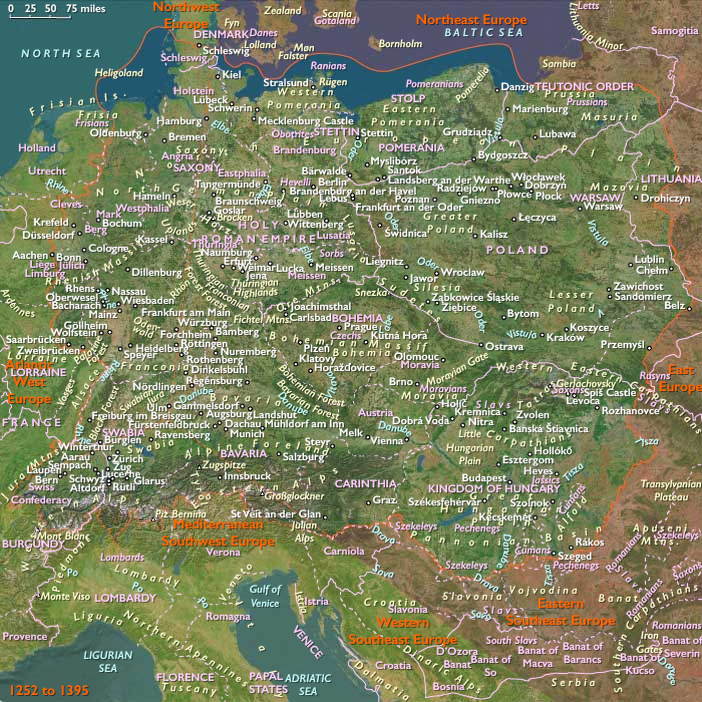
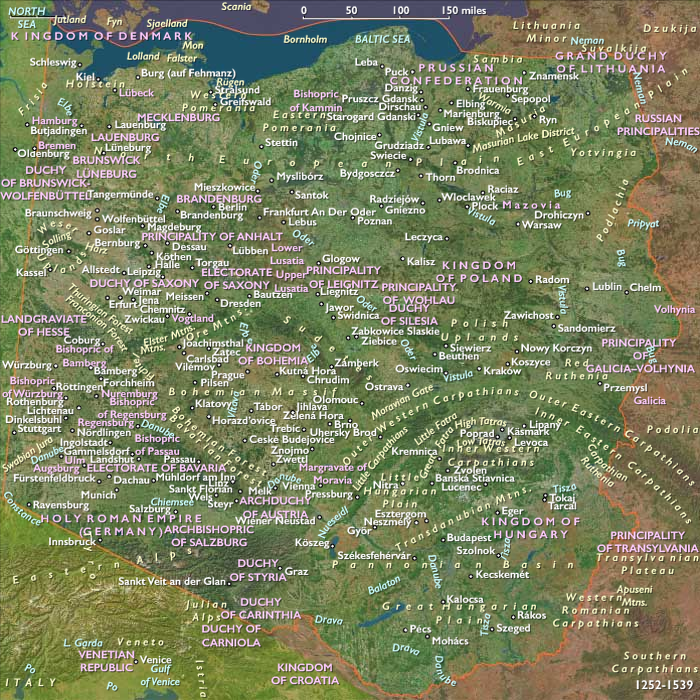
Between 1300 and 1311 CE, East Central Europe—comprising modern-day Poland, Czechia, Slovakia, Hungary, and eastern parts of Germany and Austria east of 10°E and north of the defined southeastern boundary—experienced notable geopolitical realignments. This era witnessed the ambitious expansion of Bohemian power under Wenceslaus II Přemysl, significant instability in Hungary following the extinction of the Árpád dynasty, the continued political fragmentation of Poland tempered by Bohemian influence, the consolidation of the Teutonic Order’s State in Prussia, and sustained economic and cultural vitality in urban and ecclesiastical centers.
Political and Military Developments
Bohemian Dominance and Expansion under Wenceslaus II
-
Wenceslaus II (r. 1278–1305), King of Bohemia, significantly expanded his influence, assuming the crown of Poland in 1300. This event unified Bohemia and much of Poland (particularly Lesser Poland and Kraków) under Přemyslid rule, substantially shifting regional power balances.
-
Wenceslaus II effectively centralized administration, enhancing royal authority, and promoting stability and prosperity in Bohemia and his Polish territories.
Polish-Bohemian Realignment and Fragmentation
-
Despite Bohemian dominance under Wenceslaus II, Poland’s internal fragmentation persisted, especially among the powerful Silesian duchies, Mazovia, and Greater Poland, each maintaining significant autonomy.
-
Wenceslaus’s influence stabilized southern and central Polish lands briefly, yet regional rivalries and political divisions continued to limit long-term unity.
Hungarian Interregnum and Dynastic Crisis
-
The death of Hungary’s last Árpád king, Andrew III, in 1301, triggered a dynastic crisis and interregnum. Multiple contenders, including Charles Robert of Anjou, Otto of Bavaria, and Wenceslaus III of Bohemia, vied for the Hungarian throne, plunging the kingdom into deep political turmoil and prolonged instability.
-
Hungarian magnates capitalized on the crisis, further weakening royal authority and exacerbating internal divisions.
Rise and Consolidation of the Teutonic Order’s State in Prussia
-
During this period, the Teutonic Order further solidified its control over Prussia, aggressively expanding territorial claims against pagan Lithuanians and regional Baltic peoples. The Order strengthened fortifications, founded new settlements, and increased economic and military capabilities in the Baltic region, significantly shaping regional geopolitics.
Habsburg Stabilization in Austria
-
The House of Habsburg, under Albert I (r. 1282–1308), continued consolidating control of Austria, fortifying urban centers and integrating Austrian territories more deeply into imperial politics. Vienna further developed as a critical administrative, economic, and cultural center.
Economic and Technological Developments
Continued Economic Prosperity and Urban Expansion
-
Cities such as Prague, Vienna, Kraków, Wrocław, Nuremberg, Augsburg, Lübeck, Hamburg, Ulm, and Regensburg thrived economically, driven by extensive trade routes connecting the Baltic, Mediterranean, and Western European regions.
-
Urban growth intensified, accompanied by sophisticated city planning, improved infrastructure, and significant demographic expansion.
Technological and Agricultural Innovation
-
Agricultural advancements continued with increased utilization of the heavy plow, improved harness systems, three-field crop rotation, and systematic land cultivation. These innovations sustained demographic growth and urban prosperity.
Cultural and Artistic Developments
Flourishing Bohemian Court Culture under Wenceslaus II
-
Wenceslaus II’s court in Prague emerged as a significant cultural and artistic hub, supporting Gothic architecture, literature, manuscript illumination, and music, profoundly influencing regional cultural standards.
Cultural Vitality in Ecclesiastical Territories
-
Ecclesiastical polities such as the Archbishopric of Salzburg and influential bishoprics (notably Passau, Bamberg, Regensburg, and Kammin) actively patronized arts, literature, architecture, and education, enriching cultural life across East Central Europe.
Growth of Urban Cultural Life
-
Imperial Free Cities like Nuremberg, Augsburg, Lübeck, and Hamburg expanded cultural patronage, architectural projects, and educational institutions, contributing significantly to regional cultural and intellectual vibrancy.
Settlement and Urban Development
Bohemian and Austrian Urban Growth
-
Prague under Wenceslaus II and Vienna under Albert I underwent significant urban expansion, infrastructure improvements, and fortification enhancements, strengthening their political, economic, and cultural prominence.
Polish and Silesian Town Prosperity
-
Polish and Silesian cities such as Wrocław, Kraków, Legnica, and Poznań thrived economically and culturally, benefiting from vibrant trade networks, Germanic immigration (Ostsiedlung), and stable local governance.
Continued Germanic Settlement (Ostsiedlung)
-
German settlers continued transforming the demographic and economic landscapes of Silesia, Brandenburg, Mecklenburg, Lusatia, and Polish and Hungarian territories, reinforcing urban prosperity and agricultural productivity.
Social and Religious Developments
Noble Dominance and Aristocratic Power
-
Powerful aristocratic factions significantly shaped regional politics, especially evident in Hungary’s interregnum crisis and Polish internal divisions. Noble authority limited centralized royal governance, influencing political stability and societal organization.
Increasing Influence of Ecclesiastical Institutions
-
Ecclesiastical institutions such as the Archbishopric of Salzburg and influential bishoprics like Passau, Bamberg, Kammin, and Regensburg continued expanding their social influence, strengthening regional cultural identity and societal cohesion through religious practices, educational initiatives, and charitable works.
Long-Term Consequences and Historical Significance
The era 1300–1311 CE represented a pivotal moment of geopolitical realignment and dynastic transition in East Central Europe. The ambitious expansion under Bohemia’s Wenceslaus II temporarily unified significant parts of Poland and Czech lands, reshaping regional dynamics. Hungary’s dynastic crisis profoundly undermined royal stability, setting the stage for foreign influences and internal aristocratic dominance. The Teutonic Order’s increasing strength in Prussia laid groundwork for future conflicts and the emergence of regional identities in the Baltic sphere. Economically vibrant urban centers, flourishing ecclesiastical polities, and continued cultural prosperity established enduring foundations for medieval societal structures. These transformative developments critically influenced the region’s historical trajectory, setting the stage for subsequent political, economic, and cultural evolutions.
People
- Albert I of Germany
- Andrew III of Hungary
- Charles I of Hungary
- Otto III, Duke of Lower Bavaria
- Wenceslaus II of Bohemia
- Wenceslaus III of Bohemia
Groups
- Polytheism (“paganism”)
- Franks
- Saxons
- Germans
- Hungarian people
- Wends, or Sorbs (West Slavs)
- Christianity, Chalcedonian
- Bavarians (West Germanic tribe)
- Polans, Western (West Slavic tribe)
- Thuringia, Duchy of
- Saxony, Duchy of
- Germany, Kingdom of (within the Holy Roman Empire)
- German, or Ottonian (Roman) Empire
- Holy Roman Empire
- Carinthia, Duchy of
- Austria, Margravate of
- Czechs [formerly Bohemians] (West Slavs)
- Slovaks (West Slavs)
- Hungary, Kingdom of
- Cuman people, or Western Kipchaks, also called Polovtsy, Polovtsians)
- Mongols
- Poland, Greater
- Poland during the period of fragmentation, Kingdom of
- Mazovia, Duchy of
- Austria, Archduchy of
- Brandenburg (Ascanian) Margravate of
- Bohemia, Kingdom of
- Styria, Duchy of
- Mongol Empire
- Ordensstaat (Monastic state of the Teutonic Knights)
- Bavaria, Lower, Duchy of
- Bavaria, Upper, Duchy of
- Galicia–Volhynia, Kingdom of
Topics
- Ostsiedlung (German: Settlement in the East), a.k.a. German eastward expansion
- Poland, Fragmentation of
- Marchfeld, Battle of
Commodoties
Subjects
Regions
Subregions
Years: 1300 - 1311
People
- Albert I of Germany
- Andrew III of Hungary
- Charles I of Hungary
- Otto III, Duke of Lower Bavaria
- Wenceslaus II of Bohemia
- Wenceslaus III of Bohemia
Groups
- Polytheism (“paganism”)
- Franks
- Saxons
- Germans
- Hungarian people
- Wends, or Sorbs (West Slavs)
- Christianity, Chalcedonian
- Bavarians (West Germanic tribe)
- Polans, Western (West Slavic tribe)
- Thuringia, Duchy of
- Saxony, Duchy of
- Germany, Kingdom of (within the Holy Roman Empire)
- German, or Ottonian (Roman) Empire
- Holy Roman Empire
- Carinthia, Duchy of
- Austria, Margravate of
- Czechs [formerly Bohemians] (West Slavs)
- Slovaks (West Slavs)
- Hungary, Kingdom of
- Cuman people, or Western Kipchaks, also called Polovtsy, Polovtsians)
- Mongols
- Poland, Greater
- Poland during the period of fragmentation, Kingdom of
- Mazovia, Duchy of
- Austria, Archduchy of
- Brandenburg (Ascanian) Margravate of
- Bohemia, Kingdom of
- Styria, Duchy of
- Mongol Empire
- Ordensstaat (Monastic state of the Teutonic Knights)
- Bavaria, Lower, Duchy of
- Bavaria, Upper, Duchy of
- Galicia–Volhynia, Kingdom of
Topics
- Ostsiedlung (German: Settlement in the East), a.k.a. German eastward expansion
- Poland, Fragmentation of
- Marchfeld, Battle of
Commodoties
Subjects
Regions
Subregions