
East Central Europe (1288–1299 CE): Habsburg Ascendancy, …
Years: 1288 - 1299
East Central Europe (1288–1299 CE): Habsburg Ascendancy, Přemyslid Revival, Hungarian Turmoil, Polish Fragmentation, and Urban Prosperity
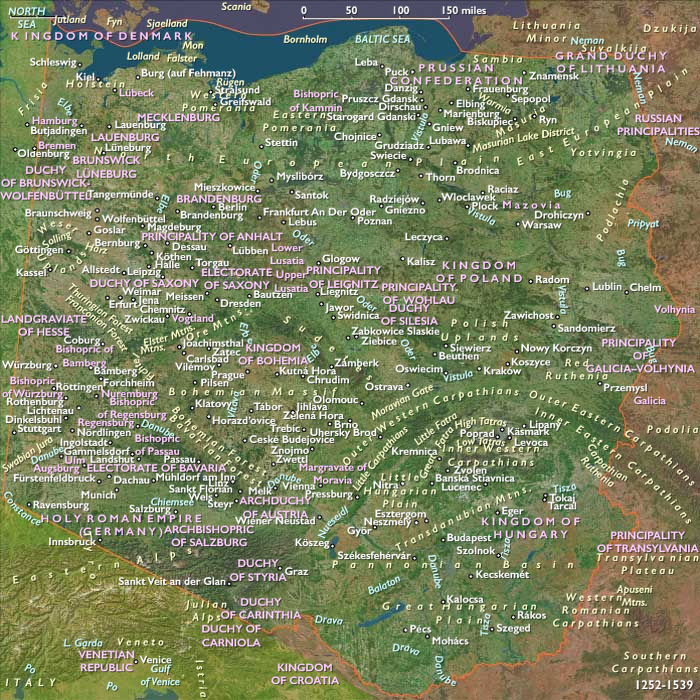
Between 1288 and 1299 CE, East Central Europe experienced critical geopolitical shifts marked by the rising power of the Habsburgs in Austria, the gradual revival and stabilization of Bohemia under Wenceslaus II Přemysl, continued fragmentation and local strength of Polish duchies, ongoing political turmoil in Hungary, and the vibrant economic growth of Hanseatic urban centers. This era saw a consolidation of new power balances that would profoundly influence regional dynamics into the 14th century.
Political and Military Developments
Strengthening of the Habsburg Position in Austria
-
Following their decisive victory at the Battle on the Marchfeld (1278), the Habsburg dynasty under Rudolf I solidified control over Austria, Styria, and Carniola.
-
Rudolf's death in 1291 ushered in succession by his son, Albert I (r. 1298–1308), who began stabilizing Habsburg rule in Austria, strengthening central governance, and laying foundations for long-term dominance.
Přemyslid Revival and Consolidation in Bohemia
-
Wenceslaus II Přemysl (r. 1278–1305) gradually emerged from minority and regency conflicts, consolidating his authority over Bohemia. His reign saw improved internal stability and economic prosperity, significantly bolstering Bohemia’s position in regional politics.
Continued Political Turmoil in Hungary
-
Hungary remained beset by aristocratic conflicts during the reign of King Andrew III (1290–1301), the last Árpád ruler. Political instability persisted, with powerful magnates undermining royal authority, creating vulnerabilities that neighboring powers, especially Bohemia and Austria, would exploit.
Polish Fragmentation and Piast Duchies' Autonomy
-
Poland continued its fragmentation into various independent Piast duchies, notably Silesia, Greater Poland, Mazovia, and Galicia-Volhynia.
-
Despite political division, these duchies prospered economically through robust trade, urbanization, and internal stability fostered by local rulers.
Brandenburg Expansion and Influence
-
Under the Ascanian Margraves, Brandenburg continued territorial expansion eastward, solidifying its political and economic presence in northern East Central Europe, especially through extensive Germanic settlement (Ostsiedlung).
Economic and Technological Developments
Flourishing Hanseatic Urban Economies
-
Hanseatic League cities, notably Lübeck, Rostock, Gdańsk, Wrocław, and Toruń, experienced significant economic prosperity through extensive Baltic and inland trade.
-
Economic vitality accelerated urban growth, encouraging the expansion of urban infrastructure, fortifications, marketplaces, and trade routes.
Agricultural Productivity and Innovations
-
Enhanced agricultural techniques—such as the three-field system, advanced iron plows, and improved livestock management—raised productivity substantially, fueling population growth and urban expansion.
Cultural and Artistic Developments
Bohemian Cultural Flourishing under Wenceslaus II
-
Prague reemerged as a cultural and intellectual center under Wenceslaus II’s patronage, fostering significant developments in Gothic architecture, literature, manuscript illumination, and scholarly activities.
Continued Polish and Silesian Cultural Vitality
-
Polish duchies, especially in Silesia and Greater Poland, maintained vibrant cultural lives, with monastic scriptoria producing manuscripts, ecclesiastical institutions supporting architecture and education, and local courts fostering literary activities.
Hungarian Ecclesiastical Continuity
-
Despite political instability, Hungary's ecclesiastical institutions, particularly in Esztergom, maintained religious and cultural continuity, preserving educational and artistic patronage.
Settlement and Urban Development
Urban Expansion and Regional Development
-
Significant urban growth characterized this period, especially in major cities such as Prague, Vienna, Wrocław, Kraków, Lübeck, and Gdańsk.
-
Urban centers expanded infrastructure, improving fortifications and municipal organization, supporting the growth of trade and regional prosperity.
Ongoing Germanic Colonization (Ostsiedlung)
-
Germanic settlement expanded eastward into Brandenburg, Mecklenburg, Silesia, and Lusatia, reinforcing demographic and economic transformations. The influx of settlers promoted agricultural innovation, urbanization, and regional stability.
Social and Religious Developments
Ecclesiastical Influence and Patronage
-
The Archbishopric of Salzburg, along with bishoprics such as Passau, Bamberg, and Regensburg, reinforced regional influence through ecclesiastical governance, educational patronage, and cultural activities, significantly shaping social structures.
Aristocratic Power and Social Structures
-
Aristocratic power persisted strongly across Hungary, Poland, and Bohemia, with local magnates exerting significant political and economic control, deeply influencing feudal structures and regional governance patterns.
Long-Term Consequences and Historical Significance
The era 1288–1299 CE proved crucial for East Central Europe, marking the consolidation of Habsburg power in Austria, the stabilization and revival of Bohemia under Wenceslaus II, and continued economic vibrancy of Polish duchies and Hanseatic cities. Persistent Hungarian political turmoil underscored vulnerabilities that would shape future regional interactions. Economic prosperity, driven by trade and agricultural innovation, laid enduring foundations for future medieval development. Collectively, these developments set the political, economic, and cultural groundwork for East Central Europe's subsequent trajectory into the 14th century.
People
Groups
- Polytheism (“paganism”)
- Saxons
- Germans
- Hungarian people
- Wends, or Sorbs (West Slavs)
- Christianity, Chalcedonian
- Bavarians (West Germanic tribe)
- Thuringia, Duchy of
- Passau, Bishopric of
- Saxony, Duchy of
- Germany, Kingdom of (within the Holy Roman Empire)
- Holy Roman Empire
- Carinthia, Duchy of
- Czechs [formerly Bohemians] (West Slavs)
- Slovaks (West Slavs)
- Hungary, Kingdom of
- Bamberg, Prince-Bishopric of
- Poland, Greater
- Poland during the period of fragmentation, Kingdom of
- Mazovia, Duchy of
- Austria, Archduchy of
- Brandenburg (Ascanian) Margravate of
- Bohemia, Kingdom of
- Mecklenburg, House of
- Styria, Duchy of
- Ordensstaat (Monastic state of the Teutonic Knights)
- Brunswick-Lüneburg, Duchy of
- Regensburg, Prince-Bishopric of
- Bavaria, Lower, Duchy of
- Bavaria, Upper, Duchy of
- Galicia–Volhynia, Kingdom of
- Lauenburg, Duchy of
- Brunswick-Wolfenbüttel, Duchy of
- Salzburg, Archbishopric of
Topics
- Ostsiedlung (German: Settlement in the East), a.k.a. German eastward expansion
- Poland, Fragmentation of
Commodoties
Subjects
Regions

Subregions
Years: 1288 - 1299
People
Groups
- Polytheism (“paganism”)
- Saxons
- Germans
- Hungarian people
- Wends, or Sorbs (West Slavs)
- Christianity, Chalcedonian
- Bavarians (West Germanic tribe)
- Thuringia, Duchy of
- Passau, Bishopric of
- Saxony, Duchy of
- Germany, Kingdom of (within the Holy Roman Empire)
- Holy Roman Empire
- Carinthia, Duchy of
- Czechs [formerly Bohemians] (West Slavs)
- Slovaks (West Slavs)
- Hungary, Kingdom of
- Bamberg, Prince-Bishopric of
- Poland, Greater
- Poland during the period of fragmentation, Kingdom of
- Mazovia, Duchy of
- Austria, Archduchy of
- Brandenburg (Ascanian) Margravate of
- Bohemia, Kingdom of
- Mecklenburg, House of
- Styria, Duchy of
- Ordensstaat (Monastic state of the Teutonic Knights)
- Brunswick-Lüneburg, Duchy of
- Regensburg, Prince-Bishopric of
- Bavaria, Lower, Duchy of
- Bavaria, Upper, Duchy of
- Galicia–Volhynia, Kingdom of
- Lauenburg, Duchy of
- Brunswick-Wolfenbüttel, Duchy of
- Salzburg, Archbishopric of
Topics
- Ostsiedlung (German: Settlement in the East), a.k.a. German eastward expansion
- Poland, Fragmentation of
Commodoties
Subjects
Regions
Subregions