
East Central Europe (1276–1287 CE): Fall of …
Years: 1276 - 1287
East Central Europe (1276–1287 CE): Fall of Ottokar II, Rise of the Habsburgs, Continued Hungarian Turmoil, Polish Duchies' Independence, and Strengthening Thuringian and Saxon Influence
Between 1276 and 1287 CE, East Central Europe experienced transformative shifts following the dramatic fall of Bohemia's powerful ruler, Ottokar II Přemysl, the consequent rise of the Habsburg dynasty in Austria, continued fragmentation in Poland, persistent internal instability in Hungary, and strengthened regional influence of Saxon and Thuringian principalities. This period redefined political alignments, setting critical foundations for subsequent medieval geopolitical and cultural developments.
Political and Military Developments
Ottokar II’s Fall and the Habsburg Rise
-
In 1278, at the decisive Battle on the Marchfeld, Ottokar II Přemysl of Bohemia was defeated and killed by Rudolf I of Habsburg. This battle dramatically shifted regional dominance, ending Přemyslid authority over Austria, Styria, and Carinthia.
-
The victory secured Austria for the emerging Habsburg dynasty, establishing a territorial foundation crucial for their subsequent centuries-long dominance in Central European politics.
Instability and Succession Conflicts in Bohemia
-
Ottokar's son, Wenceslaus II (r. 1278–1305), ascended as a minor, triggering internal instability and noble infighting within Bohemia. Royal authority significantly weakened, necessitating regency councils and external diplomatic interventions.
Hungarian Continued Aristocratic Fragmentation
-
Hungary remained troubled by aristocratic factionalism and regional conflicts following the brief reigns of Stephen V (r. 1270–1272) and his son Ladislaus IV "the Cuman" (r. 1272–1290). Royal authority struggled against powerful nobles, significantly weakening Hungary’s ability to assert regional influence.
Polish Duchies and Continued Fragmentation
-
Polish territories remained fragmented into multiple independent Piast duchies, notably in Silesia, Greater Poland, and Mazovia. Despite political division, economic prosperity continued, driven by growing urbanization, Hanseatic trade, and local autonomy.
Thuringian Consolidation and Wettin Influence
-
Following their triumph in the Thuringian Succession War (ending 1264), the Wettin family solidified their authority over Thuringia, expanding their regional influence. Thuringia's stability allowed it to exert political and cultural influence within the eastern German sphere.
Saxon Territories and Emerging Dynastic Influence
-
The Saxon duchies and principalities, especially the Wettin-controlled territories and the emerging power of Saxe-Wittenberg, increasingly asserted influence within East Central Europe, fostering economic growth, urban expansion, and political stability.
Brandenburg Expansion and Consolidation
-
Under the House of Ascania, Brandenburg continued territorial consolidation eastward into former Slavic lands. Their settlements strengthened economic and demographic integration into broader Central European networks.
Economic and Technological Developments
Urban and Commercial Growth
-
Economic prosperity continued across East Central Europe, driven by robust Hanseatic League trade, connecting Baltic markets to broader European economies. Cities such as Lübeck, Rostock, Toruń, Kraków, and Wrocławflourished economically, becoming vibrant urban centers.
Agricultural Productivity Enhancements
-
Improved agricultural techniques and tools, including more efficient plows and extensive use of the three-field rotation system, increased productivity and regional population growth, fueling urban development.
Cultural and Artistic Developments
Bohemian Cultural Continuity Despite Political Instability
-
Although politically weakened, Bohemia maintained a thriving cultural life centered on Prague. Gothic architecture, manuscript illumination, and literature continued flourishing, influenced by earlier Přemyslid patronage.
Regional Artistic Flourishing in Polish Duchies and Hungary
-
Silesian and Polish duchies retained cultural dynamism, evident in ecclesiastical architecture, monasteries, and manuscript production, notably in Wrocław and Kraków.
-
Despite political turmoil, Hungarian ecclesiastical institutions continued fostering cultural and artistic patronage, maintaining religious and intellectual continuity.
Settlement and Urban Development
Continued Urban Expansion and Fortification
-
Urban growth and fortifications expanded significantly throughout Austria, Bohemia, Poland, and Saxon territories, bolstering regional economic prosperity, political influence, and demographic stability.
Intensified Germanic Settlement (Ostsiedlung)
-
Ongoing Germanic colonization in Brandenburg, Mecklenburg, Silesia, and Lusatia profoundly influenced demographic patterns, urban development, and agricultural innovation, reshaping local economies and identities.
Social and Religious Developments
Increased Ecclesiastical Influence
-
Ecclesiastical institutions, notably the Archbishopric of Salzburg and bishoprics of Bamberg, Passau, and Regensburg, expanded their social and cultural influence, promoting education, religious life, and artistic patronage.
Aristocratic Autonomy and Feudal Structures
-
Aristocratic and noble autonomy strengthened significantly, especially in Hungary, Bohemia, and Polish duchies. Local noble authority increasingly dominated political and economic governance, setting firm foundations for regional identities and power structures.
Long-Term Consequences and Historical Significance
The era 1276–1287 CE profoundly reshaped East Central Europe. The fall of Ottokar II and rise of the Habsburgs fundamentally altered regional power dynamics, setting the stage for long-term Austrian dominance. Continued Hungarian aristocratic factionalism weakened royal centralization, while Polish fragmentation deepened local autonomy. Wettin-controlled Thuringia and Saxon territories expanded their regional influence, significantly shaping future political developments. Economically, intensified trade, urbanization, and agricultural innovation brought lasting prosperity and cultural flourishing. Collectively, these transformations firmly established the geopolitical and cultural framework for subsequent medieval developments throughout East Central Europe.
People
Groups
- Polytheism (“paganism”)
- Saxons
- Germans
- Hungarian people
- Wends, or Sorbs (West Slavs)
- Christianity, Chalcedonian
- Bavarians (West Germanic tribe)
- Thuringia, Duchy of
- Saxony, Duchy of
- Holy Roman Empire
- Czechs [formerly Bohemians] (West Slavs)
- Slovaks (West Slavs)
- Carinthia, Duchy of
- Hungary, Kingdom of
- Cuman people, or Western Kipchaks, also called Polovtsy, Polovtsians)
- Poland during the period of fragmentation, Kingdom of
- Poland, Greater
- Mazovia, Duchy of
- Brandenburg (Ascanian) Margravate of
- Bohemia, Kingdom of
- Styria, Duchy of
- Ordensstaat (Monastic state of the Teutonic Knights)
- Bavaria, Lower, Duchy of
- Bavaria, Upper, Duchy of
- Galicia–Volhynia, Kingdom of
Topics
- Ostsiedlung (German: Settlement in the East), a.k.a. German eastward expansion
- Poland, Fragmentation of
- Marchfeld, Battle of
Commodoties
Subjects
Regions
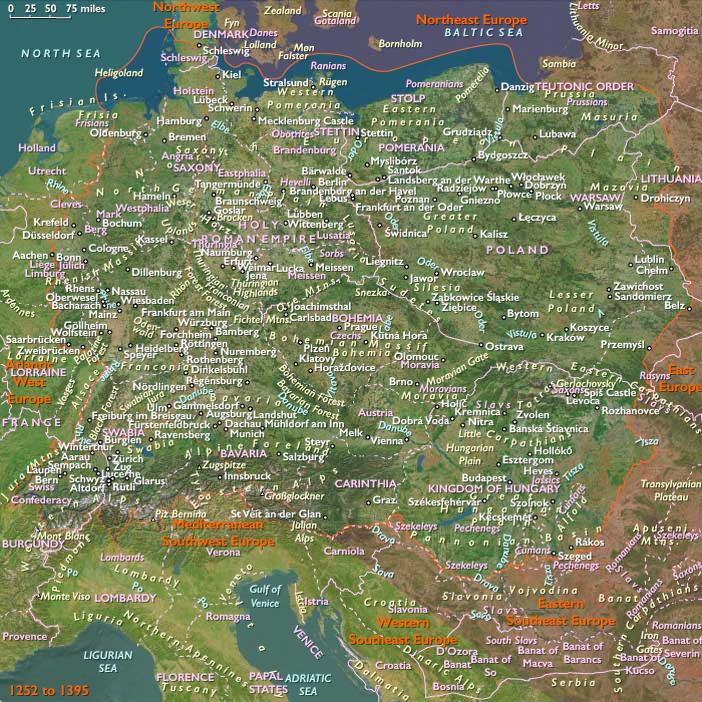
Subregions
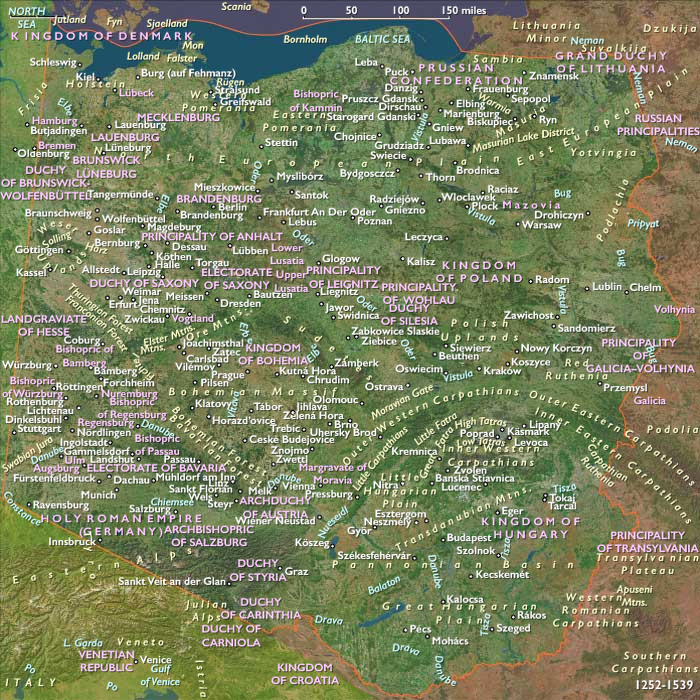
Years: 1276 - 1287
People
Groups
- Polytheism (“paganism”)
- Saxons
- Germans
- Hungarian people
- Wends, or Sorbs (West Slavs)
- Christianity, Chalcedonian
- Bavarians (West Germanic tribe)
- Thuringia, Duchy of
- Saxony, Duchy of
- Holy Roman Empire
- Czechs [formerly Bohemians] (West Slavs)
- Slovaks (West Slavs)
- Carinthia, Duchy of
- Hungary, Kingdom of
- Cuman people, or Western Kipchaks, also called Polovtsy, Polovtsians)
- Poland during the period of fragmentation, Kingdom of
- Poland, Greater
- Mazovia, Duchy of
- Brandenburg (Ascanian) Margravate of
- Bohemia, Kingdom of
- Styria, Duchy of
- Ordensstaat (Monastic state of the Teutonic Knights)
- Bavaria, Lower, Duchy of
- Bavaria, Upper, Duchy of
- Galicia–Volhynia, Kingdom of
Topics
- Ostsiedlung (German: Settlement in the East), a.k.a. German eastward expansion
- Poland, Fragmentation of
- Marchfeld, Battle of
Commodoties
Subjects
Regions
Subregions