
East Central Europe (1264–1275 CE): Bohemian Dominance …
Years: 1264 - 1275
East Central Europe (1264–1275 CE): Bohemian Dominance under Ottokar II, War of the Thuringian Succession, Hungarian Instability, Polish Fragmentation, and Austrian Consolidation
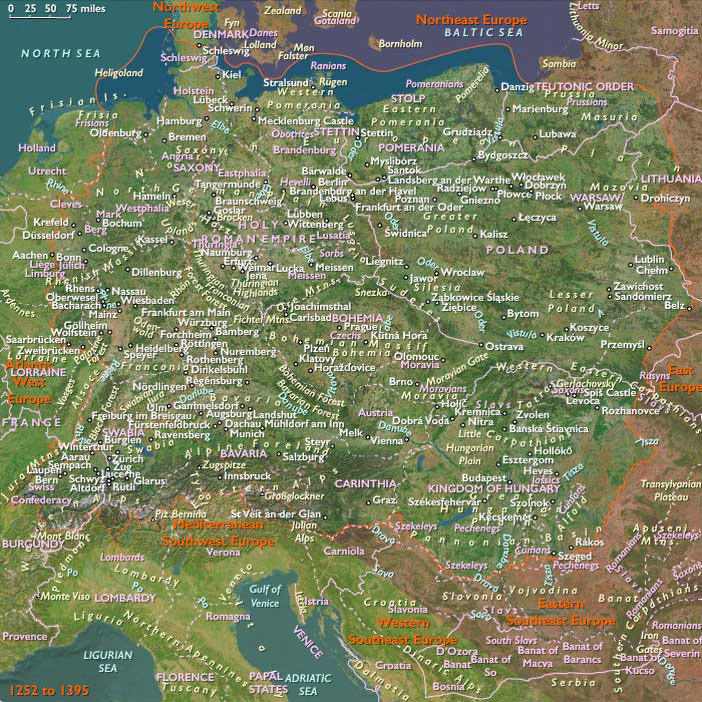
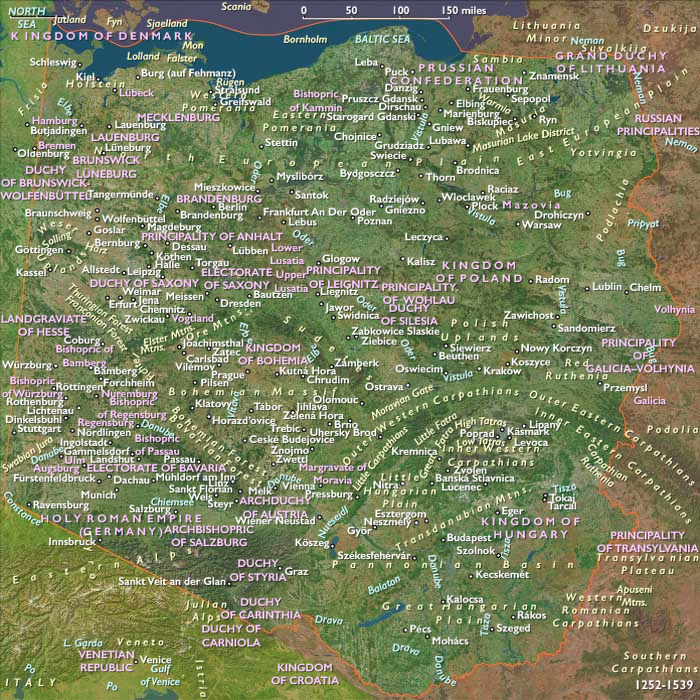
Between 1264 and 1275 CE, East Central Europe—encompassing modern-day Poland, Czechia, Slovakia, Hungary, and eastern parts of Germany and Austria east of 10°E and north of the defined southeastern boundary—experienced pivotal transformations. Characterized by significant territorial expansions of Bohemia under Ottokar II Přemysl, the turbulent War of the Thuringian Succession, continued internal instability in Hungary, persistent Polish fragmentation, and consolidation in Austrian lands, this era reshaped regional power dynamics. The influence of prominent duchies and principalities, notably in Silesia, Bavaria, Styria, Carinthia, and Mecklenburg, further defined regional politics.
Political and Military Developments
Bohemian Dominance under Ottokar II Přemysl
-
King Ottokar II Přemysl (r. 1253–1278) of Bohemia reached his territorial zenith, dominating Austria, Styria, and Carinthia. By 1270, his control extended significantly across Central Europe, bringing these lands under strong Přemyslid influence.
-
Ottokar’s assertive policies increasingly alarmed regional competitors, particularly the emerging Habsburg interests and neighboring duchies, laying foundations for future conflicts within the Holy Roman Empire.
War of the Thuringian Succession (1247–1264)
-
The protracted War of the Thuringian Succession, concluding in 1264, significantly reshaped political dynamics in eastern Germany. Following the extinction of the Ludovingian line, the conflict primarily involved the Houses of Wettin, Brabant, and Hesse, drastically realigning power structures in Thuringia.
-
By the war’s end, Thuringia largely fell under Wettin control, solidifying their authority and expanding their influence significantly within the eastern German territories.
Hungarian Aristocratic Conflicts under Béla IV and Stephen V
-
Hungary grappled with intense internal feudal strife. King Béla IV (d. 1270) faced persistent challenges from powerful aristocrats and from his son Stephen V (r. 1270–1272), whose brief reign perpetuated feudal fragmentation, undermining central royal authority.
-
The resultant weakening of Hungarian unity created vulnerabilities, exploited notably by Ottokar II and competing regional powers.
Polish Fragmentation and the Silesian Principalities
-
Poland remained politically fragmented into competing duchies, prominently in Silesia. Duchies such as Legnica (Leignitz), Wohlau, and Wrocław, under local Piast princes, continued developing independently, fostering regional prosperity despite persistent political divisions.
-
In southeastern Poland, the principality of Galicia-Volhynia solidified its autonomy, navigating diplomatically between regional powers, including Hungary, Bohemia, and Mongol-influenced Rus territories.
Austrian Consolidation under Přemyslid Rule
-
Austria solidified economically and politically under Bohemian authority. Přemyslid governance notably strengthened Vienna as an essential economic and administrative hub within the Holy Roman Empire.
Expansion and Consolidation in Brandenburg and Mecklenburg
-
The Margraviate of Brandenburg, under the House of Ascania, intensified its eastward territorial expansion, deeply embedding German settlement patterns (Ostsiedlung) in former Slavic territories.
-
The emerging Duchy of Mecklenburg, benefiting from economic integration with Hanseatic trade routes, solidified regional influence, setting foundations for future regional prominence.
Economic and Technological Developments
Flourishing Commerce and Hanseatic Trade
-
Economic prosperity continued through expanding trade networks connecting the Baltic region, Western Europe, and the Mediterranean. Key cities, notably Lübeck, Rostock, Toruń, and Gdańsk, prospered as critical centers of Hanseatic commerce.
-
Urban centers experienced significant economic and infrastructural growth, driven by intensified regional and long-distance trade.
Agricultural Productivity and Technological Advancements
-
Agricultural practices advanced notably, with improved plows, extensive use of crop rotation, and better livestock management. These innovations enhanced productivity, supporting population growth and urban expansion throughout East Central Europe.
Cultural and Artistic Developments
Bohemian and Austrian Cultural Flourishing
-
Under Ottokar II, Prague and Vienna emerged as significant cultural and intellectual centers, promoting Gothic architecture, illuminated manuscripts, and vibrant courtly culture.
-
The Přemyslid court actively patronized scholars and artists, elevating regional cultural prominence.
Polish and Silesian Regional Artistic Vitality
-
Despite political fragmentation, the Polish duchies, particularly in Silesia, maintained distinct regional cultural identities through vibrant monastic manuscript production, ecclesiastical architecture, and artistic patronage.
Hungarian Ecclesiastical Patronage
-
Hungarian instability contrasted notably with sustained cultural achievements fostered by ecclesiastical institutions, notably in Esztergom and Kalocsa, preserving continuity in artistic and religious traditions.
Settlement and Urban Development
Urban Expansion and Fortifications
-
Ottokar II significantly expanded urban infrastructure, particularly in Vienna and Prague, reinforcing their roles as major political and economic hubs. Towns throughout Austria, Styria, and Carinthia similarly benefited from Přemyslid governance and investment.
-
Polish duchies, notably in Silesia, continued urban expansion through the granting of town charters, facilitating regional economic prosperity and stability despite fragmented political authority.
Germanic Colonization (Ostsiedlung)
-
Significant Germanic eastward migration continued, profoundly shaping settlement patterns, urbanization, and economic life in Brandenburg, Mecklenburg, Lusatia, and Silesian regions, reinforcing demographic shifts and economic integration.
Social and Religious Developments
Ecclesiastical Influence and Institutions
-
Ecclesiastical institutions, including the Archbishopric of Salzburg and the bishoprics of Passau, Regensburg, and Bamberg, expanded regional influence through administrative, educational, economic, and cultural activities.
-
The Church significantly shaped regional governance and social identity, reinforcing Latin Christian cultural cohesion.
Aristocratic Consolidation and Feudal Structures
-
Aristocratic power strengthened across the region, especially in Hungary, Bohemia, Silesia, and Thuringia. The conclusion of the War of the Thuringian Succession significantly elevated aristocratic dominance in Thuringia, influencing feudal governance structures and political alliances throughout eastern Germany.
Long-Term Consequences and Historical Significance
The era 1264–1275 CE marked critical realignments in East Central Europe. The peak of Bohemian territorial dominance under Ottokar II reshaped regional geopolitics significantly. The resolution of the Thuringian Succession War realigned power in eastern Germany, strengthening the Wettin position in Thuringia. Hungarian internal conflicts undermined centralized royal authority, creating vulnerabilities exploited by neighboring powers. Continued Polish fragmentation fostered enduring regional identities. Economic prosperity accelerated through intensified trade and Germanic settlement, notably in Brandenburg and Mecklenburg, significantly influencing the region’s medieval trajecto
People
Groups
- Polytheism (“paganism”)
- Franks
- Saxons
- Germans
- Hungarian people
- Wends, or Sorbs (West Slavs)
- Christianity, Chalcedonian
- Bavarians (West Germanic tribe)
- Polans, Western (West Slavic tribe)
- Thuringia, Duchy of
- Carantania
- Carantanians
- Saxony, Duchy of
- Germany, Kingdom of (within the Holy Roman Empire)
- Holy Roman Empire
- German, or Ottonian (Roman) Empire
- Czechs [formerly Bohemians] (West Slavs)
- Slovaks (West Slavs)
- Austria, Margravate of
- Carinthia, Duchy of
- Hungary, Kingdom of
- Poland of the first Piasts, Kingdom of
- Mongols
- Poland, Greater
- Austria, Archduchy of
- Brandenburg (Ascanian) Margravate of
- Bohemia, Kingdom of
- Styria, Duchy of
- Mongol Empire
- Ordensstaat (Monastic state of the Teutonic Knights)
- Bavaria, Lower, Duchy of
- Bavaria, Upper, Duchy of
- Galicia–Volhynia, Kingdom of
Topics
Commodoties
Subjects
Regions
Subregions
Years: 1264 - 1275
People
Groups
- Polytheism (“paganism”)
- Franks
- Saxons
- Germans
- Hungarian people
- Wends, or Sorbs (West Slavs)
- Christianity, Chalcedonian
- Bavarians (West Germanic tribe)
- Polans, Western (West Slavic tribe)
- Thuringia, Duchy of
- Carantania
- Carantanians
- Saxony, Duchy of
- Germany, Kingdom of (within the Holy Roman Empire)
- Holy Roman Empire
- German, or Ottonian (Roman) Empire
- Czechs [formerly Bohemians] (West Slavs)
- Slovaks (West Slavs)
- Austria, Margravate of
- Carinthia, Duchy of
- Hungary, Kingdom of
- Poland of the first Piasts, Kingdom of
- Mongols
- Poland, Greater
- Austria, Archduchy of
- Brandenburg (Ascanian) Margravate of
- Bohemia, Kingdom of
- Styria, Duchy of
- Mongol Empire
- Ordensstaat (Monastic state of the Teutonic Knights)
- Bavaria, Lower, Duchy of
- Bavaria, Upper, Duchy of
- Galicia–Volhynia, Kingdom of
Topics
Commodoties
Subjects
Regions
Subregions