
East Central Europe (136–147 CE): Stability under …
Years: 136 - 147
East Central Europe (136–147 CE): Stability under Antoninus Pius and Deepening Cross-Cultural Ties
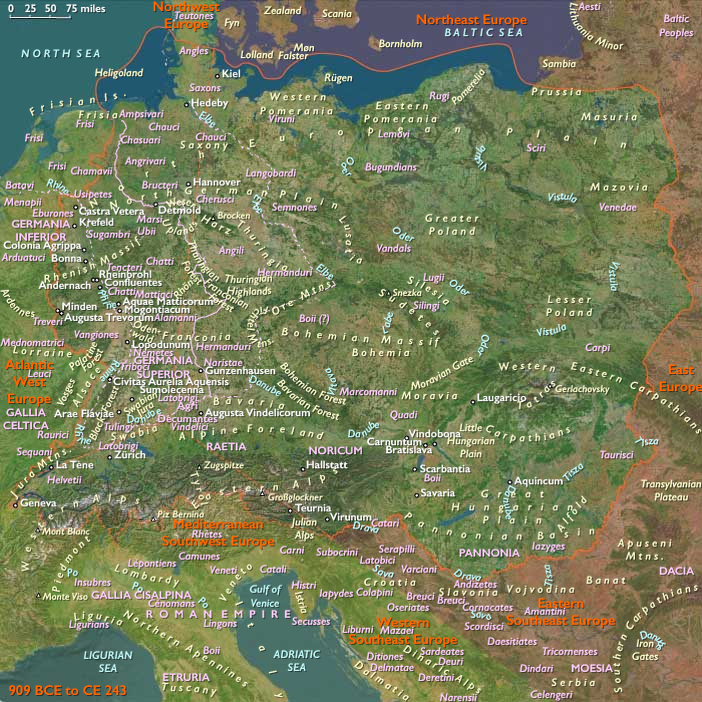
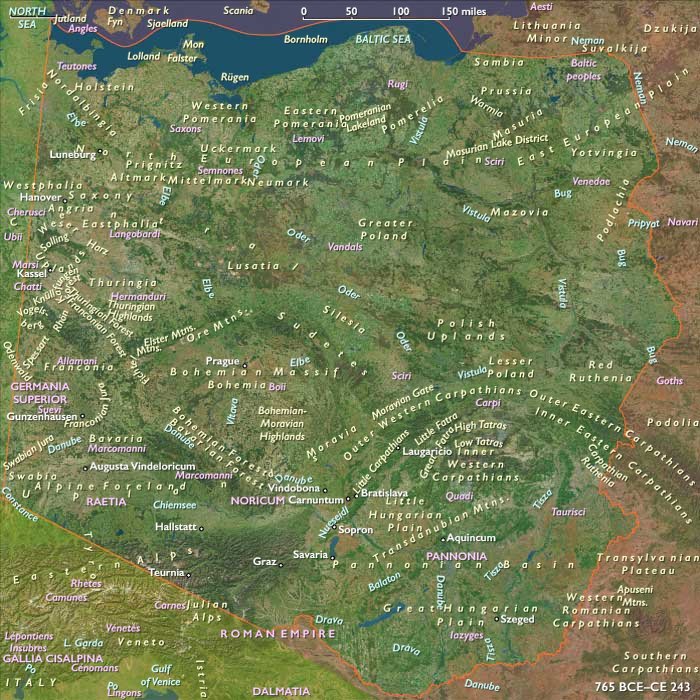
Between 136 and 147 CE, East Central Europe—encompassing Poland, Czechia, Slovakia, Hungary, and those portions of Germany and Austria lying east of 10°E and north of a line stretching from roughly 48.2°N at 10°E southeastward to the Austro-Slovenian border near 46.7°N, 15.4°E—continued to experience sustained stability and prosperity under stable Roman governance. Following the secure frontier policies of Emperor Hadrian (r. 117–138 CE), his successor, Emperor Antoninus Pius (r. 138–161 CE), maintained a peaceful and prosperous Roman presence along the Danube. This period was characterized by strengthened economic relations, stable diplomatic interactions with Germanic tribes, and the further consolidation of political structures within regional tribal confederations.
Political and Military Developments
Antoninus Pius and Frontier Stability
-
Emperor Antoninus Pius upheld and reinforced the frontier security system established by his predecessor, maintaining effective defenses in the provinces of Pannonia Superior, Pannonia Inferior, and Noricum.
-
The Roman frontier along the Danube remained secure, supported by a strong military presence, fortified installations, and well-managed administrative networks.
Diplomatic Relations with Germanic Tribes
-
Roman diplomatic policies promoted stability and peaceful coexistence with the principal Germanic confederations, especially the Marcomanni and Quadi, based primarily in modern Czechia and Slovakia, and neighboring regions.
-
The Langobardi (Lombards), residing north and northeast of the Roman provinces, maintained stable territorial control and actively engaged in peaceful trade and diplomatic relations with Roman frontier authorities.
Economic and Technological Developments
Prosperous Cross-Border Trade
-
Economic relationships flourished, supported by well-established trade routes linking Roman frontier towns (Carnuntum, Vindobona, Aquincum) with neighboring Germanic settlements. Goods including Roman manufactured ceramics, textiles, glassware, and metal goods were exchanged extensively for regional products like amber, grain, livestock, and iron artifacts.
-
The widespread circulation of Roman coins promoted greater economic integration and standardization across frontier markets.
Agricultural Improvements and Technological Exchange
-
Agricultural productivity benefited significantly from continued adoption and adaptation of Roman farming techniques, enhancing local prosperity and economic resilience.
-
Technological exchanges, especially in metallurgy, pottery, and tool-making, contributed to improvements in local craftsmanship and economic specialization among Germanic groups.
Cultural and Artistic Developments
Ongoing Cultural Integration
-
Deepened cultural interactions produced a diverse material culture reflecting combined Roman and Germanic traditions. The period's pottery, jewelry, and metalwork reveal blended artistic influences, signifying an increasingly integrated frontier cultural identity.
Artistic Excellence and Craftsmanship
-
Local artisans, benefiting from sustained economic prosperity, produced sophisticated jewelry, weaponry, and domestic artifacts, creatively integrating Roman artistic styles with traditional Germanic motifs.
Settlement and Urban Development
Expansion of Roman Frontier Towns
-
Roman frontier settlements such as Carnuntum, Vindobona, and Aquincum continued to thrive as vibrant administrative, economic, and cultural centers, attracting traders, artisans, and military personnel.
Stability of Germanic Villages
-
Germanic settlements north of the frontier expanded modestly, remaining stable and prosperous. Communities continued to grow around agricultural villages and localized production sites, enjoying increased wealth from sustained trade relations.
Social and Religious Developments
Tribal Leadership and Stability
-
Germanic tribes maintained hierarchical social structures led by powerful warrior elites and chieftains whose authority was reinforced through trade alliances and diplomatic relations with Roman authorities.
Continued Religious Practices and Syncretism
-
Religious practices among Germanic groups continued to emphasize traditional nature worship, ancestor veneration, and communal rituals. Increasing Roman cultural influence introduced new religious concepts, fostering gradual religious syncretism.
Long-Term Consequences and Historical Significance
The era from 136 to 147 CE, defined by Emperor Antoninus Pius's policies, brought continued stability, prosperity, and cultural exchange to East Central Europe. The secure Danube frontier facilitated thriving trade and productive diplomatic relations, significantly strengthening economic, political, and cultural ties between Roman provinces and Germanic communities. These conditions contributed to the ongoing development of regional identities, enhanced technological skills, and laid critical foundations for the enduring integration and future stability of East Central Europe's historical trajectory.
People
Groups
- Marcomanni (Germanic tribe)
- Lombards (West Germanic tribe)
- Quadi (Germanic tribe)
- Germans
- Noricum (Roman province)
- Roman Empire (Rome): Nerva-Antonine dynasty
- Pannonia Superior (Roman province)
- Pannonia Inferior (Roman province)
Topics
Commodoties
Subjects
Regions
Subregions
Related Events
Showing 10 events out of 61128 total
Years: 136 - 147
People
Groups
- Marcomanni (Germanic tribe)
- Lombards (West Germanic tribe)
- Quadi (Germanic tribe)
- Germans
- Noricum (Roman province)
- Roman Empire (Rome): Nerva-Antonine dynasty
- Pannonia Superior (Roman province)
- Pannonia Inferior (Roman province)
Topics
Commodoties
Subjects
Regions
Subregions