
East Central Europe (1240–1251 CE): Mongol Invasion …
Years: 1240 - 1251
East Central Europe (1240–1251 CE): Mongol Invasion and Aftermath, Rebuilding under Béla IV, Polish Fragmentation after Legnica, Bohemian Stability, and Austria’s Babenberg Decline
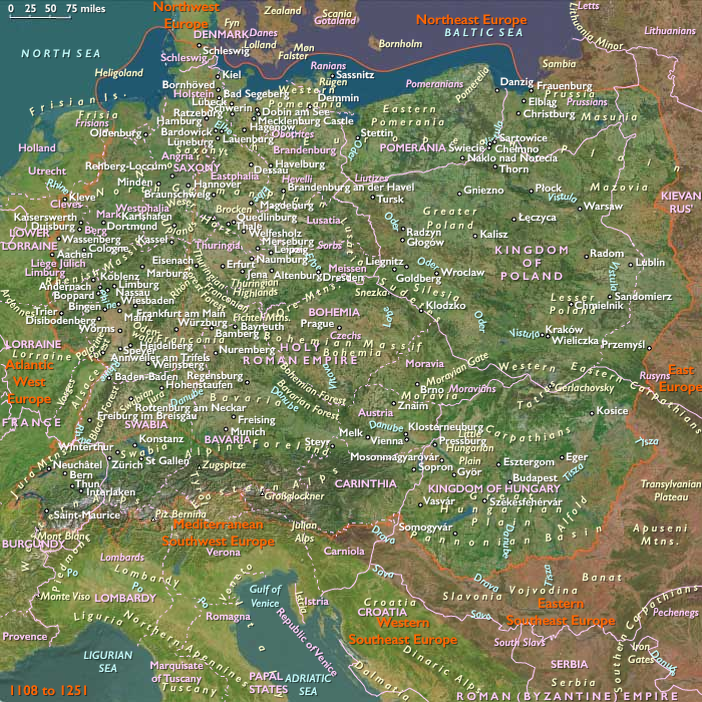
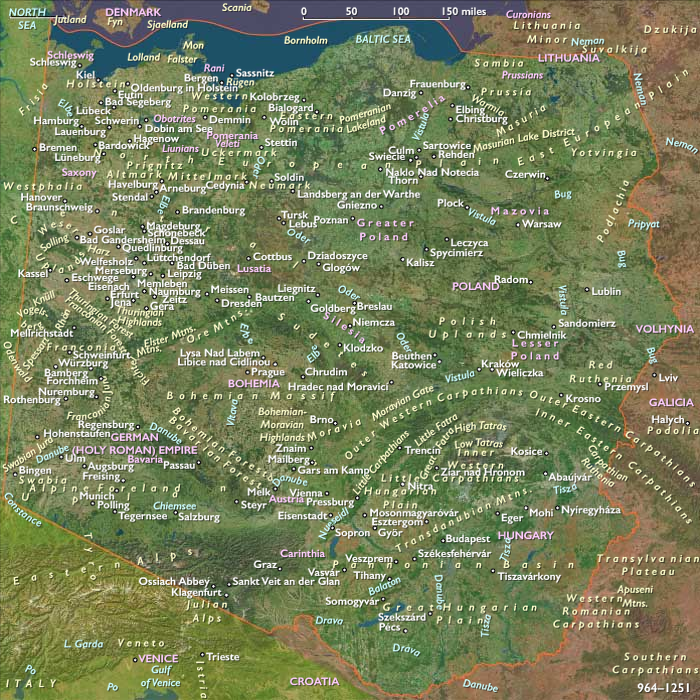
Between 1240 and 1251 CE, East Central Europe—including modern-day Poland, Czechia, Slovakia, Hungary, and eastern regions of Germany and Austria east of 10°E and north of the defined southeastern boundary—experienced unprecedented turmoil, upheaval, and profound transformation due to the devastating Mongol invasion (1241–1242). The invasion dramatically reshaped regional power dynamics, political structures, and demographic landscapes. Hungary and Poland bore the brunt of Mongol destruction but subsequently entered phases of rebuilding and political realignment. Bohemia remained relatively stable under Wenceslaus I Přemysl, while Austria faced significant instability and dynastic decline following the end of the Babenberg dynasty. These developments had profound, lasting effects on regional governance, settlement patterns, and cultural identities.
Political and Military Developments
Devastating Mongol Invasion (1241–1242)
-
In 1241, Batu Khan’s Mongol armies swept across East Central Europe, causing catastrophic destruction. Major battles included the decisive defeats at Legnica (Poland) and Mohi (Hungary) in 1241, leading to mass casualties, widespread destruction, and significant territorial devastation.
-
Poland’s fragmented duchies suffered severely, notably in Silesia, where Duke Henry II the Pious fell at Legnica. Hungarian forces under King Béla IV (r. 1235–1270) were decisively defeated at Mohi, resulting in temporary royal exile and massive demographic losses.
Hungarian Reconstruction under Béla IV
-
Following the Mongol withdrawal in 1242, Béla IV initiated extensive reconstruction, fortification programs, and administrative reforms to rebuild Hungary’s political stability and security. He fostered new fortified towns and encouraged immigration and settlement to replenish population losses.
-
Béla IV’s recovery efforts fundamentally reshaped Hungary’s political structures, significantly increasing urban fortification and royal administrative reforms.
Polish Fragmentation Intensifies after Legnica
-
After the Battle of Legnica (1241) and the death of Henry II the Pious, Poland’s political fragmentation intensified. Silesia splintered further among Henry’s heirs, exacerbating regional rivalry and undermining previous unity efforts.
-
Silesian duchies, Greater Poland, Masovia, and Lesser Poland operated independently, deepening political decentralization and reducing unified governance.
Continued Stability in Bohemia under Wenceslaus I
-
Bohemia, under King Wenceslaus I (r. 1230–1253), managed to avoid direct Mongol devastation. Wenceslaus capitalized on this stability, continuing territorial consolidation, strengthening administrative governance, and maintaining regional political influence within the Holy Roman Empire.
Austrian Babenberg Dynasty Ends
-
In 1246, the Babenberg dynasty ended abruptly with the death of Duke Frederick II the Quarrelsome in battle. Austria plunged into dynastic uncertainty and instability, triggering a prolonged succession crisis that would reshape the duchy’s future within Central Europe.
Imperial Influence and Regional Instability
-
Emperor Frederick II’s (r. 1212–1250) declining authority in his final years contributed to regional instability, affecting political alliances and complicating dynastic succession disputes, notably in Austria and neighboring regions.
Economic and Technological Developments
Devastation and Economic Disruption from Mongol Invasions
-
The Mongol invasions caused severe economic disruption, widespread destruction of trade networks, agricultural devastation, and depopulation, especially in Hungary and Poland. Recovery efforts gradually restored commerce, though long-term impacts remained significant.
Reconstruction, Settlement, and Technological Advances
-
Post-invasion recovery saw significant rebuilding, settlement initiatives, and urban fortifications. Agricultural productivity and technological innovations—including improved fortification methods—played crucial roles in regional reconstruction.
Cultural and Artistic Developments
Hungarian Cultural Resilience and Reconstruction
-
Despite severe destruction, Béla IV strongly supported cultural restoration. Ecclesiastical architecture, manuscript illumination, and scholarly institutions gradually revived, reflecting Hungary’s resilient cultural identity and intellectual traditions.
Polish Cultural Continuity amid Fragmentation
-
Poland maintained significant cultural resilience, with monasteries and ecclesiastical institutions preserving cultural continuity, scholarship, and artistic traditions despite intensified fragmentation and political decentralization.
Bohemian Cultural Flourishing under Wenceslaus I
-
Bohemia, unaffected directly by the Mongol invasion, continued cultural and artistic development under Wenceslaus I. Prague’s significance as a center of manuscript production, ecclesiastical architecture, and scholarly activity notably increased.
Settlement and Urban Development
Hungarian Reconstruction and Urban Fortification under Béla IV
-
Béla IV initiated extensive rebuilding and urban fortification programs. New and existing towns, including Buda, Esztergom, and Visegrád, were substantially fortified, transforming Hungary’s urban landscape to better resist future invasions.
Continued Bohemian Urban Stability and Expansion
-
Bohemia’s urban centers, particularly Prague, remained stable, prospering commercially and culturally. Fortifications were reinforced strategically, and urban infrastructure continued developing, further enhancing regional prominence.
Austrian Instability and Urban Uncertainty
-
Following the Babenberg dynasty’s end (1246), Austrian urban growth temporarily slowed due to political uncertainty and dynastic instability. However, key centers like Vienna maintained essential administrative and economic functions, preserving continuity despite challenges.
Social and Religious Developments
Ecclesiastical Institutional Strength and Reconstruction
-
Ecclesiastical institutions played crucial roles in post-Mongol reconstruction, societal cohesion, and intellectual revival. Monasteries, bishoprics, and religious orders significantly influenced governance, education, and social recovery across East Central Europe.
Aristocratic Power, Social Transformation, and Urban Fortification
-
Aristocratic influence intensified due to the weakened royal authority from the Mongol invasion’s devastation. Nobility and local aristocrats played prominent roles in rebuilding, fortification, and regional governance, reshaping social and political structures.
Long-Term Consequences and Historical Significance
The era 1240–1251 CE was a transformative period for East Central Europe, marked by catastrophic destruction from the Mongol invasions and significant political realignments. Hungary under Béla IV undertook substantial reconstruction efforts, significantly altering its defensive strategies and urban landscapes. Poland faced deepened fragmentation following Legnica, hindering unified governance. Bohemia maintained political stability under Wenceslaus I, emerging with enhanced regional prominence. Austria’s Babenberg dynasty’s end introduced prolonged dynastic uncertainty. Collectively, these developments profoundly reshaped regional political, economic, social, and cultural structures, laying foundations for future medieval identities, governance patterns, and enduring legacies.
People
- Batu Khan
- Béla IV
- Frederick II
- Frederick II, Duke of Austria and Duke of Styria
- Henry II of Silesia
- Wenceslaus I of Bohemia
Groups
- Polytheism (“paganism”)
- Franks
- Saxons
- Germans
- Hungarian people
- Wends, or Sorbs (West Slavs)
- Christianity, Chalcedonian
- Bavarians (West Germanic tribe)
- Polans, Western (West Slavic tribe)
- Thuringia, Duchy of
- Carantania
- Carantanians
- Saxony, Duchy of
- Bavaria, Ottonian Duchy of
- Holy Roman Empire
- German, or Ottonian (Roman) Empire
- Germany, Kingdom of (within the Holy Roman Empire)
- Carinthia, Duchy of
- Slovaks (West Slavs)
- Austria, Margravate of
- Czechs [formerly Bohemians] (West Slavs)
- Hungary, Kingdom of
- Poland of the first Piasts, Kingdom of
- Mongols
- Poland, Greater
- Austria, Archduchy of
- Bohemia, Kingdom of
- Mongol Empire
Topics
- Poland, Fragmentation of
- Mongol Conquests
- Mongol Invasion of Europe
- Mongol Invasion of Poland
- Legnica, (Liegnitz) or Wahlstadt, Battle of
- Mohi, Battle of
Commodoties
Subjects
Regions
Subregions
Related Events
Showing 10 events out of 26 total
Years: 1240 - 1251
People
- Batu Khan
- Béla IV
- Frederick II
- Frederick II, Duke of Austria and Duke of Styria
- Henry II of Silesia
- Wenceslaus I of Bohemia
Groups
- Polytheism (“paganism”)
- Franks
- Saxons
- Germans
- Hungarian people
- Wends, or Sorbs (West Slavs)
- Christianity, Chalcedonian
- Bavarians (West Germanic tribe)
- Polans, Western (West Slavic tribe)
- Thuringia, Duchy of
- Carantania
- Carantanians
- Saxony, Duchy of
- Bavaria, Ottonian Duchy of
- Holy Roman Empire
- German, or Ottonian (Roman) Empire
- Germany, Kingdom of (within the Holy Roman Empire)
- Carinthia, Duchy of
- Slovaks (West Slavs)
- Austria, Margravate of
- Czechs [formerly Bohemians] (West Slavs)
- Hungary, Kingdom of
- Poland of the first Piasts, Kingdom of
- Mongols
- Poland, Greater
- Austria, Archduchy of
- Bohemia, Kingdom of
- Mongol Empire
Topics
- Poland, Fragmentation of
- Mongol Conquests
- Mongol Invasion of Europe
- Mongol Invasion of Poland
- Legnica, (Liegnitz) or Wahlstadt, Battle of
- Mohi, Battle of
Commodoties
Subjects
Regions
Subregions