
East Central Europe (1216–1227 CE): Golden Bull …
Years: 1216 - 1227
East Central Europe (1216–1227 CE): Golden Bull of Hungary, Bohemian Consolidation, Polish Regional Rivalries, and Babenberg Influence in Austria
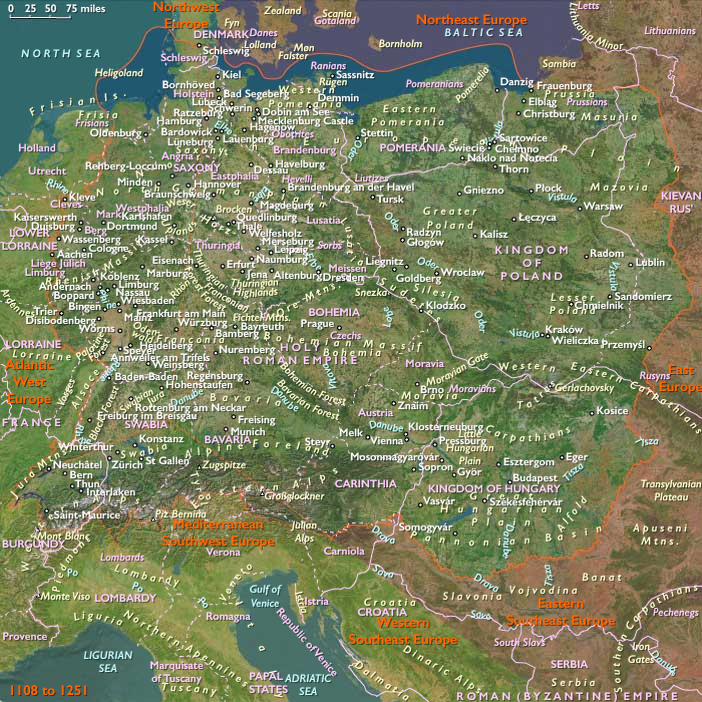
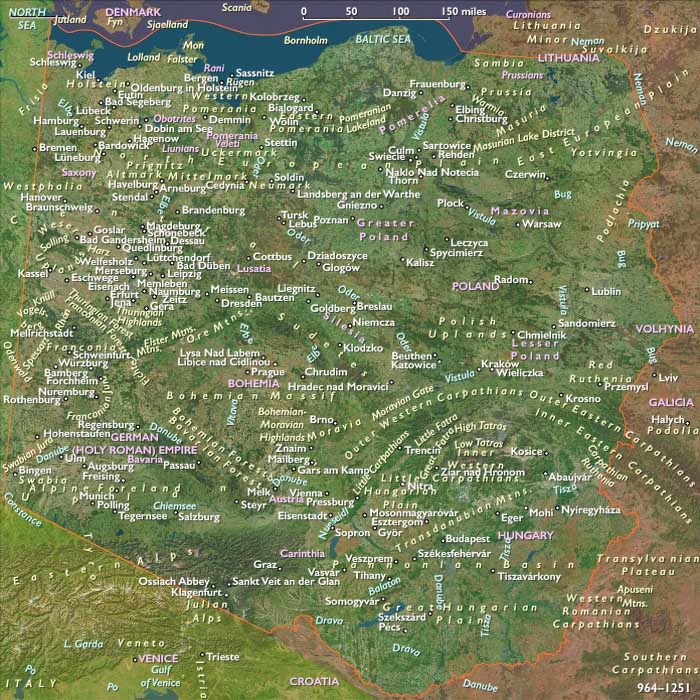
Between 1216 and 1227 CE, East Central Europe—encompassing modern-day Poland, Czechia, Slovakia, Hungary, and the eastern regions of Germany and Austria east of 10°E and north of the defined southeastern boundary—witnessed pivotal political and institutional developments. Hungary under Andrew II saw profound social and political change through the Golden Bull of 1222, Bohemia further solidified royal authority under Ottokar I Přemysl, Polish territories experienced intensified regional rivalry, and Austria flourished culturally and politically under Duke Leopold VI of the Babenberg dynasty. Collectively, these events significantly shaped regional governance, social structures, and cultural dynamics.
Political and Military Developments
Hungary’s Golden Bull and Aristocratic Power under Andrew II
-
In 1222, King Andrew II (r. 1205–1235) issued the Golden Bull of Hungary, a landmark charter limiting royal power, guaranteeing noble privileges, and establishing foundational political rights. This document significantly reshaped Hungarian governance by solidifying aristocratic authority and curbing royal absolutism, echoing England’s Magna Carta (1215).
-
Andrew’s rule, though marked by occasional internal conflict, significantly expanded Hungarian regional influence, notably in frontier regions such as Transylvania and along the Adriatic coast.
Consolidation of Bohemian Royal Authority under Ottokar I
-
Under Ottokar I Přemysl (r. 1197–1230), Bohemia saw significant political stability and institutional development. The Golden Bull of Sicily (1212) continued to define his reign, confirming hereditary royal authority and enhancing Přemyslid autonomy within the Holy Roman Empire.
-
Ottokar’s effective governance and diplomatic skill solidified Bohemian territorial integrity and political stability, elevating Prague as a crucial regional political and cultural hub.
Intensified Polish Regional Rivalries and Silesian Strength
-
Poland remained deeply fragmented, with autonomous Piast duchies increasingly competing for dominance. Henry I the Bearded of Silesia (r. 1201–1238) emerged prominently, expanding influence over neighboring territories and elevating Silesia as a major power center within fragmented Poland.
-
Despite Henry’s successes, regional rivalry and persistent dynastic disputes among Polish duchies continued to limit centralized royal authority.
Austria’s Continued Prosperity under Leopold VI
-
Duke Leopold VI of Austria (r. 1198–1230) maintained stability, prosperity, and cultural vibrancy within Austria. His reign was characterized by effective administration, territorial security, economic flourishing, and active participation in European crusading politics.
-
Leopold significantly strengthened Austria’s territorial integrity, enhancing Vienna’s political prominence within East Central Europe.
Imperial Influence of Frederick II
-
Emperor Frederick II (r. 1212–1250) expanded his political influence across East Central Europe, notably affecting Bohemia, Hungary, and Austria. Regional rulers navigated shifting alliances, with imperial relations significantly impacting regional stability and governance.
Economic and Technological Developments
Regional Economic Expansion and Commercial Vitality
-
East Central Europe experienced robust economic expansion driven by thriving trade networks connecting Baltic, Mediterranean, Byzantine, and Western European markets. Major urban centers, including Prague, Vienna, Esztergom, Kraków, and Wrocław, flourished as prosperous trade hubs.
Agricultural Productivity and Technological Advancements
-
Continued adoption of advanced agricultural techniques—improved plowing methods, systematic crop rotation, and enhanced livestock management—significantly increased productivity, supporting urbanization, population growth, and economic prosperity.
Cultural and Artistic Developments
Cultural Flourishing in Hungary under Andrew II
-
Andrew II strongly supported ecclesiastical and cultural institutions, fostering extensive manuscript production, architectural projects, and scholarly activities. The artistic and intellectual vibrancy of Hungary notably increased, influenced by Western European and Byzantine traditions.
Bohemian Cultural and Ecclesiastical Vitality under Ottokar I
-
Bohemia, particularly Prague, experienced a cultural revival through royal patronage of monasteries, manuscript illumination, architectural development, and scholarly activities, establishing it as a significant intellectual and cultural center.
Silesian Cultural and Artistic Prominence under Henry the Bearded
-
Silesia under Henry I the Bearded emerged as a leading cultural center within fragmented Poland, marked by substantial monastic foundations, artistic patronage, manuscript production, and urban development, significantly influencing broader Polish culture.
Settlement and Urban Development
Hungarian Urban Growth under Andrew II
-
Hungarian towns such as Esztergom, Székesfehérvár, and Buda continued to expand significantly, supported by stable governance, fortified infrastructure, thriving commerce, and active royal patronage.
Bohemian Urban Consolidation and Expansion
-
Under Ottokar I, Prague and other Bohemian cities saw significant infrastructure improvements, commercial expansion, and strengthened administrative structures, reinforcing their roles as vital regional economic and political hubs.
Austrian Urban Prosperity under Leopold VI
-
Austria’s urban centers, notably Vienna, flourished economically and politically under Leopold VI’s effective governance, enhanced fortifications, administrative efficiency, and expanded trade networks, significantly influencing regional economic stability.
Social and Religious Developments
Ecclesiastical Institutional Expansion and Influence
-
The region experienced extensive ecclesiastical institutional growth, shaping social organization, governance, and education. Monasteries, bishoprics, and religious orders played central roles in regional cultural continuity, intellectual development, and societal cohesion.
Aristocratic Dominance and Dynastic Governance
-
Aristocratic power continued to influence governance significantly. The Golden Bull in Hungary explicitly strengthened noble rights and power. Bohemia under Ottokar, Austria under Leopold, and Silesia under Henry highlighted the pivotal role of dynastic and aristocratic leadership in regional governance structures.
Long-Term Consequences and Historical Significance
The era 1216–1227 CE significantly influenced East Central Europe’s political institutions, economic prosperity, and cultural vitality. Hungary’s Golden Bull of 1222 established lasting legal precedents that profoundly shaped Hungarian politics. Bohemia’s consolidation under Ottokar I, Silesia’s regional prominence under Henry the Bearded amid persistent Polish fragmentation, and Austria’s stable prosperity under Leopold VI significantly impacted regional stability, governance, and identity. Collectively, these developments formed enduring foundations for the political, economic, and cultural landscapes characterizing East Central Europe throughout the subsequent medieval period.
People
Groups
- Polytheism (“paganism”)
- Franks
- Saxons
- Germans
- Hungarian people
- Wends, or Sorbs (West Slavs)
- Christianity, Chalcedonian
- Bavarians (West Germanic tribe)
- Polans, Western (West Slavic tribe)
- Thuringia, Duchy of
- Carantania
- Carantanians
- Saxony, Duchy of
- Bavaria, Ottonian Duchy of
- Holy Roman Empire
- German, or Ottonian (Roman) Empire
- Germany, Kingdom of (within the Holy Roman Empire)
- Carinthia, Duchy of
- Austria, Margravate of
- Slovaks (West Slavs)
- Czechs [formerly Bohemians] (West Slavs)
- Hungary, Kingdom of
- Poland of the first Piasts, Kingdom of
- Poland, Greater
- Austria, Archduchy of
- Bohemia, Kingdom of
Topics
Commodoties
Subjects
Regions
Subregions
Related Events
Showing 10 events out of 47296 total
Years: 1216 - 1227
People
Groups
- Polytheism (“paganism”)
- Franks
- Saxons
- Germans
- Hungarian people
- Wends, or Sorbs (West Slavs)
- Christianity, Chalcedonian
- Bavarians (West Germanic tribe)
- Polans, Western (West Slavic tribe)
- Thuringia, Duchy of
- Carantania
- Carantanians
- Saxony, Duchy of
- Bavaria, Ottonian Duchy of
- Holy Roman Empire
- German, or Ottonian (Roman) Empire
- Germany, Kingdom of (within the Holy Roman Empire)
- Carinthia, Duchy of
- Austria, Margravate of
- Slovaks (West Slavs)
- Czechs [formerly Bohemians] (West Slavs)
- Hungary, Kingdom of
- Poland of the first Piasts, Kingdom of
- Poland, Greater
- Austria, Archduchy of
- Bohemia, Kingdom of
Topics
Commodoties
Subjects
Regions
Subregions