
East Central Europe (1180–1191 CE): Heightened Hungarian …
Years: 1180 - 1191
East Central Europe (1180–1191 CE): Heightened Hungarian Influence under Béla III, Přemyslid Succession in Bohemia, Intensified Polish Regionalism, and Leopold V’s Austrian Expansion
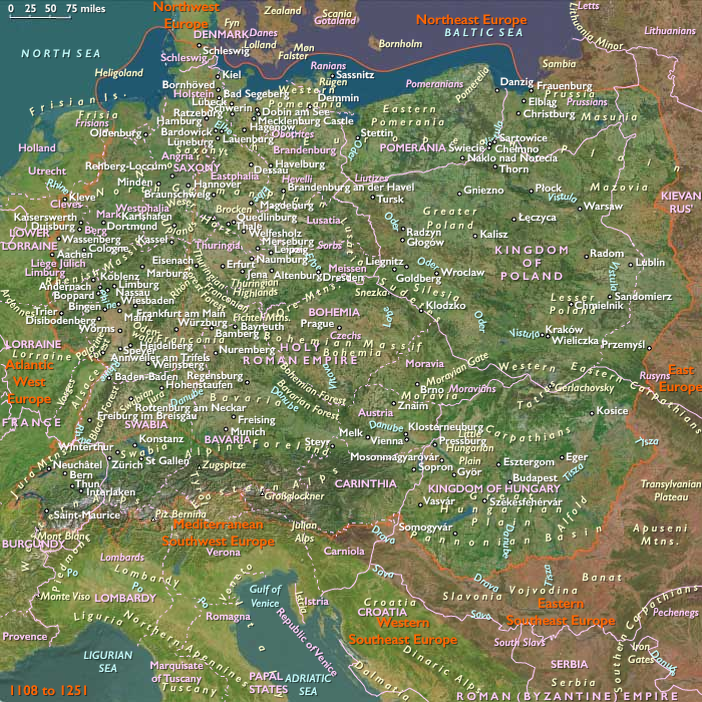
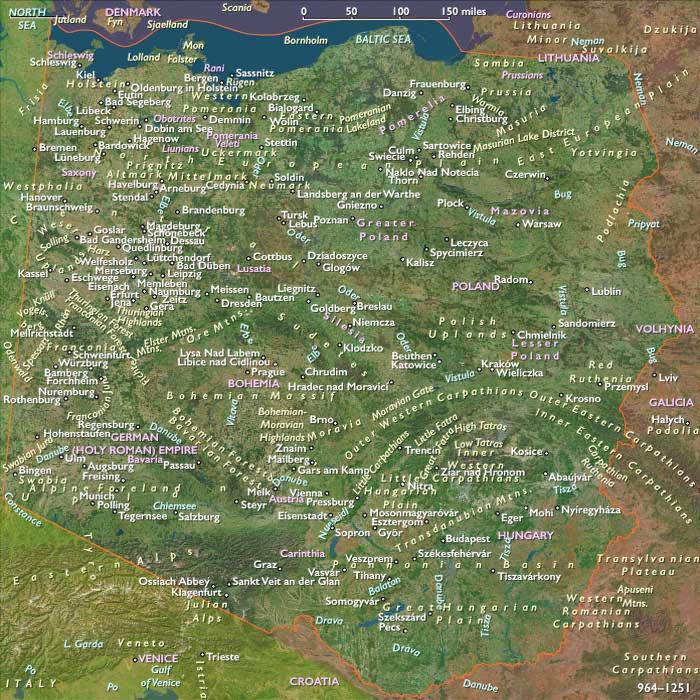
Between 1180 and 1191 CE, East Central Europe—encompassing modern-day Poland, Czechia, Slovakia, Hungary, and the eastern regions of Germany and Austria east of 10°E and north of the defined southeastern boundary—experienced significant political and territorial developments. Hungary flourished under Béla III’s effective administration, becoming a dominant regional power; Bohemia navigated complex succession challenges after Vladislaus II; Polish territories remained fragmented and increasingly regionalized; and Austria expanded politically and territorially under Duke Leopold V of the Babenberg dynasty. Collectively, these developments shaped regional stability, economic growth, and cultural vitality.
Political and Military Developments
Hungarian Ascendancy under Béla III
-
King Béla III (r. 1172–1196) secured Hungary’s position as one of Central Europe’s leading kingdoms, fostering internal stability, robust administration, and extensive diplomatic relations. His reign marked significant territorial expansion, notably in Dalmatia and the Balkans.
-
Béla III’s active diplomacy with Byzantium, the Holy Roman Empire, and neighboring Slavic territories established Hungary as a major political player, significantly influencing regional affairs.
Přemyslid Succession and Political Realignment in Bohemia
-
After Vladislaus II’s abdication in 1172, Bohemia experienced complex dynastic succession struggles among his heirs, leading to political instability under rulers like Bedřich (Frederick) and later Conrad II Otto. These internal conflicts weakened centralized royal authority, challenging Přemyslid dominance and temporarily reducing Bohemia’s regional influence.
Polish Fragmentation and Increasing Regionalism
-
Poland remained politically fragmented into autonomous Piast duchies, with principalities such as Silesia, Lesser Poland, Masovia, and Greater Poland increasingly pursuing independent political and economic interests.
-
Regional rivalries intensified, limiting unified royal authority and reinforcing a fragmented political landscape dominated by local princes and nobility.
Austrian Territorial and Political Expansion under Leopold V
-
Duke Leopold V of Austria (r. 1177–1194) expanded Babenberg authority, strengthening Austrian territory and political influence within the Holy Roman Empire. His rule marked Austria’s enhanced autonomy, strategic territorial acquisitions, and solidified its political presence in regional affairs.
Continued Imperial Influence under Frederick Barbarossa
-
Emperor Frederick Barbarossa (r. 1152–1190) maintained significant political influence throughout East Central Europe, particularly in Bohemian succession affairs, Austrian ducal politics, and diplomatic relationships with Hungary. His death in 1190 on the Third Crusade marked a notable turning point, leading to altered imperial relations with the region.
Economic and Technological Developments
Regional Economic Prosperity and Urban Growth
-
Economic growth continued, driven by flourishing trade networks connecting East Central Europe with broader European markets, including the Baltic, Byzantium, and Western Europe. Major urban centers expanded significantly, reflecting increased trade, commerce, and regional stability.
Agricultural Productivity and Technological Innovation
-
Agricultural advancements persisted, including improved farming techniques, iron plows, and expanded crop rotation. These innovations supported growing urban populations, regional prosperity, and economic stability.
Cultural and Artistic Developments
Hungarian Cultural Renaissance under Béla III
-
Béla III significantly patronized cultural and ecclesiastical activities, commissioning architectural works, manuscript illumination, and scholarly pursuits. Byzantine and Western European influences profoundly shaped Hungary’s artistic and cultural identity during this period.
Přemyslid Cultural Continuity amid Political Challenges
-
Despite internal dynastic struggles, Bohemia’s ecclesiastical and monastic institutions continued cultural activities, preserving scholarly traditions and artistic production, notably in Prague and surrounding regions.
Polish Cultural Resilience in a Fragmented Landscape
-
Poland’s ecclesiastical institutions, monasteries, and regional cultural centers continued scholarly, religious, and artistic traditions, maintaining cultural continuity despite political fragmentation and regional divisions.
Settlement and Urban Development
Hungarian Urban Expansion and Infrastructure under Béla III
-
Béla III’s reign saw significant urban growth, especially in Esztergom, Buda, and Székesfehérvár, supported by enhanced administrative infrastructure, fortified settlements, and flourishing commerce, reflecting stable governance and regional influence.
Austrian Urban and Territorial Growth under Leopold V
-
Under Leopold V, Austrian urban centers, especially Vienna, expanded territorially, improving infrastructure, fortifications, and trade connections. Vienna notably grew in prominence as a regional administrative and commercial hub.
Stability and Growth in Polish and Bohemian Urban Centers
-
Despite internal instability, cities such as Kraków, Wrocław, and Prague sustained urban growth and economic stability, benefiting from vibrant regional trade networks and administrative continuity.
Social and Religious Developments
Strengthened Ecclesiastical Structures and Religious Influence
-
Christianity deepened its integration into governance, culture, and education across East Central Europe, supported by royal and ducal patronage in Hungary, Austria, and Bohemia. Religious institutions played central roles in cultural preservation and social organization.
Dynastic Stability and Aristocratic Authority
-
Aristocratic governance structures and dynastic influence continued to shape regional politics significantly. Hungarian royal stability under Béla III, Austrian strength under Leopold V, and Poland’s local aristocratic power underscored the continuing importance of nobility and dynastic structures.
Long-Term Consequences and Historical Significance
The era 1180–1191 CE represented a period of significant transformation and consolidation in East Central Europe. Hungary’s ascendancy under Béla III, Austria’s political expansion under Leopold V, Bohemia’s dynastic challenges, and Poland’s persistent regional fragmentation collectively defined regional political identities and territorial boundaries. These developments had lasting implications, shaping regional governance, cultural traditions, economic structures, and political dynamics that profoundly influenced East Central Europe’s medieval trajectory.
People
- Béla III of Hungary
- Conrad II Otto
- Frederick I, Holy Roman Emperor
- Frederick of Bohemia
- Leopold V
- Vladislaus II of Bohemia
Groups
- Polytheism (“paganism”)
- Franks
- Saxons
- Germans
- Hungarian people
- Wends, or Sorbs (West Slavs)
- Christianity, Chalcedonian
- Bavarians (West Germanic tribe)
- Polans, Western (West Slavic tribe)
- Thuringia, Duchy of
- Carantania
- Carantanians
- Saxony, Duchy of
- Bavaria, Ottonian Duchy of
- Germany, Kingdom of (within the Holy Roman Empire)
- German, or Ottonian (Roman) Empire
- Holy Roman Empire
- Austria, Margravate of
- Czechs [formerly Bohemians] (West Slavs)
- Slovaks (West Slavs)
- Carinthia, Duchy of
- Hungary, Kingdom of
- Poland of the first Piasts, Kingdom of
- Poland, Greater
- Austria, Archduchy of
- Bohemia, Kingdom of
- Bohemia, Duchy of
Topics
Commodoties
Subjects
Regions
Subregions
Related Events
Showing 10 events out of 48192 total
Years: 1180 - 1191
People
- Béla III of Hungary
- Conrad II Otto
- Frederick I, Holy Roman Emperor
- Frederick of Bohemia
- Leopold V
- Vladislaus II of Bohemia
Groups
- Polytheism (“paganism”)
- Franks
- Saxons
- Germans
- Hungarian people
- Wends, or Sorbs (West Slavs)
- Christianity, Chalcedonian
- Bavarians (West Germanic tribe)
- Polans, Western (West Slavic tribe)
- Thuringia, Duchy of
- Carantania
- Carantanians
- Saxony, Duchy of
- Bavaria, Ottonian Duchy of
- Germany, Kingdom of (within the Holy Roman Empire)
- German, or Ottonian (Roman) Empire
- Holy Roman Empire
- Austria, Margravate of
- Czechs [formerly Bohemians] (West Slavs)
- Slovaks (West Slavs)
- Carinthia, Duchy of
- Hungary, Kingdom of
- Poland of the first Piasts, Kingdom of
- Poland, Greater
- Austria, Archduchy of
- Bohemia, Kingdom of
- Bohemia, Duchy of
Topics
Commodoties
Subjects
Regions
Subregions