
East Central Europe (1168–1179 CE): Bohemia’s Royal …
Years: 1168 - 1179
East Central Europe (1168–1179 CE): Bohemia’s Royal Consolidation, Hungarian Stability under Béla III, Continued Polish Fragmentation, and the Strengthening of Austria under the Babenbergs
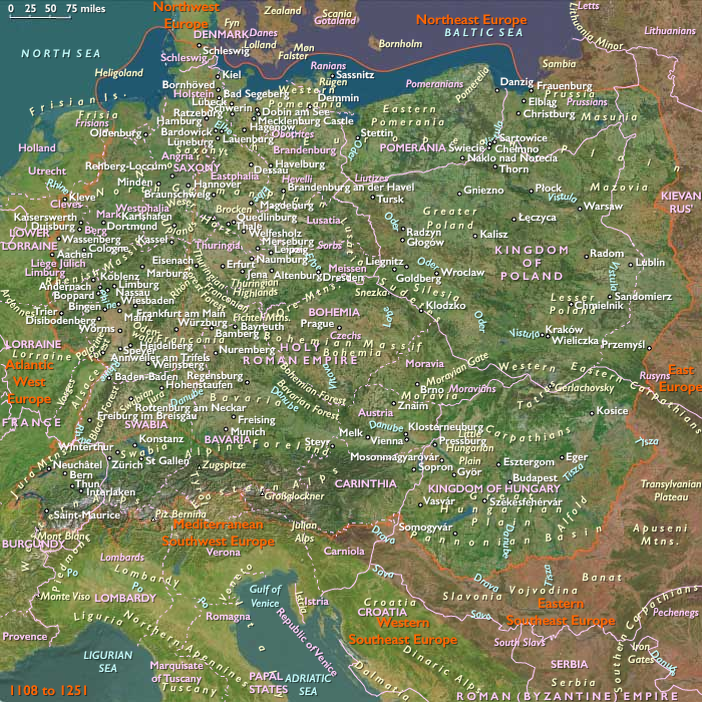
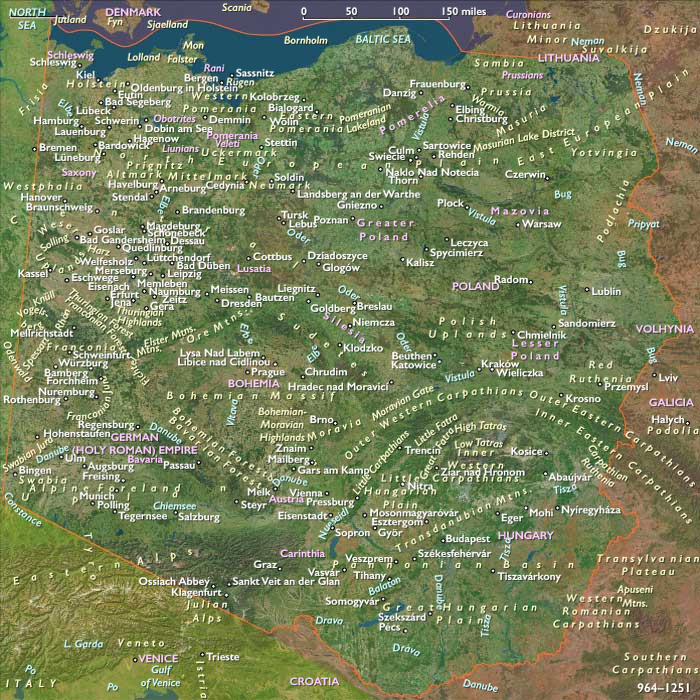
Between 1168 and 1179 CE, East Central Europe—including modern-day Poland, Czechia, Slovakia, Hungary, and the eastern regions of Germany and Austria east of 10°E and north of the defined southeastern boundary—experienced continued political consolidation and shifting regional dynamics. Bohemia saw royal authority strengthened under Vladislaus II; Hungary entered a prosperous era under Béla III; Poland’s fragmentation persisted, deepening regional autonomy; and Austria, newly elevated under the Babenbergs, solidified its identity and territorial influence. This era reinforced established kingdoms, intensified imperial involvement, and highlighted emerging political identities across the region.
Political and Military Developments
Bohemia under Vladislaus II: Royal Stability and Imperial Alliances
-
King Vladislaus II of Bohemia (r. 1140–1172) maintained strong royal authority with imperial support from Frederick Barbarossa, consolidating Přemyslid control and enhancing Prague’s position as a regional political center.
-
His successful governance ensured political stability and secured the Přemyslid dynasty’s long-term dominance, significantly shaping Bohemia’s medieval trajectory.
Hungarian Prosperity and Expansion under Béla III
-
In 1172, following brief succession conflicts after Géza II, Béla III (r. 1172–1196) ascended the throne, ushering in a period of considerable stability, administrative reform, and territorial expansion.
-
Béla’s reign marked increased diplomatic engagement with Byzantium and Western Europe, strengthening Hungary’s regional influence, internal governance, and economic prosperity.
Persistent Polish Fragmentation and Dynastic Rivalries
-
Poland remained deeply fragmented into autonomous Piast principalities, such as Silesia, Lesser Poland, Greater Poland, and Masovia, ruled independently by local princes. Persistent dynastic rivalries and territorial disputes limited unified royal authority, shaping Poland’s political landscape into competing regional power centers.
Strengthening of the Austrian Duchy under Henry II Jasomirgott
-
Under Duke Henry II Jasomirgott (r. 1141–1177), Austria strengthened its political identity and territorial coherence after elevation to duchy status in 1156. His rule solidified Austrian autonomy within the Holy Roman Empire, laying foundations for the Babenberg dynasty’s regional prominence.
Continued Imperial Influence under Frederick Barbarossa
-
Holy Roman Emperor Frederick Barbarossa (r. 1152–1190) maintained strong influence over regional politics, especially through alliances with Bohemia, overseeing the Austrian duchy, and managing imperial marches, profoundly shaping regional governance structures.
Economic and Technological Developments
Regional Economic Expansion and Prosperity
-
East Central Europe enjoyed continued economic growth, fueled by stable trade networks connecting Baltic, Central European, Byzantine, and Western markets. Towns expanded, and commerce thrived, notably in Hungary under Béla III and Bohemia under Vladislaus II.
Agricultural Productivity and Technological Improvements
-
Agricultural productivity continued to increase, driven by widespread adoption of advanced farming practices, heavy plow technologies, and effective land management, supporting urban expansion, population growth, and economic stability.
Cultural and Artistic Developments
Hungarian Cultural Renaissance under Béla III
-
Béla III extensively supported ecclesiastical institutions, scholarship, and artistic endeavors, including substantial architectural projects and illuminated manuscripts, reflecting Byzantine and Western European influences that enhanced Hungary’s cultural prestige.
Bohemian Cultural and Ecclesiastical Flourishing
-
Under Vladislaus II, Bohemia’s cultural landscape flourished, supported by royal patronage of monasteries, manuscript illumination, and architectural developments. Prague became an influential cultural and religious center, attracting scholars and artisans.
Cultural Continuity in Poland amid Fragmentation
-
Despite political divisions, Polish ecclesiastical institutions, particularly monasteries, maintained vibrant cultural activities and scholarly traditions, preserving religious identity and regional cultural continuity.
Settlement and Urban Development
Hungarian Urban Expansion under Béla III
-
Under Béla III, Hungarian towns, including Esztergom, Székesfehérvár, and Buda, experienced significant urban development, expanded fortifications, administrative structures, and thriving markets, reflecting strong royal authority and prosperous economy.
Bohemian Urban Prosperity and Infrastructure
-
Bohemia’s towns, especially Prague, benefited from continued Přemyslid patronage, urban infrastructure improvements, and stable governance, reinforcing their economic and administrative prominence.
Austrian Settlement Consolidation under the Babenbergs
-
The Austrian duchy saw growth and stabilization in urban centers, including Vienna, under Henry II Jasomirgott, laying foundations for Austria’s regional economic and political influence.
Social and Religious Developments
Expansion and Strengthening of Ecclesiastical Structures
-
Ecclesiastical influence deepened across the region, with robust monastic expansion, episcopal administration, and religious patronage shaping governance, education, and societal organization, particularly in Hungary under Béla III and Bohemia under Vladislaus II.
Aristocratic Influence and Dynastic Stability
-
Aristocratic power continued to influence regional governance significantly. Hungary’s strong monarchy under Béla III, Bohemia’s Přemyslid stability, and Austria’s Babenberg consolidation all exemplified the interplay of dynastic authority and aristocratic governance. In fragmented Poland, local aristocrats gained increased power amid dynastic rivalry.
Long-Term Consequences and Historical Significance
The era 1168–1179 CE profoundly shaped East Central Europe’s medieval development. Bohemia’s royal consolidation under Vladislaus II, Hungary’s stable and prosperous governance under Béla III, Austria’s strengthening under the Babenbergs, and Poland’s continued fragmentation defined distinct regional identities and governance structures. These developments reinforced economic prosperity, cultural vitality, and enduring political dynamics, significantly influencing East Central Europe’s subsequent historical trajectory.
People
Groups
- Polytheism (“paganism”)
- Franks
- Saxons
- Germans
- Hungarian people
- Wends, or Sorbs (West Slavs)
- Christianity, Chalcedonian
- Bavarians (West Germanic tribe)
- Polans, Western (West Slavic tribe)
- Thuringia, Duchy of
- Carantania
- Carantanians
- Saxony, Duchy of
- Bavaria, Ottonian Duchy of
- Germany, Kingdom of (within the Holy Roman Empire)
- German, or Ottonian (Roman) Empire
- Holy Roman Empire
- Austria, Margravate of
- Czechs [formerly Bohemians] (West Slavs)
- Slovaks (West Slavs)
- Carinthia, Duchy of
- Hungary, Kingdom of
- Poland of the first Piasts, Kingdom of
- Poland, Greater
- Austria, Archduchy of
- Bohemia, Kingdom of
- Bohemia, Duchy of
Topics
Commodoties
Subjects
Regions
Subregions
Years: 1168 - 1179
People
Groups
- Polytheism (“paganism”)
- Franks
- Saxons
- Germans
- Hungarian people
- Wends, or Sorbs (West Slavs)
- Christianity, Chalcedonian
- Bavarians (West Germanic tribe)
- Polans, Western (West Slavic tribe)
- Thuringia, Duchy of
- Carantania
- Carantanians
- Saxony, Duchy of
- Bavaria, Ottonian Duchy of
- Germany, Kingdom of (within the Holy Roman Empire)
- German, or Ottonian (Roman) Empire
- Holy Roman Empire
- Austria, Margravate of
- Czechs [formerly Bohemians] (West Slavs)
- Slovaks (West Slavs)
- Carinthia, Duchy of
- Hungary, Kingdom of
- Poland of the first Piasts, Kingdom of
- Poland, Greater
- Austria, Archduchy of
- Bohemia, Kingdom of
- Bohemia, Duchy of
Topics
Commodoties
Subjects
Regions
Subregions