
East Central Europe (1156–1167 CE): Frederick Barbarossa’s …
Years: 1156 - 1167
East Central Europe (1156–1167 CE): Frederick Barbarossa’s Imperial Influence, Vladislaus II’s Royal Status in Bohemia, Géza II’s Continued Strength in Hungary, and Persistent Polish Fragmentation
Between 1156 and 1167 CE, East Central Europe—encompassing modern-day Poland, Czechia, Slovakia, Hungary, and eastern regions of Germany and Austria east of 10°E and north of the defined southeastern boundary—experienced intensified imperial influence under Holy Roman Emperor Frederick Barbarossa, significant Bohemian ascendancy as Vladislaus II secured royal recognition, continued territorial strength under Hungary’s Géza II, and ongoing political fragmentation across Poland. This era witnessed dynamic political interactions, strengthened regional economies, and cultural vitality, setting enduring patterns for future developments.
Political and Military Developments
Bohemian Royal Elevation under Vladislaus II
-
In 1158, Přemyslid Duke Vladislaus II (r. 1140–1172) was elevated to the title King of Bohemia by Emperor Frederick Barbarossa in recognition of his support during imperial campaigns in Italy. This event significantly raised Bohemia’s prestige within the empire and solidified Přemyslid authority.
-
Vladislaus II leveraged imperial backing to reinforce centralized governance, bolster regional power, and expand influence throughout East Central Europe.
Hungarian Strength and Expansion under Géza II
-
Géza II of Hungary (r. 1141–1162) continued his stable governance, strengthening royal administration, and conducting military campaigns to solidify Hungarian influence in the Balkans and along eastern frontiers.
-
After Géza’s death in 1162, Hungary briefly experienced succession instability before stabilizing under his son Stephen III (1162–1172), who sustained Hungary’s regional power.
Continued Polish Fragmentation and Regional Rivalries
-
Poland remained politically fragmented into competing Piast principalities. Territorial conflicts among duchies such as Silesia, Greater Poland, and Lesser Poland continued, weakening centralized royal authority and shaping the decentralized political landscape that persisted throughout the 12th century.
Imperial Influence of Frederick Barbarossa
-
Holy Roman Emperor Frederick Barbarossa (r. 1152–1190) actively asserted imperial authority in East Central Europe, significantly influencing Bohemian politics, securing Bavarian and Austrian frontiers, and deepening diplomatic ties with Hungary under Géza II and later Stephen III.
Establishment of the Duchy of Austria (1156)
-
In 1156, Frederick Barbarossa issued the Privilegium Minus, elevating Austria from a frontier march to a hereditary duchy under the Babenberg dynasty. This decision reshaped regional politics, laying foundations for Austria’s emergence as a distinct and influential entity within East Central Europe.
Economic and Technological Developments
Economic Growth and Expanded Trade Networks
-
East Central Europe enjoyed significant economic prosperity, facilitated by regional stability in Hungary and Bohemia and vibrant trade networks linking Baltic, Central European, Byzantine, and Western European markets.
-
Urban economies flourished, supported by expanded trade in goods such as grain, textiles, metals, salt, and luxury commodities.
Agricultural and Technological Advancements
-
Agricultural production continued to advance with widespread use of improved farming techniques, contributing to regional economic growth, population expansion, and increasing urbanization.
Cultural and Artistic Developments
Cultural Flourishing under Vladislaus II’s Bohemia
-
King Vladislaus II actively patronized ecclesiastical and cultural institutions, commissioning significant architectural projects, monastic foundations, and artistic creations, notably in Prague and surrounding regions, enriching Bohemia’s cultural landscape.
Hungarian Ecclesiastical and Cultural Patronage
-
Géza II and his successor Stephen III maintained robust support for religious and cultural initiatives, evident in extensive monastic foundations, ecclesiastical building programs, manuscript illumination, and scholarly pursuits, enhancing Hungary’s cultural vitality.
Cultural Resilience in Fragmented Poland
-
Despite political divisions, Poland sustained cultural and intellectual continuity through ecclesiastical institutions and monastic communities, preserving religious scholarship, artistic traditions, and regional cultural identities.
Settlement and Urban Development
Bohemian Urban Expansion and Infrastructure Improvement
-
Prague and other Bohemian urban centers expanded significantly under Vladislaus II’s patronage, improving infrastructure, fortifications, and administrative efficiency, reinforcing Bohemia’s regional prominence.
Hungarian Urban Prosperity
-
Hungarian towns, including Esztergom and Székesfehérvár, continued developing robust urban infrastructures, vibrant markets, and trade centers, reflecting strong royal administration and economic vitality.
Polish Urban Stability amid Political Fragmentation
-
Polish urban centers, notably Kraków, Gniezno, and Wrocław, maintained economic vitality despite ongoing political fragmentation, serving as regional administrative and commercial hubs.
Social and Religious Developments
Expansion and Consolidation of Christian Institutions
-
Christianity remained central to societal structures, with expanded ecclesiastical networks reinforcing governance, education, and cultural cohesion, especially in Hungary’s expanding diocesan structures and Bohemia’s enhanced ecclesiastical organization.
Dynastic Authority and Aristocratic Influence
-
Aristocratic power and dynastic structures continued strengthening throughout the region. The rise of the Přemyslids to royal status in Bohemia and the Hungarian monarchy’s resilience under Géza II and Stephen III emphasized the aristocracy’s central role in regional governance.
Long-Term Consequences and Historical Significance
The era 1156–1167 CE significantly reshaped East Central Europe’s political and cultural landscape. Bohemia’s royal elevation under Vladislaus II solidified Přemyslid authority and imperial favor, Géza II’s stable Hungarian reign reinforced regional strength, while Austria’s elevation to duchy status under Frederick Barbarossa set foundations for its future prominence. Persistent Polish fragmentation profoundly impacted regional politics and stability. Collectively, these developments had enduring consequences, influencing regional identities, governance structures, and historical trajectories throughout the medieval era.
People
- Béla II of Hungary
- Frederick I, Holy Roman Emperor
- Géza
- Stephen III of Hungary
- Vladislaus II of Bohemia
Groups
- Polytheism (“paganism”)
- Franks
- Saxons
- Germans
- Hungarian people
- Wends, or Sorbs (West Slavs)
- Christianity, Chalcedonian
- Bavarians (West Germanic tribe)
- Polans, Western (West Slavic tribe)
- Thuringia, Duchy of
- Carantania
- Carantanians
- Saxony, Duchy of
- Bavaria, Ottonian Duchy of
- Holy Roman Empire
- German, or Ottonian (Roman) Empire
- Germany, Kingdom of (within the Holy Roman Empire)
- Carinthia, Duchy of
- Slovaks (West Slavs)
- Austria, Margravate of
- Czechs [formerly Bohemians] (West Slavs)
- Hungary, Kingdom of
- Poland of the first Piasts, Kingdom of
- Bohemia, Duchy of
- Poland, Greater
- Austria, Archduchy of
- Bohemia, Kingdom of
Topics
Commodoties
Subjects
Regions
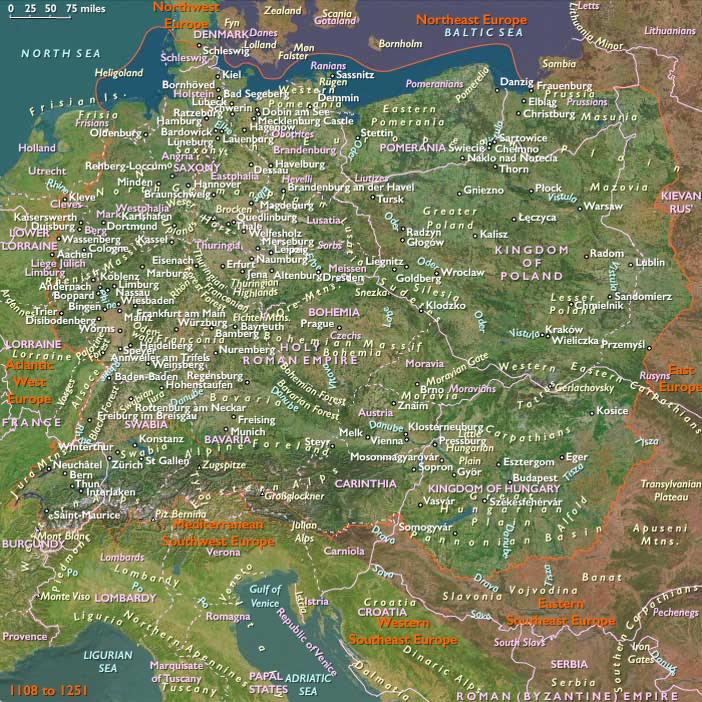
Subregions
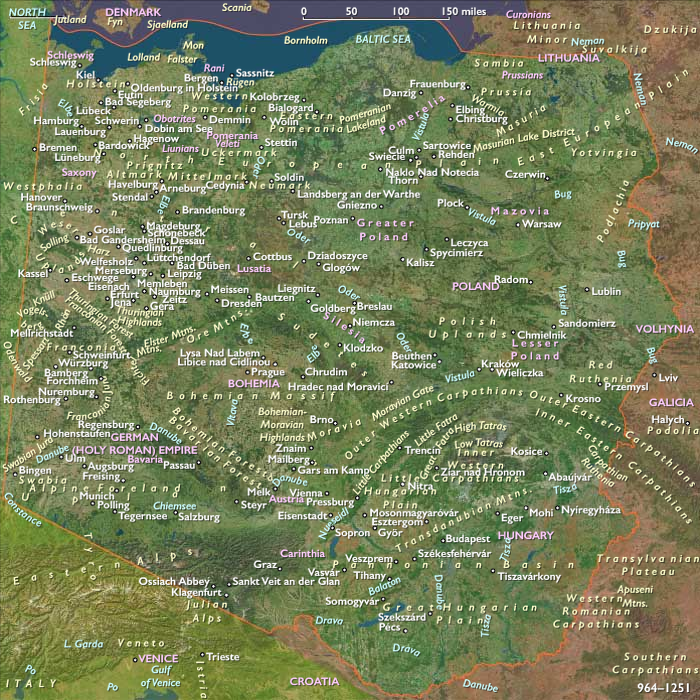
Related Events
Showing 10 events out of 48604 total
Years: 1156 - 1167
People
- Béla II of Hungary
- Frederick I, Holy Roman Emperor
- Géza
- Stephen III of Hungary
- Vladislaus II of Bohemia
Groups
- Polytheism (“paganism”)
- Franks
- Saxons
- Germans
- Hungarian people
- Wends, or Sorbs (West Slavs)
- Christianity, Chalcedonian
- Bavarians (West Germanic tribe)
- Polans, Western (West Slavic tribe)
- Thuringia, Duchy of
- Carantania
- Carantanians
- Saxony, Duchy of
- Bavaria, Ottonian Duchy of
- Holy Roman Empire
- German, or Ottonian (Roman) Empire
- Germany, Kingdom of (within the Holy Roman Empire)
- Carinthia, Duchy of
- Slovaks (West Slavs)
- Austria, Margravate of
- Czechs [formerly Bohemians] (West Slavs)
- Hungary, Kingdom of
- Poland of the first Piasts, Kingdom of
- Bohemia, Duchy of
- Poland, Greater
- Austria, Archduchy of
- Bohemia, Kingdom of
Topics
Commodoties
Subjects
Regions
Subregions