
East Central Europe (1132–1143 CE): Bolesław III’s …
Years: 1132 - 1143
East Central Europe (1132–1143 CE): Bolesław III’s Succession Crisis in Poland, Béla II’s Stabilization in Hungary, and Přemyslid Strengthening in Bohemia
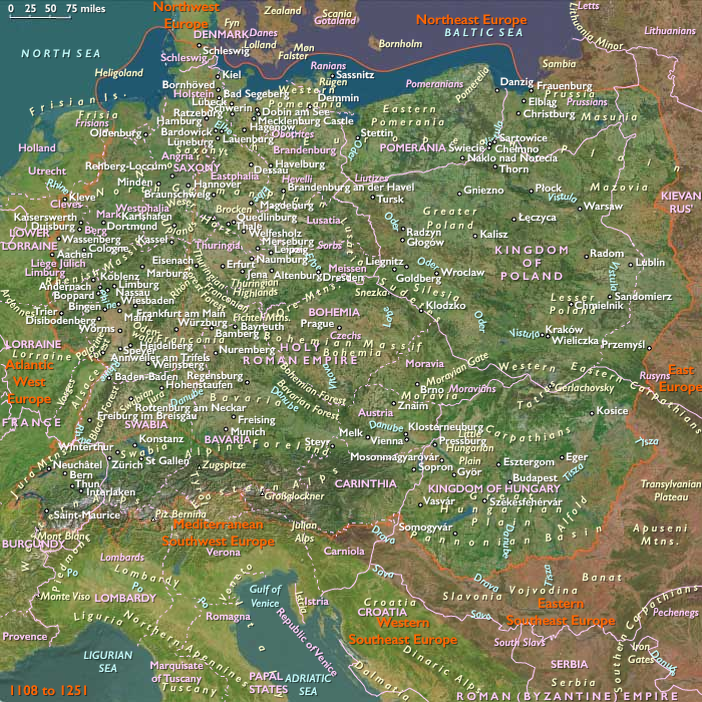
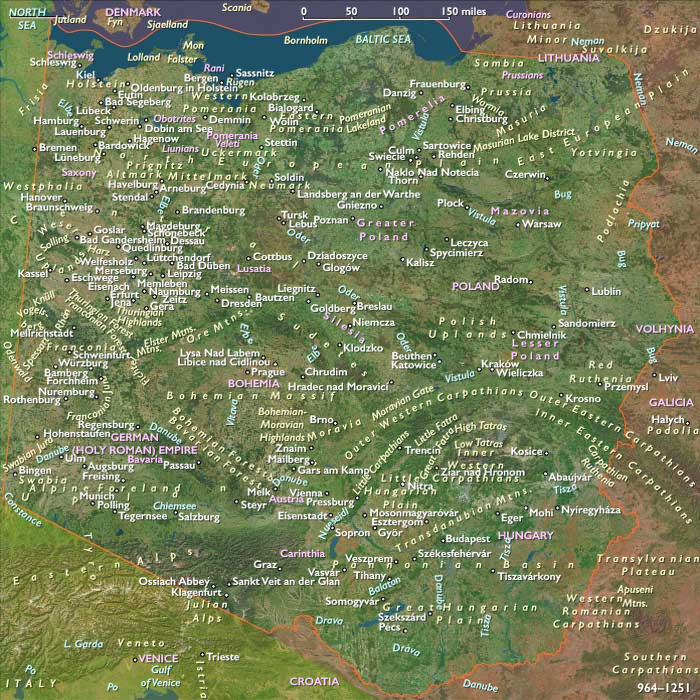
Between 1132 and 1143 CE, East Central Europe—encompassing modern-day Poland, Czechia, Slovakia, Hungary, and the eastern portions of Germany and Austria east of 10°E and north of the defined southeastern boundary—experienced significant dynastic transitions, political realignments, and shifts in regional power dynamics. Poland faced the beginnings of a critical succession crisis following the death of Bolesław III Wrymouth in 1138, Hungary experienced internal stabilization under Béla II, and Bohemia saw continued strengthening and dynastic authority under the Přemyslid ruler Soběslav I. These developments reshaped regional stability and set the stage for future political transformations.
Political and Military Developments
Poland’s Fragmentation after Bolesław III’s Death
-
Bolesław III Wrymouth (r. 1102–1138) died in 1138, initiating Poland’s seniorate system, dividing the kingdom among his sons and creating a senior-prince system that aimed at stability but resulted in fragmentation and ongoing dynastic conflict.
-
The division of Poland into principalities significantly weakened centralized royal power and set the stage for prolonged internal instability and aristocratic rivalry throughout the 12th century.
Hungary’s Internal Stabilization under Béla II
-
Béla II "the Blind" (r. 1131–1141) brought renewed internal stability to Hungary after inheriting a realm shaken by prior succession struggles. Assisted by his wife, Queen Helena, Béla consolidated royal authority, reasserted central administration, and decisively dealt with internal opponents (1132).
-
His effective rule ensured dynastic continuity and stability, strengthening Hungary’s administrative cohesion and internal peace.
Přemyslid Stability and Imperial Alliances in Bohemia
-
Bohemia, under Duke Soběslav I (r. 1125–1140), experienced a period of stable governance, military strength, and reinforced political authority. His victory against imperial forces at the Battle of Chlumec (1126) had earlier secured Bohemia’s regional autonomy within the Holy Roman Empire.
-
Soběslav strengthened Bohemia’s political institutions and alliances, ensuring continued Přemyslid stability and reinforcing Prague’s position as a regional center.
Imperial Influence under Lothair III and Conrad III
-
The Holy Roman Empire, under Lothair III (r. 1125–1137) and later Conrad III (r. 1138–1152), continued shaping East Central European politics, particularly in Bohemia and the eastern German territories, influencing regional alliances, dynastic successions, and political stability.
Economic and Technological Developments
Economic Stability and Urban Growth
-
Regional economies remained robust despite political transitions, supported by stable trade routes connecting the Baltic, Byzantine, and Western European markets. Urban centers in Hungary, Poland, and Bohemia expanded, benefiting from steady commerce and agricultural prosperity.
Agricultural Productivity and Technological Innovations
-
Agricultural productivity continued to grow due to the increased adoption of improved agricultural techniques, such as crop rotation, iron tools, and heavy plowing, sustaining population growth and economic expansion across the region.
Cultural and Artistic Developments
Ecclesiastical Patronage in Hungary under Béla II
-
Béla II, supported by Queen Helena, actively patronized ecclesiastical institutions and monastic foundations, furthering the expansion of Hungarian religious and cultural life and significantly enriching artistic and architectural developments.
Polish Cultural Continuity amid Political Fragmentation
-
Despite political fragmentation, Poland’s religious institutions, particularly monasteries and bishoprics, continued cultural and intellectual activities, preserving and advancing Latin Christian learning and local traditions.
Bohemian Cultural Flourishing under Soběslav I
-
Soběslav I’s reign saw continued Přemyslid patronage of cultural activities, including manuscript illumination, architectural projects, and monastic foundations, reinforcing Prague’s cultural prominence within Central Europe.
Settlement and Urban Development
Continued Urban Expansion in Poland and Hungary
-
Poland’s principalities continued developing urban centers, especially Kraków and Wrocław, despite internal divisions. Hungary’s Esztergom, Székesfehérvár, and other towns flourished, driven by stable governance and vibrant trade.
Bohemian Urban Fortification and Infrastructure
-
Prague and other Bohemian towns experienced steady fortification and infrastructure improvements under Soběslav I, enhancing their economic vitality, administrative efficiency, and defensive strength.
Social and Religious Developments
Consolidation of Christian Institutions
-
Christianity remained central to societal structures, particularly evident through continued ecclesiastical expansion and patronage by Hungarian royalty and Polish principalities. Religious institutions influenced governance, education, and regional culture.
Aristocratic Influence and Dynastic Authority
-
Aristocratic power and regional nobility played increasingly crucial roles in political governance, especially evident in Poland’s fragmentation. In Hungary and Bohemia, royal and ducal authority remained strong, with aristocratic classes integral to administration and military leadership.
Long-Term Consequences and Historical Significance
The era 1132–1143 CE significantly shaped the political trajectory of East Central Europe. Poland’s dynastic fragmentation after Bolesław III profoundly influenced its political landscape for generations, while Hungary’s internal stabilization under Béla II reinforced royal centralization and administrative effectiveness. Concurrently, Přemyslid Bohemia enjoyed continued political stability, regional autonomy, and cultural growth under Soběslav I. Collectively, these developments deeply affected regional governance, economic prosperity, cultural traditions, and societal structures, setting enduring patterns that defined East Central Europe’s medieval evolution.
People
- Boleslaw III Wrymouth
- Béla II of Hungary
- Conrad III of Germany
- Lothair II, Holy Roman Emperor
- Sobeslav I
- Vladislaus I
Groups
- Polytheism (“paganism”)
- Franks
- Saxons
- Germans
- Hungarian people
- Wends, or Sorbs (West Slavs)
- Christianity, Chalcedonian
- Bavarians (West Germanic tribe)
- Polans, Western (West Slavic tribe)
- Thuringia, Duchy of
- Carantania
- Carantanians
- Saxony, Duchy of
- Bavaria, Ottonian Duchy of
- Germany, Kingdom of (within the Holy Roman Empire)
- German, or Ottonian (Roman) Empire
- Holy Roman Empire
- Austria, Margravate of
- Czechs [formerly Bohemians] (West Slavs)
- Slovaks (West Slavs)
- Carinthia, Duchy of
- Hungary, Kingdom of
- Poland of the first Piasts, Kingdom of
- Bohemia, Duchy of
Topics
Commodoties
Subjects
Regions
Subregions
Related Events
Showing 10 events out of 49196 total
Years: 1132 - 1143
People
- Boleslaw III Wrymouth
- Béla II of Hungary
- Conrad III of Germany
- Lothair II, Holy Roman Emperor
- Sobeslav I
- Vladislaus I
Groups
- Polytheism (“paganism”)
- Franks
- Saxons
- Germans
- Hungarian people
- Wends, or Sorbs (West Slavs)
- Christianity, Chalcedonian
- Bavarians (West Germanic tribe)
- Polans, Western (West Slavic tribe)
- Thuringia, Duchy of
- Carantania
- Carantanians
- Saxony, Duchy of
- Bavaria, Ottonian Duchy of
- Germany, Kingdom of (within the Holy Roman Empire)
- German, or Ottonian (Roman) Empire
- Holy Roman Empire
- Austria, Margravate of
- Czechs [formerly Bohemians] (West Slavs)
- Slovaks (West Slavs)
- Carinthia, Duchy of
- Hungary, Kingdom of
- Poland of the first Piasts, Kingdom of
- Bohemia, Duchy of
Topics
Commodoties
Subjects
Regions
Subregions