
East Central Europe (1120–1131 CE): Hungarian Expansion …
Years: 1120 - 1131
East Central Europe (1120–1131 CE): Hungarian Expansion under Stephen II, Polish Consolidation under Bolesław III, and Přemyslid Stability in Bohemia
Between 1120 and 1131 CE, East Central Europe—encompassing modern-day Poland, Czechia, Slovakia, Hungary, and the eastern portions of Germany and Austria east of 10°E and north of the defined southeastern boundary—experienced further political consolidation, territorial expansion, and economic growth. Stephen II of Hungary expanded royal authority and territorial influence, particularly in the Balkans; Bolesław III Wrymouth continued to strengthen Poland’s political unity and Baltic expansion; and Bohemia, under the Přemyslid dynasty, maintained stability and regional influence within the Holy Roman Empire.
Political and Military Developments
Hungarian Expansion under Stephen II
-
Stephen II (r. 1116–1131) vigorously pursued territorial expansion southward into the Balkans, launching campaigns against Byzantine territories in 1127–1129 and asserting Hungarian dominance over parts of Dalmatia and neighboring regions.
-
His military efforts bolstered Hungary’s position as a regional power, strengthening its southern borders and extending its influence deeper into southeastern Europe.
Continued Polish Consolidation and Baltic Integration under Bolesław III
-
Bolesław III Wrymouth (r. 1102–1138) reinforced Poland’s centralized authority and expanded into Pomerania, securing its integration through extensive missionary work and the foundation of ecclesiastical institutions.
-
His continued military successes stabilized Poland’s northern frontier, facilitating increased trade and economic integration along the Baltic coast.
Stability and Dynastic Continuity in Bohemia under Vladislaus I
-
Bohemia remained politically stable under Duke Vladislaus I (r. 1109–1125) and his successor Soběslav I (r. 1125–1140), solidifying Přemyslid authority and reinforcing Bohemia’s strategic relationship within the Holy Roman Empire.
-
The Přemyslid rulers carefully balanced autonomy with imperial alliances, ensuring Bohemia’s political stability and regional influence.
Holy Roman Empire and Regional Diplomacy
-
The reign of Holy Roman Emperor Henry V (1106–1125) and the subsequent election of Lothair III (1125–1137) maintained imperial engagement in East Central European affairs, particularly influencing dynastic alliances and regional power dynamics involving Bohemia and neighboring territories.
Economic and Technological Developments
Economic Prosperity and Trade Expansion
-
Stability and territorial expansion facilitated sustained economic prosperity throughout East Central Europe. Expanded Baltic trade under Polish control, Hungarian connections with Byzantine markets, and Bohemian integration into imperial trade networks stimulated economic growth.
Agricultural Productivity and Technological Improvements
-
Agricultural techniques improved further with increased adoption of the heavy plow, crop rotation, and advanced iron tools. These innovations enhanced agricultural productivity, supporting population growth and urban expansion across Poland, Hungary, and Bohemia.
Cultural and Artistic Developments
Hungarian Royal Patronage and Artistic Flourishing
-
Stephen II actively supported religious and cultural institutions, promoting monastic foundations, ecclesiastical building projects, and scholarly activities, enhancing Hungary’s cultural and intellectual life.
Polish Ecclesiastical Expansion and Baltic Christianization
-
Bolesław III strongly supported missionary and ecclesiastical efforts in newly acquired Pomeranian territories, establishing bishoprics and monasteries that significantly advanced Poland’s Christian and cultural identity.
Continued Bohemian Cultural Vitality under Přemyslid Patronage
-
The Přemyslid rulers in Bohemia continued their patronage of monasteries, manuscript production, and architectural endeavors, reinforcing Prague’s prominence as a cultural and religious center within the Holy Roman Empire.
Settlement and Urban Development
Polish Urban and Administrative Expansion
-
Major Polish cities, notably Kraków, Poznań, and newly incorporated Pomeranian settlements, expanded substantially, enhancing administrative efficiency, trade infrastructure, and fortifications.
Hungarian Urban Growth and Southern Expansion
-
Stephen II oversaw significant growth in Hungarian urban centers such as Esztergom, Székesfehérvár, and Dalmatian coastal cities, strengthening administrative control and commercial vitality along Hungary’s expanding frontiers.
Bohemian Urban Stability and Growth
-
Prague and other Bohemian towns remained stable and prosperous under Přemyslid governance, benefiting from continued imperial trade connections and local administrative improvements.
Social and Religious Developments
Strengthening of Ecclesiastical Structures
-
Ecclesiastical institutions and Christian practices became increasingly integral to regional governance, education, and cultural identities, particularly in newly Christianized Polish territories and expanding Hungarian dioceses.
Dynastic Authority and Aristocratic Power Consolidation
-
Dynastic and aristocratic structures continued to solidify, reinforcing centralized royal authority under Bolesław III in Poland, Stephen II in Hungary, and Přemyslid rulers in Bohemia. The nobility increasingly played key roles in governance, warfare, and economic development.
Long-Term Consequences and Historical Significance
The era 1120–1131 CE further strengthened East Central Europe’s medieval kingdoms. Hungarian expansion under Stephen II secured enduring regional influence, Polish territorial consolidation under Bolesław III significantly advanced northern frontier security and economic integration, and Bohemian stability under the Přemyslids reinforced regional autonomy and cultural vitality. Collectively, these developments enhanced regional political stability, economic prosperity, and cultural cohesion, deeply influencing East Central Europe’s trajectory throughout the subsequent medieval centuries.
People
- Boleslaw III Wrymouth
- Henry V, Holy Roman Emperor
- Lothair II, Holy Roman Emperor
- Sobeslav I
- Stephen II of Hungary
- Vladislaus I
- Vratislaus II of Bohemia
Groups
- Polytheism (“paganism”)
- Franks
- Saxons
- Germans
- Hungarian people
- Wends, or Sorbs (West Slavs)
- Christianity, Chalcedonian
- Bavarians (West Germanic tribe)
- Polans, Western (West Slavic tribe)
- Thuringia, Duchy of
- Carantania
- Carantanians
- Saxony, Duchy of
- Bavaria, Ottonian Duchy of
- Germany, Kingdom of (within the Holy Roman Empire)
- German, or Ottonian (Roman) Empire
- Holy Roman Empire
- Austria, Margravate of
- Czechs [formerly Bohemians] (West Slavs)
- Slovaks (West Slavs)
- Carinthia, Duchy of
- Hungary, Kingdom of
- Poland of the first Piasts, Kingdom of
- Bohemia, Duchy of
Topics
Commodoties
Subjects
Regions
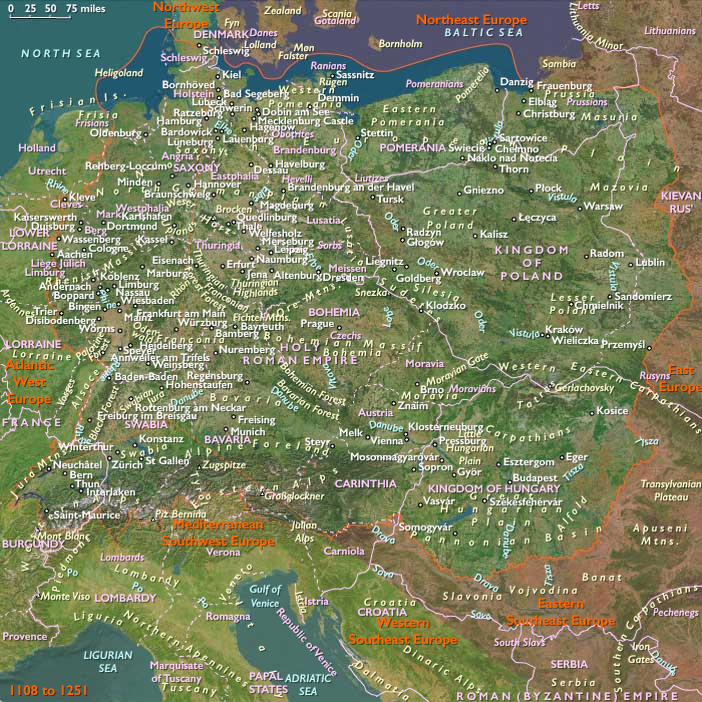
Subregions
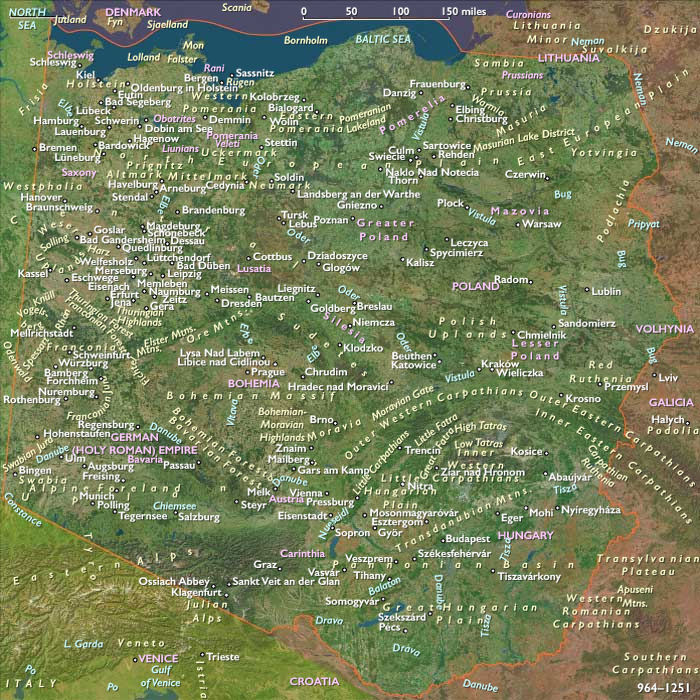
Related Events
Showing 10 events out of 49346 total
Years: 1120 - 1131
People
- Boleslaw III Wrymouth
- Henry V, Holy Roman Emperor
- Lothair II, Holy Roman Emperor
- Sobeslav I
- Stephen II of Hungary
- Vladislaus I
- Vratislaus II of Bohemia
Groups
- Polytheism (“paganism”)
- Franks
- Saxons
- Germans
- Hungarian people
- Wends, or Sorbs (West Slavs)
- Christianity, Chalcedonian
- Bavarians (West Germanic tribe)
- Polans, Western (West Slavic tribe)
- Thuringia, Duchy of
- Carantania
- Carantanians
- Saxony, Duchy of
- Bavaria, Ottonian Duchy of
- Germany, Kingdom of (within the Holy Roman Empire)
- German, or Ottonian (Roman) Empire
- Holy Roman Empire
- Austria, Margravate of
- Czechs [formerly Bohemians] (West Slavs)
- Slovaks (West Slavs)
- Carinthia, Duchy of
- Hungary, Kingdom of
- Poland of the first Piasts, Kingdom of
- Bohemia, Duchy of
Topics
Commodoties
Subjects
Regions
Subregions