
East Central Europe (1072–1083 CE): Hungarian Stability …
Years: 1072 - 1083
East Central Europe (1072–1083 CE): Hungarian Stability under Ladislaus I, Polish Royal Ambitions under Bolesław II, and Bohemian Alignment with the Holy Roman Empire
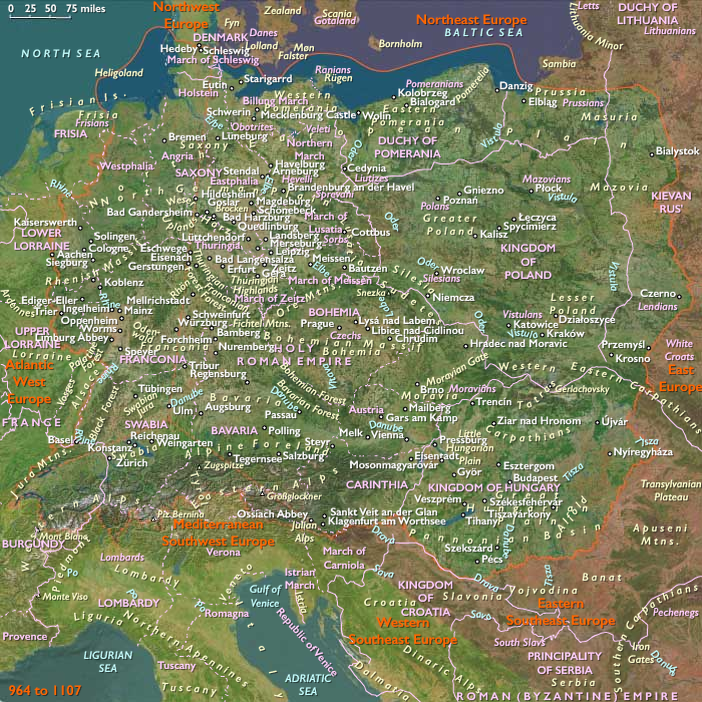
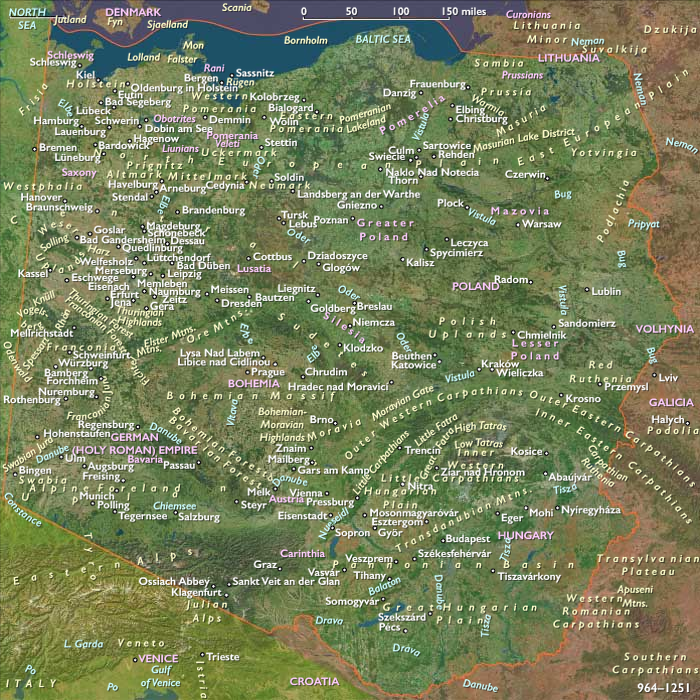
Between 1072 and 1083 CE, East Central Europe—encompassing modern-day Poland, Czechia, Slovakia, Hungary, and the eastern portions of Germany and Austria east of 10°E and north of the defined southeastern boundary—experienced significant developments in political consolidation, dynastic authority, and regional stability. In Hungary, King Ladislaus I restored political coherence after prolonged instability; Bolesław II "the Bold" continued to expand Poland’s territorial and royal ambitions; while Bohemia under Vratislaus II strengthened its strategic alignment with the Holy Roman Empire. These shifts significantly impacted regional power dynamics and set critical foundations for medieval governance and cultural identity.
Political and Military Developments
Hungarian Consolidation and Stability under Ladislaus I
-
Ladislaus I of Hungary (r. 1077–1095) decisively ended internal dynastic conflicts following the turbulent reigns of Solomon and Géza I. Ladislaus restored royal authority, strengthened military defenses, reorganized administration, and established law codes that firmly stabilized Hungary and enhanced royal prestige.
Polish Territorial and Royal Expansion under Bolesław II
-
Bolesław II "the Bold" of Poland continued territorial expansion into Ruthenia, significantly enlarging Poland’s sphere of influence. He successfully sought royal recognition, crowned as king in 1076, reinforcing Poland’s status as a significant European monarchy.
Bohemian Alignment and Autonomy under Vratislaus II
-
Duke Vratislaus II of Bohemia deepened Bohemia’s diplomatic alignment with the Holy Roman Empire, skillfully balancing imperial loyalty and local autonomy. His strategic diplomacy secured stability, and he later received royal recognition as the first King of Bohemia (in 1085, slightly beyond this era).
Imperial Influence and the Investiture Conflict
-
The Investiture Controversy (begun in 1075) profoundly impacted East Central Europe as Emperor Henry IV (r. 1056–1106) struggled with the papacy. Vratislaus II aligned closely with Henry, while Hungary and Poland navigated carefully between imperial and papal interests, impacting regional diplomacy and church-state relations.
Economic and Technological Developments
Economic Revival and Trade Expansion
-
Stability in Hungary under Ladislaus and Poland under Bolesław supported a vibrant revival of commerce. Regional trade networks expanded, notably along routes connecting the Baltic, Central Europe, and Byzantium, facilitating significant economic growth.
Urbanization and Fortifications
-
Key urban centers in Poland (Kraków, Gniezno), Hungary (Esztergom, Székesfehérvár), and Bohemia (Prague) further developed and fortified their infrastructure, bolstering administrative control, commerce, and defense capabilities.
Cultural and Artistic Developments
Hungarian Ecclesiastical and Cultural Flourishing under Ladislaus
-
Ladislaus I extensively patronized ecclesiastical institutions, monasteries, and churches, promoting cultural and religious revival. His reign saw the canonization of Stephen I (1083), enhancing Hungarian Christian identity and cultural prestige.
Polish Royal Patronage and Cultural Expansion
-
Bolesław II promoted cultural patronage, supporting ecclesiastical institutions, monasteries, and religious art. His coronation reinforced Poland’s royal and cultural identity, further integrating it into broader European Christian traditions.
Bohemian Cultural Development under Vratislaus II
-
Vratislaus II actively supported cultural growth, evident in cathedral expansions, monastic foundations, and manuscript production, significantly enriching Prague’s ecclesiastical and cultural life.
Settlement and Urban Development
Growth and Expansion of Polish Royal Centers
-
Kraków, Gniezno, and Poznań flourished under Bolesław II, expanding their urban structures and fortifications, becoming prominent administrative and economic centers.
Hungarian Urban and Administrative Development
-
Ladislaus I significantly developed Hungarian royal and ecclesiastical cities, notably Esztergom, Székesfehérvár, and Veszprém, consolidating Hungary’s administrative efficiency and urban prosperity.
Bohemian Urban Infrastructure
-
Under Vratislaus II, Prague and other Bohemian towns experienced ongoing urban growth, fortification, and enhanced administrative organization, strengthening Bohemia’s regional role and urban prosperity.
Social and Religious Developments
Consolidation of Christian Institutions
-
Christianity further deepened its dominant role in society across Hungary, Poland, and Bohemia. Ladislaus’s support of religious reform, Bolesław’s ecclesiastical patronage, and Vratislaus’s imperial-aligned religious policy significantly influenced regional religious institutions.
Strengthening Dynastic Authority
-
Dynastic and aristocratic structures became increasingly defined, reinforcing governance, social hierarchies, and royal authority. Ladislaus I in Hungary, Bolesław II in Poland, and Vratislaus II in Bohemia strengthened dynastic legitimacy and political cohesion.
Long-Term Consequences and Historical Significance
The era 1072–1083 CE proved transformative for East Central Europe. Hungarian stability under Ladislaus I, Poland’s royal expansion under Bolesław II, and Bohemia’s strengthened autonomy under Vratislaus II reshaped regional political alliances, cultural identities, and societal structures. These developments laid crucial foundations for enduring medieval kingdoms, significantly influencing East Central Europe’s historical trajectory for centuries to come.
People
- Boleslaw II the Generous
- Henry IV, Holy Roman Emperor
- Ladislaus I of Hungary
- Vratislaus II of Bohemia
Groups
- Polytheism (“paganism”)
- Franks
- Saxons
- Germans
- Hungarian people
- Wends, or Sorbs (West Slavs)
- Christianity, Chalcedonian
- Bavarians (West Germanic tribe)
- Polans, Western (West Slavic tribe)
- Thuringia, Duchy of
- Carantania
- Carantanians
- Saxony, Duchy of
- Bohemia, Duchy of
- Bavaria, Ottonian Duchy of
- Holy Roman Empire
- German, or Ottonian (Roman) Empire
- Germany, Kingdom of (within the Holy Roman Empire)
- Austria, Margravate of
- Carinthia, Duchy of
- Hungary, Kingdom of
- Poland of the first Piasts, Kingdom of
Topics
Commodoties
Subjects
Regions
Subregions
Years: 1072 - 1083
People
- Boleslaw II the Generous
- Henry IV, Holy Roman Emperor
- Ladislaus I of Hungary
- Vratislaus II of Bohemia
Groups
- Polytheism (“paganism”)
- Franks
- Saxons
- Germans
- Hungarian people
- Wends, or Sorbs (West Slavs)
- Christianity, Chalcedonian
- Bavarians (West Germanic tribe)
- Polans, Western (West Slavic tribe)
- Thuringia, Duchy of
- Carantania
- Carantanians
- Saxony, Duchy of
- Bohemia, Duchy of
- Bavaria, Ottonian Duchy of
- Holy Roman Empire
- German, or Ottonian (Roman) Empire
- Germany, Kingdom of (within the Holy Roman Empire)
- Austria, Margravate of
- Carinthia, Duchy of
- Hungary, Kingdom of
- Poland of the first Piasts, Kingdom of
Topics
Commodoties
Subjects
Regions
Subregions