
East Central Europe (1048–1059 CE): Polish Restoration …
Years: 1048 - 1059
East Central Europe (1048–1059 CE): Polish Restoration under Casimir I, Hungarian Stability under Andrew I, and Bohemia’s Growing Influence under Bretislav I
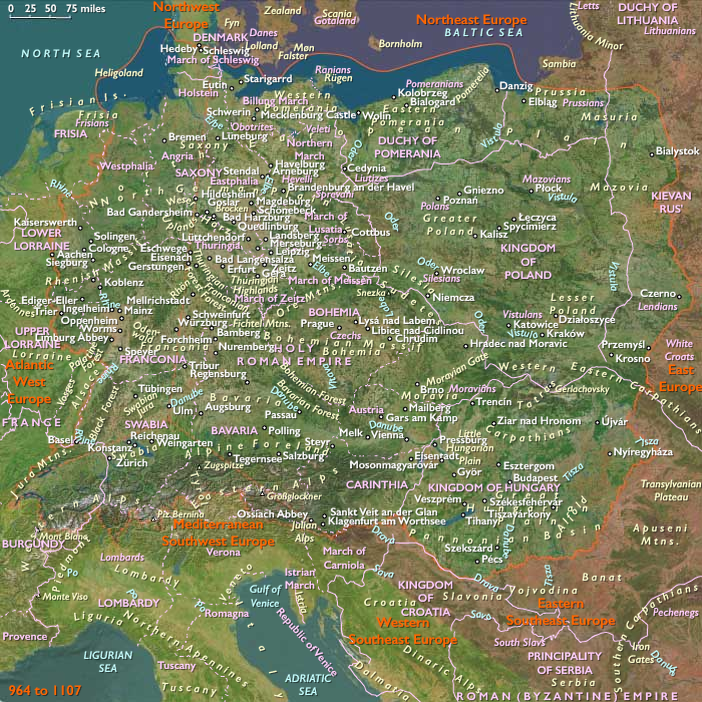
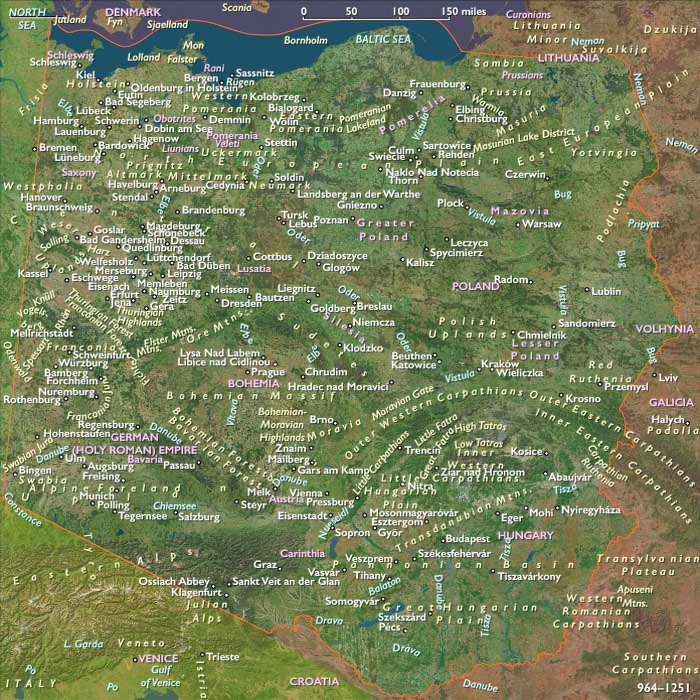
Between 1048 and 1059 CE, East Central Europe—comprising modern-day Poland, Czechia, Slovakia, Hungary, and the eastern parts of Germany and Austria east of 10°E and north of the defined southeastern boundary—experienced significant political restoration, stabilization, and regional realignment. Casimir I "the Restorer"revitalized and reunified Poland following decades of turmoil, King Andrew I brought renewed stability to Hungary, and the Přemyslid ruler Bretislav I firmly consolidated Bohemian power. These developments reshaped regional political structures, strengthened cultural identities, and restored economic stability, laying critical foundations for future medieval growth.
Political and Military Developments
Polish Restoration under Casimir I
-
Casimir I "the Restorer" (r. 1039–1058) restored Polish political unity and royal authority after decades of instability. Through successful diplomatic and military efforts, including crucial alliances with Hungary and the Holy Roman Empire, Casimir regained lost territories, restored the Polish Church’s authority, and reestablished effective governance throughout Poland.
Hungarian Stability under Andrew I
-
Following succession crises, King Andrew I (r. 1046–1060) stabilized Hungary by reinforcing royal authority, reestablishing internal peace, and strengthening Hungary’s military capabilities. His reign solidified Hungary’s internal structures and external diplomatic relations, notably with Poland and neighboring German states.
Bohemian Expansion under Bretislav I
-
Duke Bretislav I of Bohemia (r. 1034–1055) expanded and consolidated Přemyslid control, extending his influence into Silesia and Moravia, significantly enhancing Bohemia’s regional political and economic standing.
Imperial Influence under Henry III
-
Holy Roman Emperor Henry III (r. 1039–1056) maintained active involvement in East Central Europe, intervening diplomatically and militarily, influencing succession issues in Hungary and Bohemia, and shaping the regional political landscape through strategic alliances and assertive imperial policy.
Economic and Technological Developments
Restoration of Polish Economic Networks
-
Casimir’s reunification efforts revitalized Polish economic life, restoring trade routes and commerce, notably through rebuilding urban centers, reestablishing regional marketplaces, and renewing Poland’s economic integration into broader European networks.
Continued Urban Growth and Fortification
-
Bohemian and Hungarian towns, notably Prague, Esztergom, Székesfehérvár, and Veszprém, experienced continued urban expansion, robust fortification, and administrative improvements, reflecting renewed political stability and economic prosperity.
Cultural and Artistic Developments
Polish Ecclesiastical Renewal
-
Casimir I actively supported the renewal and rebuilding of ecclesiastical institutions, monasteries, and religious centers, significantly enhancing Polish Christian cultural and religious identity after a period of instability.
Hungarian Royal and Ecclesiastical Culture under Andrew I
-
King Andrew I promoted cultural renewal by supporting monasteries, churches, and ecclesiastical institutions, reinforcing Hungary’s Christian royal traditions and deepening the kingdom’s integration into broader European culture.
Bohemian Cultural Patronage under Bretislav I
-
Bretislav I’s rule witnessed extensive cultural patronage, including monastic foundations, church construction, and artistic patronage, significantly strengthening Prague’s role as a major cultural and ecclesiastical center.
Settlement and Urban Development
Polish Urban Reconstruction
-
Casimir I prioritized reconstruction of key Polish urban centers such as Kraków, Gniezno, and Poznań, reestablishing their roles as vibrant political, ecclesiastical, and economic hubs.
Hungarian Administrative Expansion
-
Andrew I continued urban and administrative expansions, especially in Esztergom and Székesfehérvár, strengthening royal authority, ecclesiastical organization, and economic vitality.
Bohemian Urban and Administrative Consolidation
-
Under Bretislav I, Prague and other Bohemian cities further expanded, fortifications improved significantly, and urban infrastructure advanced, solidifying Bohemia’s administrative coherence and economic growth.
Social and Religious Developments
Strengthening of Christian Identity
-
Throughout Poland, Hungary, and Bohemia, renewed stability reinforced Christian identity and institutional influence. Churches and monasteries were key centers of governance, education, and cultural life, deepening Christianity’s role in society.
Dynastic Consolidation and Aristocratic Power
-
Dynastic and aristocratic structures strengthened considerably in Poland, Hungary, and Bohemia, defining clear social hierarchies and governance models, stabilizing societal structures, and reinforcing royal authority.
Long-Term Consequences and Historical Significance
The era 1048–1059 CE marked a significant phase of restoration and stabilization across East Central Europe. Casimir’s Polish restoration, Andrew’s stabilization of Hungary, and Bretislav’s expansion and consolidation in Bohemia significantly reshaped regional political, cultural, and economic dynamics. These developments laid essential foundations for enduring medieval states and institutions, decisively influencing the future historical trajectory of East Central Europe.
People
Groups
- Polytheism (“paganism”)
- Franks
- Saxons
- Germans
- Hungarian people
- Wends, or Sorbs (West Slavs)
- Christianity, Chalcedonian
- Bavarians (West Germanic tribe)
- Polans, Western (West Slavic tribe)
- Thuringia, Duchy of
- Carantania
- Carantanians
- Saxony, Duchy of
- Bohemia, Duchy of
- Bavaria, Ottonian Duchy of
- Holy Roman Empire
- German, or Ottonian (Roman) Empire
- Germany, Kingdom of (within the Holy Roman Empire)
- Austria, Margravate of
- Carinthia, Duchy of
- Hungary, Kingdom of
- Poland of the first Piasts, Kingdom of
Commodoties
Subjects
Regions
Subregions
Related Events
Showing 10 events out of 51252 total
Years: 1048 - 1059
People
Groups
- Polytheism (“paganism”)
- Franks
- Saxons
- Germans
- Hungarian people
- Wends, or Sorbs (West Slavs)
- Christianity, Chalcedonian
- Bavarians (West Germanic tribe)
- Polans, Western (West Slavic tribe)
- Thuringia, Duchy of
- Carantania
- Carantanians
- Saxony, Duchy of
- Bohemia, Duchy of
- Bavaria, Ottonian Duchy of
- Holy Roman Empire
- German, or Ottonian (Roman) Empire
- Germany, Kingdom of (within the Holy Roman Empire)
- Austria, Margravate of
- Carinthia, Duchy of
- Hungary, Kingdom of
- Poland of the first Piasts, Kingdom of
Commodoties
Subjects
Regions
Subregions