
East Central Europe (1036–1047 CE): Crisis and …
Years: 1036 - 1047
East Central Europe (1036–1047 CE): Crisis and Fragmentation in Poland, End of Stephen I’s Reign in Hungary, and Přemyslid Consolidation in Bohemia
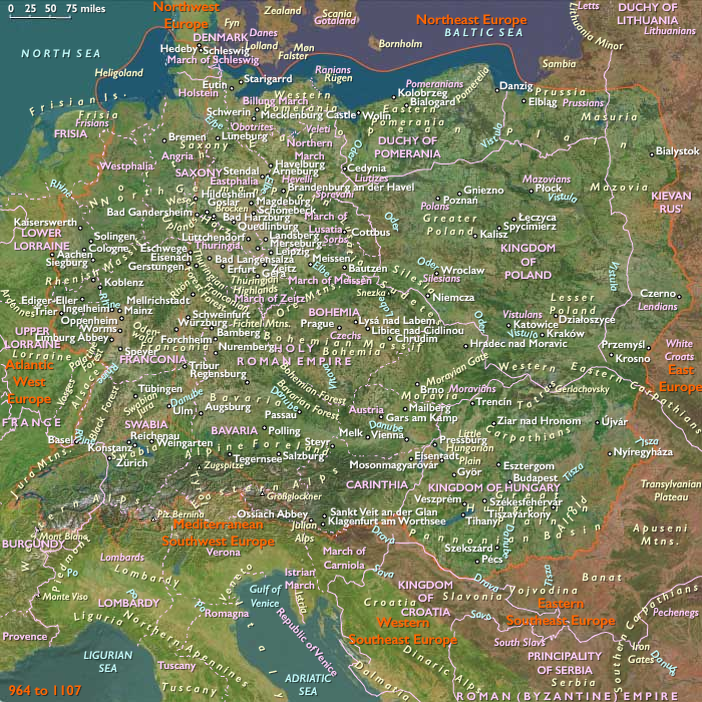
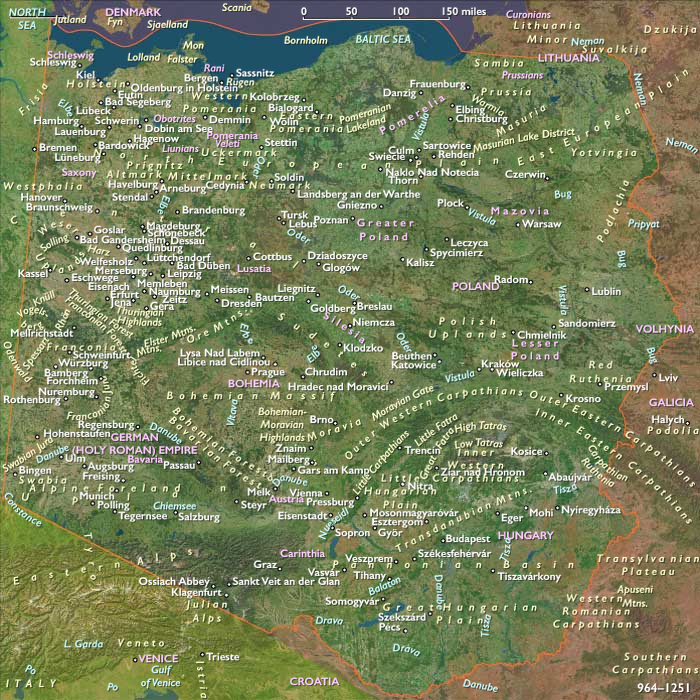
Between 1036 and 1047 CE, East Central Europe—covering modern-day Poland, Czechia, Slovakia, Hungary, and the eastern regions of Germany and Austria east of 10°E and north of the defined southeastern boundary—underwent significant political realignments marked by internal crises, dynastic transitions, and regional consolidation. Poland entered a period of severe instability following the death of Mieszko II, King Stephen I of Hungary died after a transformative reign, leading to initial uncertainty before renewed stabilization under his successors, while Bohemiaexperienced a period of renewed political strength under the Přemyslid dynasty, solidifying its autonomy within the shifting imperial politics of the Holy Roman Empire.
Political and Military Developments
Crisis and Fragmentation in Poland
-
Following Mieszko II’s death in 1034, Poland descended into a period of severe political fragmentation, internal rebellion, and pagan resurgence (Pagan Reaction, 1034–1038). This instability temporarily undermined central authority, weakened the Piast dynasty, and prompted invasions from Bohemia and neighboring regions.
End of Stephen I’s Reign and Succession Crisis in Hungary
-
King Stephen I’s death in 1038 initially led to instability as rival factions competed for power. The brief rule of his successor, Peter Orseolo (r. 1038–1041), Stephen’s nephew, was followed by rebellions and conflicts over royal succession, temporarily weakening Hungarian political coherence.
Přemyslid Consolidation under Bretislav I in Bohemia
-
Duke Bretislav I of Bohemia (r. 1034–1055) significantly strengthened Přemyslid authority, launching successful military campaigns including a devastating invasion of Poland (1038), capturing significant Polish territories and transferring relics to Prague, enhancing Bohemian prestige and power.
Imperial Influence under Conrad II and Henry III
-
The Holy Roman Emperors Conrad II (r. 1024–1039) and his son Henry III (r. 1039–1056) actively intervened in East Central European affairs, influencing succession struggles in Hungary and Poland, reinforcing imperial influence, and stabilizing regional alignments.
Economic and Technological Developments
Disruption and Realignment of Trade
-
Poland’s internal turmoil disrupted trade temporarily, redirecting economic activity toward more stable regions, notably Bohemia and Hungary, where commerce and urban growth remained relatively strong.
Fortifications and Urban Reconstruction
-
Bohemia and Hungary intensified urban fortifications and administrative infrastructures. Particularly under Bretislav I, Bohemia saw significant investments in fortifications and public works, reflecting increased regional political stability and economic vitality.
Cultural and Artistic Developments
Bohemian Cultural Flourishing under Bretislav I
-
Bretislav I’s patronage fostered cultural vitality, including ecclesiastical building projects, artistic patronage, and the enrichment of Prague’s cathedral and monastic institutions, enhancing Bohemia’s cultural and religious prestige.
Hungarian Cultural Continuity amid Succession Crisis
-
Despite political challenges after Stephen I’s death, Hungary preserved its cultural institutions, royal traditions, and ecclesiastical organization, maintaining Stephen’s legacy of Christian royal identity.
Polish Cultural Resilience
-
Although Poland faced considerable political and social instability, monastic and ecclesiastical centers maintained cultural continuity, preserving literary and religious traditions that allowed rapid recovery in subsequent decades.
Settlement and Urban Development
Reconstruction and Expansion in Bohemia
-
Bretislav I significantly expanded Prague and other major Bohemian centers, fortifying settlements and enhancing administrative and ecclesiastical infrastructure, promoting urban prosperity.
Hungarian Administrative and Royal Centers
-
Despite political uncertainty, major Hungarian towns such as Esztergom, Székesfehérvár, and Veszprém remained important administrative, religious, and economic centers, sustaining their urban growth and prominence.
Polish Urban Decline and Reconstruction
-
Polish towns, notably Gniezno and Poznań, experienced significant setbacks due to invasions and rebellions but began gradual reconstruction, setting the stage for future urban recovery and expansion.
Social and Religious Developments
Revival of Paganism and Christian Response in Poland
-
Poland’s political chaos (1034–1038) briefly witnessed a resurgence of paganism before Christian authorities regained control. This religious instability shaped future ecclesiastical and royal policies aimed at reinforcing Christian orthodoxy and political stability.
Dynastic and Aristocratic Realignments
-
Regional dynastic structures in Bohemia and Hungary further consolidated authority, creating clear social and hierarchical orders. Aristocratic families increasingly asserted influence amid succession crises and shifting alliances.
Long-Term Consequences and Historical Significance
The era 1036–1047 CE significantly reshaped East Central Europe’s medieval trajectory. Poland’s internal turmoil temporarily reduced its regional power, while Bohemia’s Přemyslid dynasty achieved substantial consolidation, asserting regional dominance. Hungary navigated its first major succession crisis following Stephen I’s foundational reign. These dynamics reshaped political boundaries, cultural identities, and social structures, laying the groundwork for future stability and realignment throughout East Central Europe.
People
- Bretislaus I
- Conrad II
- Henry III, Holy Roman Emperor
- Mieszko II Lambert
- Peter, King of Hungary
- Stephen I of Hungary
Groups
- Polytheism (“paganism”)
- Franks
- Saxons
- Germans
- Hungarian people
- Wends, or Sorbs (West Slavs)
- Christianity, Chalcedonian
- Bavarians (West Germanic tribe)
- Polans, Western (West Slavic tribe)
- Thuringia, Duchy of
- Carantania
- Carantanians
- Saxony, Duchy of
- Bohemia, Duchy of
- Bavaria, Ottonian Duchy of
- Holy Roman Empire
- German, or Ottonian (Roman) Empire
- Germany, Kingdom of (within the Holy Roman Empire)
- Austria, Margravate of
- Carinthia, Duchy of
- Hungary, Kingdom of
- Poland of the first Piasts, Kingdom of
Topics
Commodoties
Subjects
Regions
Subregions
Related Events
Showing 1 events out of 1 total
Years: 1036 - 1047
People
- Bretislaus I
- Conrad II
- Henry III, Holy Roman Emperor
- Mieszko II Lambert
- Peter, King of Hungary
- Stephen I of Hungary
Groups
- Polytheism (“paganism”)
- Franks
- Saxons
- Germans
- Hungarian people
- Wends, or Sorbs (West Slavs)
- Christianity, Chalcedonian
- Bavarians (West Germanic tribe)
- Polans, Western (West Slavic tribe)
- Thuringia, Duchy of
- Carantania
- Carantanians
- Saxony, Duchy of
- Bohemia, Duchy of
- Bavaria, Ottonian Duchy of
- Holy Roman Empire
- German, or Ottonian (Roman) Empire
- Germany, Kingdom of (within the Holy Roman Empire)
- Austria, Margravate of
- Carinthia, Duchy of
- Hungary, Kingdom of
- Poland of the first Piasts, Kingdom of
Topics
Commodoties
Subjects
Regions
Subregions