
East Central Europe (112–123 CE): Economic Prosperity, …
Years: 112 - 123
East Central Europe (112–123 CE): Economic Prosperity, Germanic Consolidation, and Cultural Integration
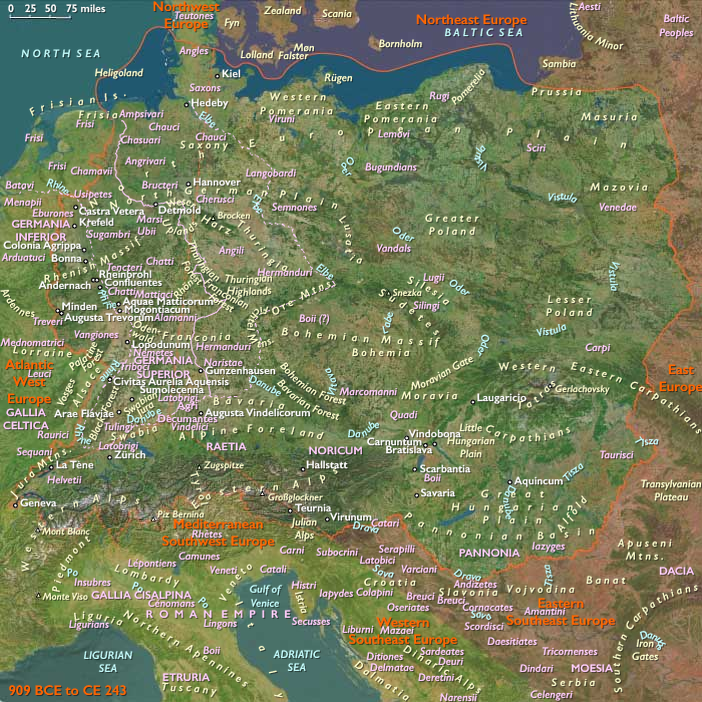
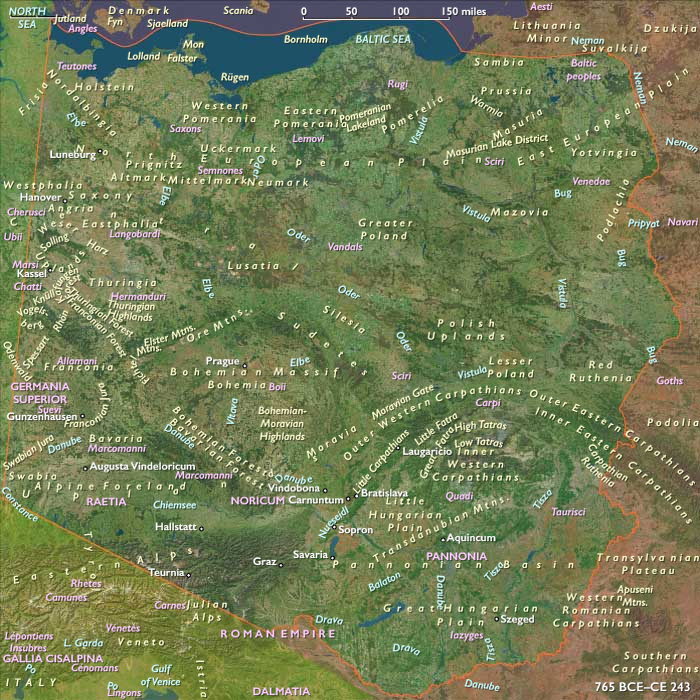
Between 112 and 123 CE, East Central Europe—including Poland, Czechia, Slovakia, Hungary, and those portions of Germany and Austria lying east of 10°E and north of a line stretching from roughly 48.2°N at 10°E southeastward to the Austro-Slovenian border near 46.7°N, 15.4°E—continued to benefit from stable conditions along the Roman frontier. Under Emperors Trajan (98–117 CE) and Hadrian (117–138 CE), the Roman provinces of Pannonia and Noricum prospered economically, influencing surrounding Germanic communities. The era saw increased cultural integration, further tribal consolidation, and ongoing technological and economic exchanges, which collectively strengthened regional stability.
Political and Military Developments
Continued Stability of Roman Frontier
-
Under Emperor Hadrian, frontier defenses along the Danube were further fortified and reorganized, reinforcing peace and security in the provinces of Pannonia and Noricum.
-
Diplomatic interactions with Germanic tribes remained generally peaceful, focusing primarily on trade, diplomacy, and mutual benefits rather than conflict.
Germanic Tribal Consolidation
-
The major tribal confederations—particularly the Marcomanni and Quadi—strengthened their territorial control and influence in regions corresponding to modern Czechia, Slovakia, and parts of southern Poland.
-
Tribes like the Langobardi (Lombards), settled mainly north and northeast of the Roman frontier, consolidated their territories and expanded diplomatic and economic contacts with Roman frontier towns.
Economic and Technological Developments
Increased Regional Trade
-
Economic prosperity continued, with intensified trade between Roman provinces and Germanic territories. Roman imports—such as ceramics, glassware, textiles, and metals—exchanged for local products like amber, animal hides, grain, and iron tools.
-
Roman coinage circulated widely, deepening the monetization of trade and local economies.
Agricultural and Metallurgical Advances
-
Germanic groups increasingly adopted Roman agricultural innovations, improving crop yields and livestock productivity.
-
Metallurgy, particularly ironworking, advanced through the adaptation of Roman tools and techniques, strengthening regional economies.
Cultural and Artistic Developments
Deepening Cultural Integration
-
Material culture across East Central Europe increasingly reflected combined Germanic-Roman traditions. Artifacts from this period—ceramics, jewelry, weapons, and household goods—exhibited distinctive blends of Roman and Germanic motifs.
Artistic and Cultural Synthesis
-
Local artisans, influenced by Roman craftsmanship, produced sophisticated metal objects, jewelry, pottery, and weaponry, reflecting an emerging hybrid cultural identity along the Roman frontier.
Settlement and Urban Development
Roman Frontier Towns and Settlements
-
Roman settlements such as Carnuntum and Vindobona continued to flourish as critical administrative, economic, and cultural hubs. These urban centers expanded significantly, serving as markets and meeting places for Roman and Germanic merchants and traders.
Germanic Villages and Agricultural Communities
-
Germanic tribal villages north of the frontier expanded, characterized by larger clusters of timber dwellings, communal agriculture, and specialized craft activities. Stability allowed communities to grow and develop economically and socially.
Social and Religious Developments
Germanic Social Structures and Leadership
-
Tribal societies retained hierarchical structures dominated by warrior elites and chieftains whose authority was reinforced by wealth from trade, military reputation, and political alliances with Roman authorities.
Religious Continuity and Emerging Syncretism
-
Germanic communities maintained traditional religious practices involving nature worship, ancestor veneration, and communal rites. Increasing interactions with Roman culture introduced elements of Roman religious practice, creating early examples of religious syncretism.
Long-Term Consequences and Historical Significance
The era from 112 to 123 CE marked continued stability, economic prosperity, and deepening cultural integration in East Central Europe. Peaceful relations along the Roman frontier fostered economic growth, technological exchange, and further consolidation of Germanic tribes. This stability and cultural synthesis laid essential foundations for subsequent historical developments, particularly influencing regional identities and setting the stage for more complex interactions between Rome and East Central Europe's tribal societies in the following decades.
People
Groups
- Marcomanni (Germanic tribe)
- Lombards (West Germanic tribe)
- Quadi (Germanic tribe)
- Germans
- Roman Empire (Rome): Nerva-Antonine dynasty
- Pannonia Superior (Roman province)
- Pannonia Inferior (Roman province)
Topics
Commodoties
Subjects
Regions
Subregions
Years: 112 - 123
People
Groups
- Marcomanni (Germanic tribe)
- Lombards (West Germanic tribe)
- Quadi (Germanic tribe)
- Germans
- Roman Empire (Rome): Nerva-Antonine dynasty
- Pannonia Superior (Roman province)
- Pannonia Inferior (Roman province)
Topics
Commodoties
Subjects
Regions
Subregions