
Early Swedish victories at Copenhagen and at …
Years: 1708 - 1708
January
Early Swedish victories at Copenhagen and at the Battle of Narva in 1700 had temporarily taken both Denmark and Russia out of the Great Northern War.
King Charles XII of Sweden had proved unable to speedily end the war, however, as it has taken eight years to deal with the remaining combatant, Augustus of Saxony-Poland.
Peter the Great of Russia had meanwhile rebuilt his army into modern form, concentrating on infantry trained to use linear tactics and modern firearms properly.
He had then achieved a stunning propaganda victory in establishing the city of Saint Petersburg on Swedish territory, in Ingria.
Charles has reacted by ordering an attack on the Russian heartland, with an possible assault on Moscow from his campaign base in Poland.
The Swedish army of almost forty-four thousand men had left Saxony on August 22, 1707 and marched slowly eastwards.
When they reached the Vistula River, they waited for it to freeze and didn't cross until December 30.
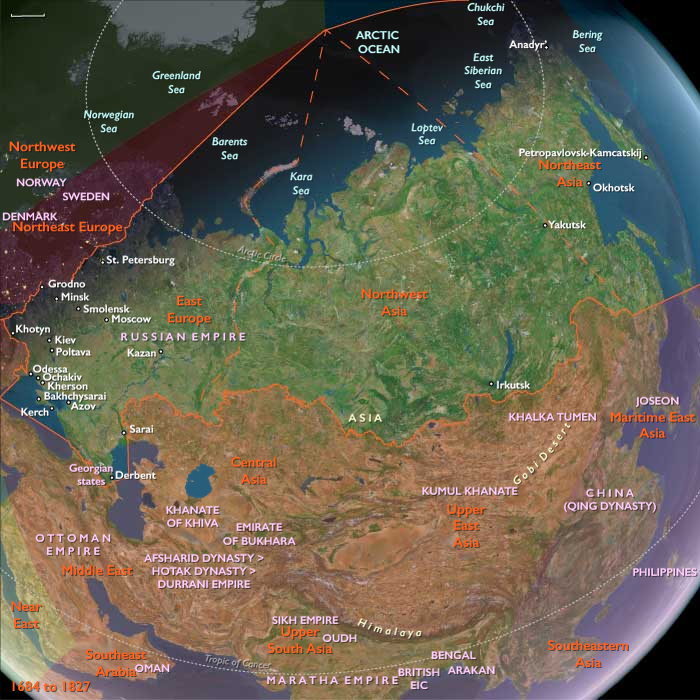
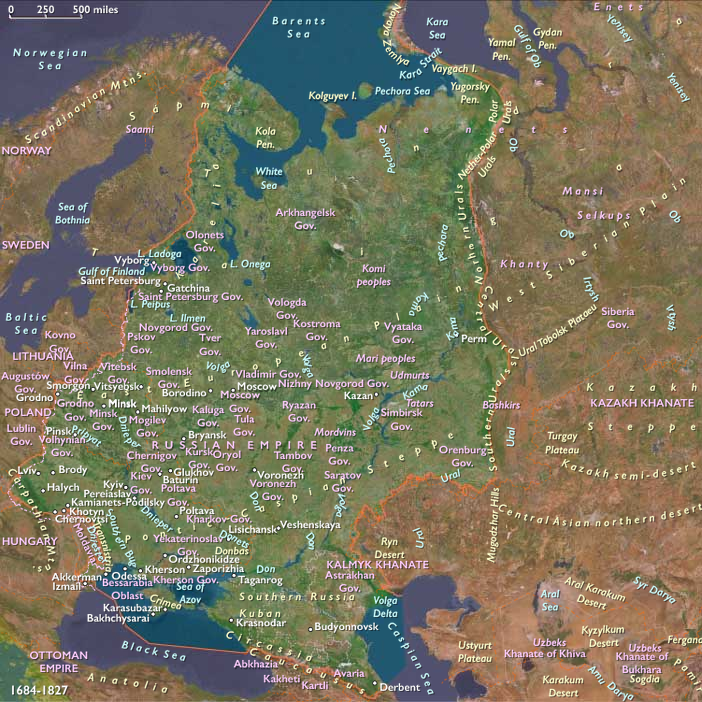
Continuing through a hostile Masuria, the Swedes take Grodno on January 28, 1708, the Russians having left without a fight.
When Charles XII liberates Grodno, the Jews again have to pay a heavy fine for not having supported the Swedes.
At this time, the Russians are dealing with a large rebellion of Don Cossacks, known as Bulavin Rebellion.
The mutiny has been contained in part by the forces of the Cossack Hetmanate led by Hetman Ivan Mazepa.
Locations
People
Groups
- Jews
- Cossacks, Zaporozhian
- Sweden, (second) Kingdom of
- Russia, Tsardom of
- Cossacks, Don
- Polish-Lithuanian Commonwealth (Commonwealth of the Two Nations)
- Cossack Hetmanate
Topics
Subjects
Regions
Subregions
Related Events
Showing 10 events out of 28695 total
Years: 1708 - 1708
January
Locations
People
Groups
- Jews
- Cossacks, Zaporozhian
- Sweden, (second) Kingdom of
- Russia, Tsardom of
- Cossacks, Don
- Polish-Lithuanian Commonwealth (Commonwealth of the Two Nations)
- Cossack Hetmanate
Topics
Subjects
Regions
Subregions