
Early Safavid power in Iran had been …
Years: 1523 - 1523
Early Safavid power in Iran had been based on the military power of the Qizilbāsh.
Ismāil had exploited the first element to seize power in Iran, but, eschewing politics after his defeat in Chaldiran, he had left the affairs of the government to the office of the wakīl (chief administrator, vakīl in Turkish).
Ismāil's successors, and most manifestly Shāh Abbās I, will successfully diminish the Qizilbāsh's influence on the affairs of the state.
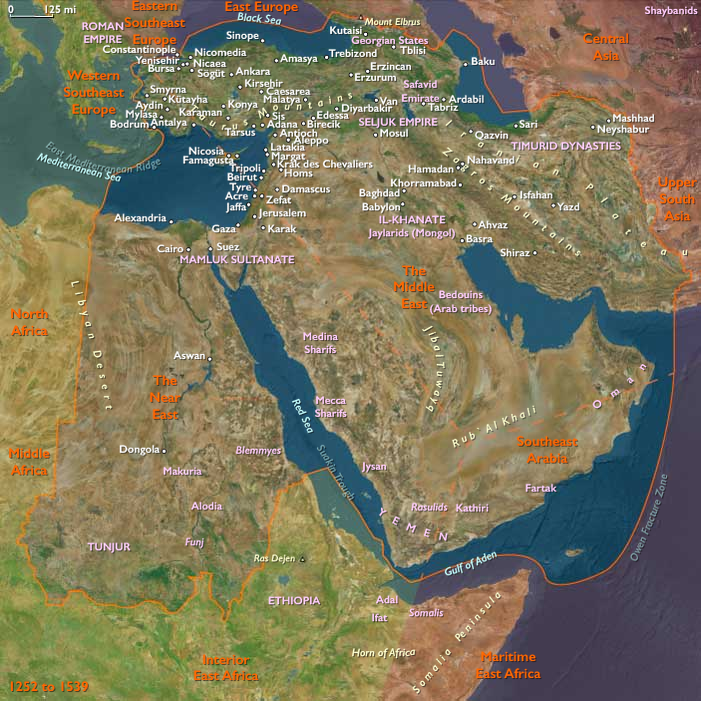
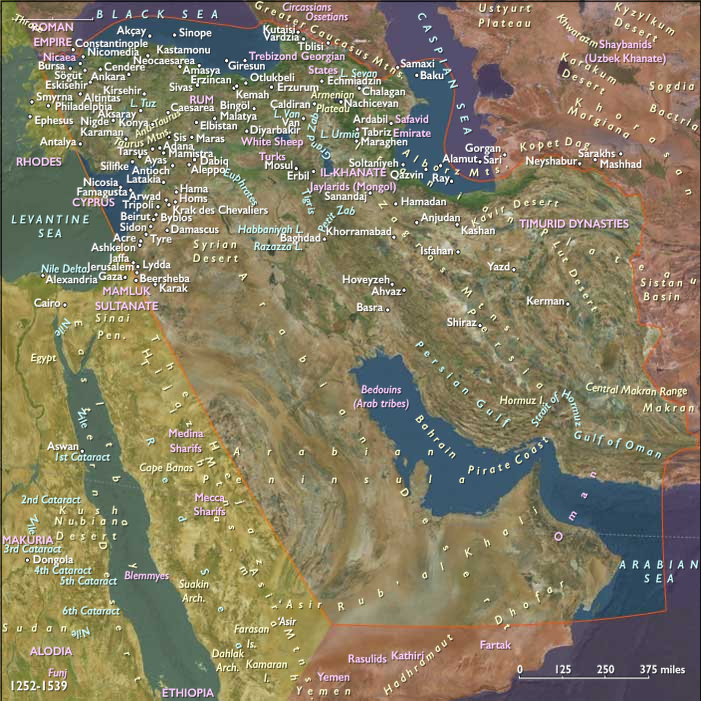
The Chaldiran battle furthermore holds even more historical significance as it had marked the start of over three hundred years of frequent and harsh warfare, fueled by geopolitics and ideological differences between the Ottomans and the Iranian Safavids (as well as successive Iranian states), mainly regarding territories in Eastern Anatolia, the Caucasus, and Mesopotamia.
The consequences of the defeat at Chaldiran are also psychological for Shah Ismāil: the defeat had destroyed Ismāil's belief in his invincibility, based on his claimed divine status.
His relationships with his Qizilbāsh followers had also been fundamentally altered.
For most of the last decade of Ismail's reign, the domestic affairs of the empire are overseen by the Tajik vizier Mirza Shah Husayn Isfahani.
A native of Isfahan, Mirza Shah had originally served as an architect, but in 1503 had been appointed as the personal vizier of the powerful Qizilbash magnate Durmish Khan Shamlu, who had recently been appointed as the governor of Mirza Shah's native city.
Mirza Shah had been appointed as vakil and vizier in 1514 after the Battle of Chaldiran, which had a damaging impact on the health of Safavid king Ismail I, who withdrew from affairs of the state and began heavily drinking.
The appointment of Mirza Shah to the vakil office is because he had after the battle found Ismail's favorite wife, who was lost in Azerbaijan.
Mirza Shah has used the absence of the king as an opportunity to expand his authority.
Furthermore, Mirza Shah has also become a close friend with Ismail and accompanies him during his period of drinking.
This had enabled Mirza Shah gain influence over the king himself.
In 1521, Mirza Shah had chosen to confront his former master, Durmish Khan Shamlu, managing to send him far away from the Safavid court—to Herat in Khorasan, where he was forced to serve as its governor.
However, Mirza Shah Husayn outsmarts himself in the end, and as a result is assassinated in April 1523 at the hands of furious Qizilbash officers.
Ismail appoint Jalal al-Din Mohammad Tabrizi, the son of the late vizier Muhammad Zakariya Kujuji, as his new vizier.
Locations
People
Groups
- Tajik people
- Iranian peoples
- Persian people
- Oghuz Turks
- Muslims, Sunni
- Muslims, Shi'a
- Turkmen people
- Ottoman Empire
- Qizilbash or Kizilbash, (Ottoman Turkish for "Crimson/Red Heads")
- Persia, Safavid Kingdom of
Topics
Commodoties
Subjects
Regions
Subregions
Related Events
Showing 10 events out of 38565 total
Years: 1523 - 1523
Locations
People
Groups
- Tajik people
- Iranian peoples
- Persian people
- Oghuz Turks
- Muslims, Sunni
- Muslims, Shi'a
- Turkmen people
- Ottoman Empire
- Qizilbash or Kizilbash, (Ottoman Turkish for "Crimson/Red Heads")
- Persia, Safavid Kingdom of
Topics
Commodoties
Subjects
Regions
Subregions