
General Clinton had sent his trusted aide, …
Years: 1779 - 1779
April
General Clinton had sent his trusted aide, Lieutenant Duncan Drummond, to England early in 1779 in order to argue Clinton's request to be recalled.
Drummond is unsuccessful in this: despite the intervention of Henry Clinton’s cousin, the Duke of Newcastle, the king has refused to even consider granting Clinton leave, claiming that Clinton is "the only man who might still save America".
William Eden had also interceded in an attempt to improve Clinton's situation, but political divisions in the government and the prospect of Spanish entry into the war mean that Clinton ends up with very little support.
Clinton has also complained about the lack of naval support being provided by Admiral James Gambier, with whom he also has a difficult relationship.
He eventually sends London a list of admirals with whom he thinks he can work; none are chosen, and Gambier is replaced temporarily by George Collier before his permanent replacement, Mariot Arbuthnot, arrives.
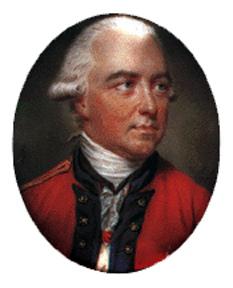
General Sir Henry Clinton, Commander in Chief of the British Forces in the American Revolution, 1778-1782. Painted in 1777 by John Smart (1741–1811)
Locations
People
- George Collier
- George Germain, 1st Viscount Sackville
- George III of Great Britain
- Henry Clinton
- Henry Pelham-Clinton, 2nd Duke of Newcastle
- James Gambier, 1st Baron Gambier
- Mariot Arbuthnot
- William Eden, 1st Baron Auckland
Groups
- France, (Bourbon) Kingdom of
- Spain, Bourbon Kingdom of
- Britain, Kingdom of Great
- United States of America (US, USA) (Philadelphia PA)
Topics
- American Revolution
- American Revolutionary War, or American War of Independence
- Anglo-French War (1778–1783)
- Anglo-Spanish War
Subjects
Regions
Subregions
Years: 1779 - 1779
April
General Sir Henry Clinton, Commander in Chief of the British Forces in the American Revolution, 1778-1782. Painted in 1777 by John Smart (1741–1811)
Locations
People
- George Collier
- George Germain, 1st Viscount Sackville
- George III of Great Britain
- Henry Clinton
- Henry Pelham-Clinton, 2nd Duke of Newcastle
- James Gambier, 1st Baron Gambier
- Mariot Arbuthnot
- William Eden, 1st Baron Auckland
Groups
- France, (Bourbon) Kingdom of
- Spain, Bourbon Kingdom of
- Britain, Kingdom of Great
- United States of America (US, USA) (Philadelphia PA)
Topics
- American Revolution
- American Revolutionary War, or American War of Independence
- Anglo-French War (1778–1783)
- Anglo-Spanish War
Subjects
Regions
Subregions