
Filters:
The free nonwhites manifest a number of …
Years: 1684 - 1827
The free nonwhites manifest a number of common traits throughout the British Caribbean.
They are predominantly female, largely urban, and clearly differentiated from the slaves both by- law and by custom.
Although adult females outnumber males, the free nonwhite population tends to be the most sexually balanced overall and is the only group that consistently reproduces itself in the British colonies during the era of the slave trade.
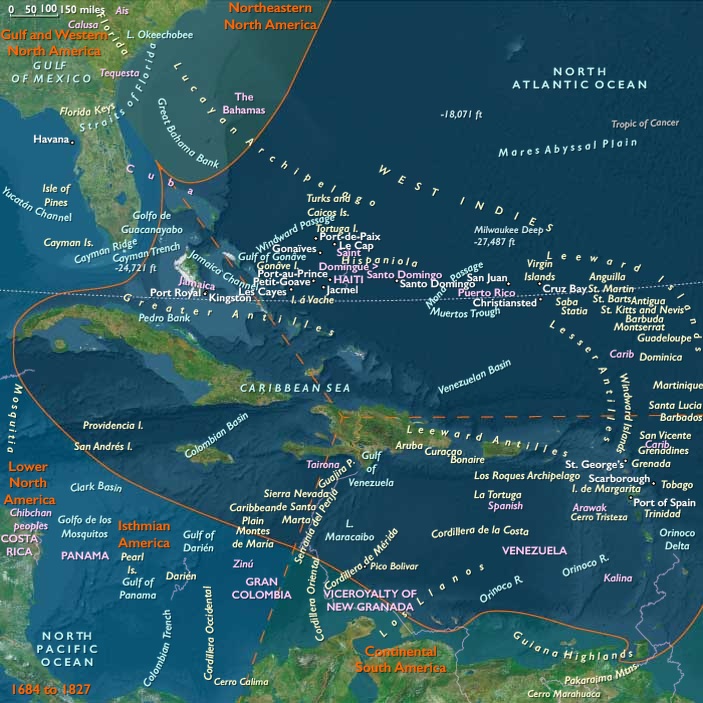
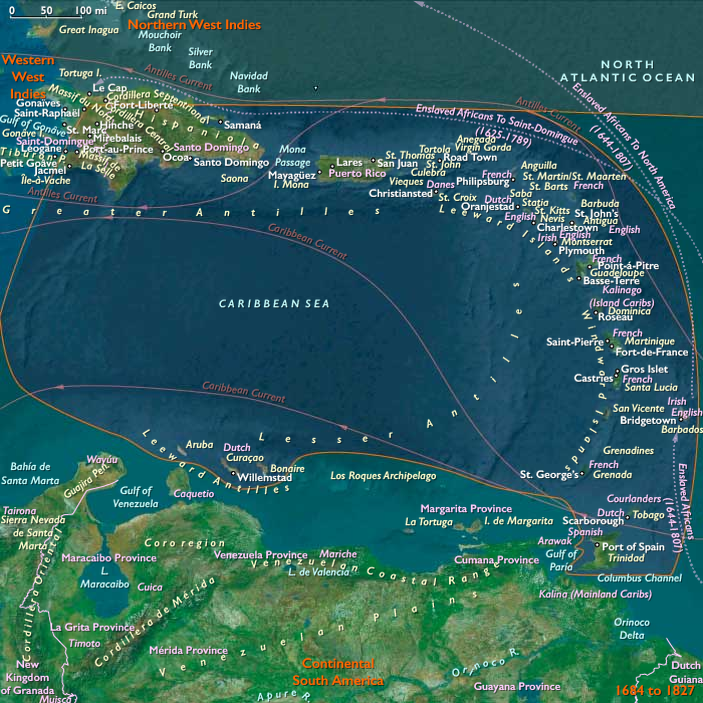
Moreover, with the exception of Trinidad, where, as Bridget Brereton indicates, just as many free nonwhites live in the rural parishes as in the towns of Port-of-Spain, San Fernando, and St. Joseph, the free nonwhites are strongly urban.
After 1809 about sixty-one percent of all the free nonwhites in Barbados live in the parish of St. Michael in the capital city, Bridgetown.
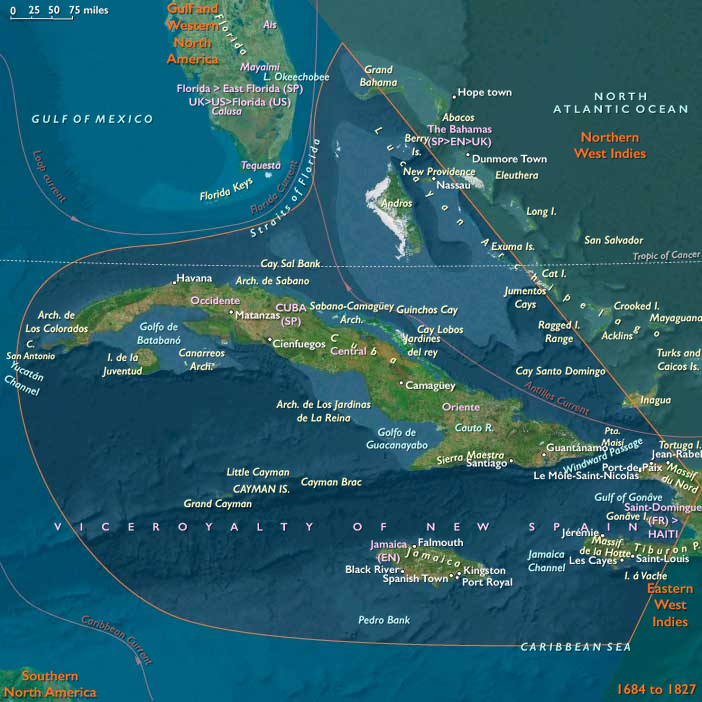
More free nonwhites live in Kingston, Jamaica, than in all the other parishes combined.
The free nonwhite population faces competition from both ends of the spectrum.
At the lower end of the economic scale they have to compete with jobbing slaves, who are often working arduously to get enough money to purchase their freedom and so join the free group.
At the upper end they compete with the artisan, commercial, and semiskilled service sector of the lower orders of whites.
The whites often use their political power—or in some cases their access to political power in Britain—to circumscribe the free non-whites as much as possible.
Throughout the Caribbean it is common to find laws distinguishing comportment, dress, and residence; denying nonwhites the right to practice certain professions; or limiting the material legacy of individual free nonwhites, but at the time of the abolition of slavery, nonwhites are aggressively challenging the political hegemony of the whites, and their successes are very important in the subsequent development of British Caribbean society.
They are predominantly female, largely urban, and clearly differentiated from the slaves both by- law and by custom.
Although adult females outnumber males, the free nonwhite population tends to be the most sexually balanced overall and is the only group that consistently reproduces itself in the British colonies during the era of the slave trade.
Moreover, with the exception of Trinidad, where, as Bridget Brereton indicates, just as many free nonwhites live in the rural parishes as in the towns of Port-of-Spain, San Fernando, and St. Joseph, the free nonwhites are strongly urban.
After 1809 about sixty-one percent of all the free nonwhites in Barbados live in the parish of St. Michael in the capital city, Bridgetown.
More free nonwhites live in Kingston, Jamaica, than in all the other parishes combined.
The free nonwhite population faces competition from both ends of the spectrum.
At the lower end of the economic scale they have to compete with jobbing slaves, who are often working arduously to get enough money to purchase their freedom and so join the free group.
At the upper end they compete with the artisan, commercial, and semiskilled service sector of the lower orders of whites.
The whites often use their political power—or in some cases their access to political power in Britain—to circumscribe the free non-whites as much as possible.
Throughout the Caribbean it is common to find laws distinguishing comportment, dress, and residence; denying nonwhites the right to practice certain professions; or limiting the material legacy of individual free nonwhites, but at the time of the abolition of slavery, nonwhites are aggressively challenging the political hegemony of the whites, and their successes are very important in the subsequent development of British Caribbean society.
Groups
- Dutch people
- French people (Latins)
- English people
- Spaniards (Latins)
- Netherlands, United Provinces of the (Dutch Republic)
- England, (Stuart) Kingdom of
- England, (Stewart, Restored) Kingdom of
- England, (Orange and Stewart) Kingdom of
- Britain, Kingdom of Great
- Britain (United Kingdom of Great Britain and Ireland)
Topics
- Colonization of the Americas, Spanish
- Colonization of the Americas, French
- Colonization of the Americas, English
- Colonization of the Americas, Dutch
Commodoties
Subjects
Regions
Subregions
Years: 1684 - 1827
Groups
- Dutch people
- French people (Latins)
- English people
- Spaniards (Latins)
- Netherlands, United Provinces of the (Dutch Republic)
- England, (Stuart) Kingdom of
- England, (Stewart, Restored) Kingdom of
- England, (Orange and Stewart) Kingdom of
- Britain, Kingdom of Great
- Britain (United Kingdom of Great Britain and Ireland)
Topics
- Colonization of the Americas, Spanish
- Colonization of the Americas, French
- Colonization of the Americas, English
- Colonization of the Americas, Dutch
Commodoties
Subjects
Regions
Subregions