
The Phocians, whose early history remains obscure, …
Years: 479BCE - 479BCE
The Phocians, whose early history remains obscure, had at first joined in the national defense during the Persian invasion of 480 BCE, but their irresolute conduct had contributed to the Greek defeat by Persia at Thermopylae.
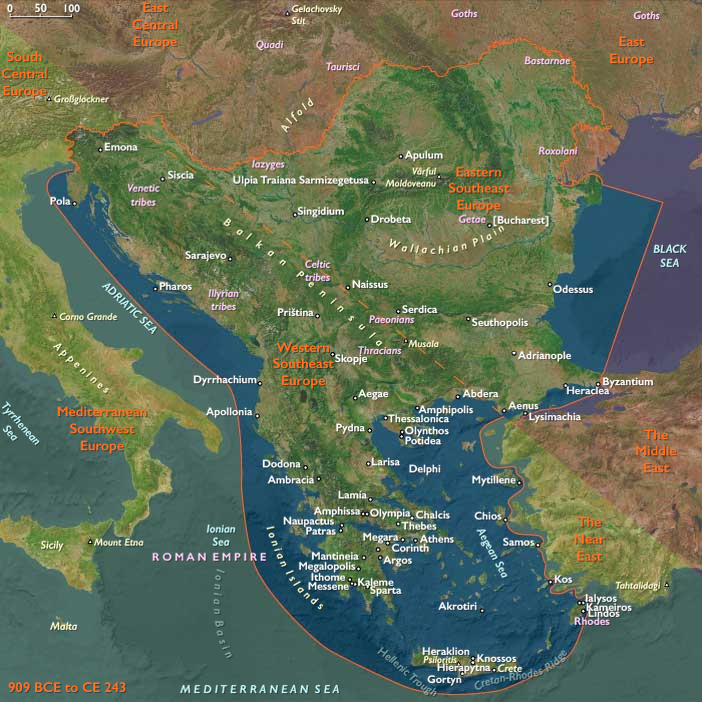
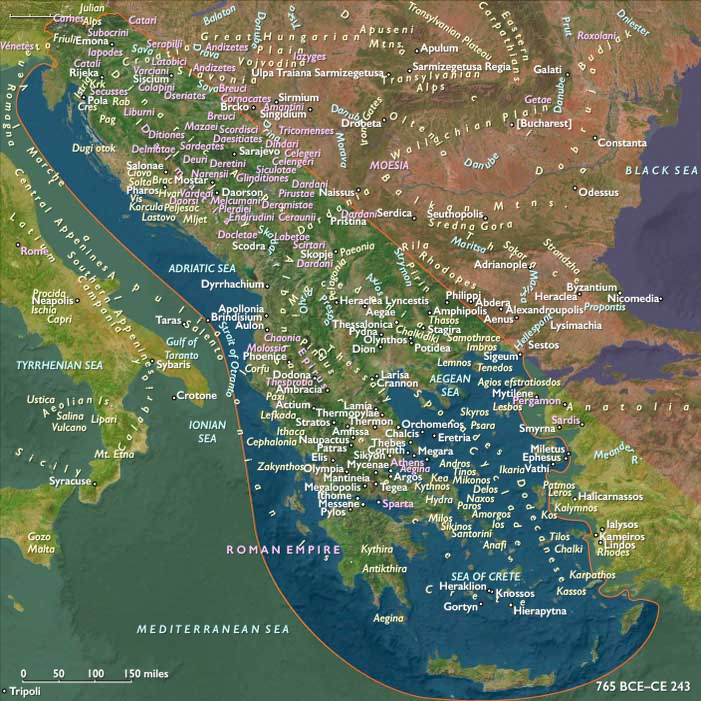
The Phocians are on the Persian side at Plataea, where the Persian army of occupation under Mardonius engages a Pan-Greek force of Spartans, Tegeans, Chalcidians and Athenians on August 27, 479 BCE on the slopes of Mount Cithaeron below the city; Aristides commands the Athenian forces.
The Thebans had been brought for the first time into hostile contact with the Athenians, who had helped the small village of Plataea to maintain its independence against them, and in 506 BCE had repelled an inroad into Attica.
The aversion to Athens best serves to explain the apparently unpatriotic attitude which Thebes has displayed during the Persian invasion of Greece.
Though a contingent of four hundred had been sent to Thermopylae and remained there with Leonidas until just before the last stand when they surrendered to the Persians, the governing aristocracy had soon after joined Xerxes with great readiness and fights zealously on his behalf at the Battle of Plataea.
The superiority of Greek armor and tactics is the deciding factor: Mardonius is killed, and his death obliges the less organized and less disciplined Persian forces to withdraw, decisively crushing Persian ambitions on the Greek mainland.
The Plataeans hereafter will offer sacrifice annually to Zeus the Liberator in honor of the Greek dead, and Pausanias declares the inviolability of Plataea.
Locations
People
Groups
- Polytheism (“paganism”)
- Athens, City-State of
- Thebes, City-State of
- Greece, classical
- Persian people
- Sparta, Kingdom of
- Corinth, City-State of
- Peloponnesian League (Spartan Alliance)
- Boeotian League
- Achaemenid, or First Persian, Empire
Topics
- Younger Subboreal Period
- Iron Age Europe
- Iron Age Cold Epoch
- Classical antiquity
- Greco-Persian Wars, Early
- Persian Invasion of Greece, Second
- Mycale, Battle of
- Plataea, Battle of
Commodoties
Subjects
Regions
Subregions
Related Events
Showing 10 events out of 65565 total
Years: 479BCE - 479BCE
Locations
People
Groups
- Polytheism (“paganism”)
- Athens, City-State of
- Thebes, City-State of
- Greece, classical
- Persian people
- Sparta, Kingdom of
- Corinth, City-State of
- Peloponnesian League (Spartan Alliance)
- Boeotian League
- Achaemenid, or First Persian, Empire
Topics
- Younger Subboreal Period
- Iron Age Europe
- Iron Age Cold Epoch
- Classical antiquity
- Greco-Persian Wars, Early
- Persian Invasion of Greece, Second
- Mycale, Battle of
- Plataea, Battle of
Commodoties
Subjects
Regions
Subregions