
Poland had lost ground during the eleventh …
Years: 1108 - 1251
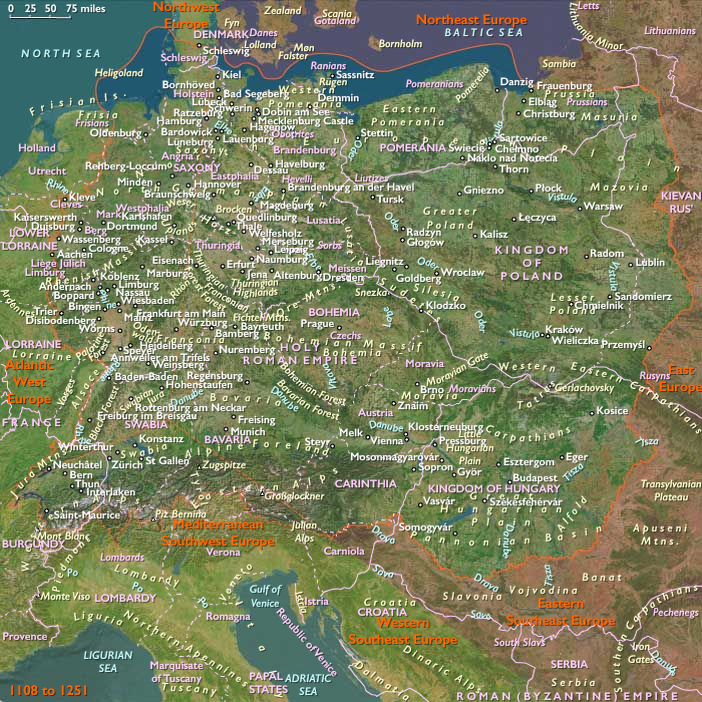
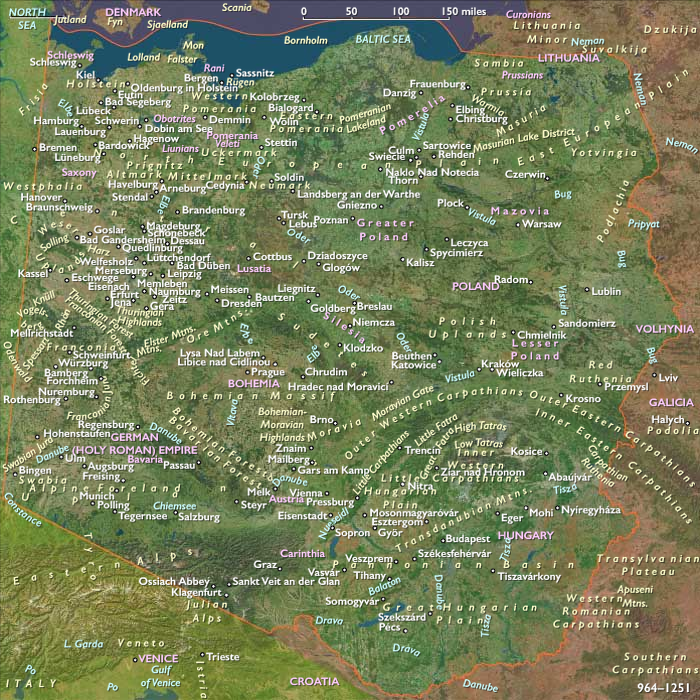
Poland had lost ground during the eleventh and twelfth centuries in its complex triangular relationship with the German Empire to the west and the kingdom of Bohemia to the south.
New foreign enemies appear by the thirteenth century.
The Mongol invasion cuts a swath of destruction through the country in 1241; for fifty years after their withdrawal in 1242, Mongol nomads will mount devastating raids into Poland from bases in Ruthenia to the southeast.
Meanwhile, an even more dangerous foe had arrived in 1226 when a Polish duke invited the Teutonic Knights, a Germanic crusading order, to help him subdue Baltic pagan tribes.
Upon completing their mission with characteristic fierceness and efficiency, the knights build a stronghold on the Baltic seacoast, from which they seek to enlarge their holdings at Polish expense.
By this time, the Piasts have been parceling out the realm into ever smaller units for nearly one hundred years.
This policy of division, initiated by Boleslaw II to appease separatist provinces while maintaining national unity, leads to regional governance by various branches of the dynasty and to a near breakdown of cohesiveness in the face of foreign aggression.
Locations
People
Groups
- Germans
- Papal States (Republic of St. Peter)
- Kievan Rus', or Kiev, Great Principality of
- Germany, Kingdom of (within the Holy Roman Empire)
- German, or Ottonian (Roman) Empire
- Poles (West Slavs)
- Czechs [formerly Bohemians] (West Slavs)
- Poland of the first Piasts, Kingdom of
- Christians, Roman Catholic
- Mongols
- Poland during the period of fragmentation, Kingdom of
- Bohemia, Kingdom of
- Mongol Empire
- Ordensstaat (Monastic state of the Teutonic Knights)
Topics
- Mongol Conquests
- Mongol Invasion of Europe
- Teutonic Knights' Conquest of Prussia
- Mongol Invasion of Poland
- Mongol Invasions of Europe
Subjects
Regions
Subregions
Years: 1108 - 1251
Locations
People
Groups
- Germans
- Papal States (Republic of St. Peter)
- Kievan Rus', or Kiev, Great Principality of
- Germany, Kingdom of (within the Holy Roman Empire)
- German, or Ottonian (Roman) Empire
- Poles (West Slavs)
- Czechs [formerly Bohemians] (West Slavs)
- Poland of the first Piasts, Kingdom of
- Christians, Roman Catholic
- Mongols
- Poland during the period of fragmentation, Kingdom of
- Bohemia, Kingdom of
- Mongol Empire
- Ordensstaat (Monastic state of the Teutonic Knights)
Topics
- Mongol Conquests
- Mongol Invasion of Europe
- Teutonic Knights' Conquest of Prussia
- Mongol Invasion of Poland
- Mongol Invasions of Europe
Subjects
Regions
Subregions