
Around 55,000 years ago, global …
Years: 49293BCE - 28558BCE
Around 55,000 years ago, global weather patterns begin to fluctuate dramatically, shifting from extreme cold to milder conditions and back within just a few decades.
By 50,000 years ago, the Wisconsin glaciation (known in Europe as the Würm glaciation) is well advanced. Expanding ice sheets in North America and Europe push climatic zones southward, transforming the temperate regions of Europe and North America into Arctic tundra-like landscapes. Meanwhile, rain bands typical of temperate zones shift south, reaching as far as northern Africa.
Neanderthals and Climate Adaptation
The Neanderthals, well adapted to cold climates with their barrel chests and stocky limbs, are better suited than Cro-Magnons to retain body heat. However, the rapid and unpredictable climate fluctuations cause ecological upheavals, replacing familiar plants and animals within a single lifetime—a shift to which Neanderthals struggle to adapt.
One major challenge is the replacement of forests by grasslands during the Mousterian Pluvial, an effect of the last Ice Age’s climatic shifts. This change disrupts the Neanderthals’ ambush-based hunting techniques, making it harder for them to secure food. As a result, large numbers of Neanderthals likely perish due to food scarcity and environmental stress, with the crisis peaking around 30,000 years ago.
Neanderthal Burial and Final Strongholds
Despite their decline, Neanderthals appear to be the first humans to intentionally bury their dead, often in simple graves. The last known traces of Mousterian culture, though lacking human remains, have been discovered at Gorham’s Cave on Gibraltar’s remote south-facing coast, dating between 30,000 and 24,500 years ago.
Possible Scenarios for Neanderthal Extinction
Several hypotheses attempt to explain the disappearance of the Neanderthals from the fossil record around 25,000 years ago:
-
Complete Extinction and Replacement: Neanderthals were a separate species from modern humans and became extinct due to climate change and/or competition with Homo sapiens, who expanded into their territories starting around 80,000 years ago. Anthropologist Jared Diamond suggests that violent conflict and displacement played a role in their demise.
-
Interbreeding and Absorption: Neanderthals were a contemporary subspecies that interbred with modern humans, gradually disappearing through genetic absorption.
-
Volcanic Catastrophe: A Campanian Ignimbrite super-eruption around 40,000 years ago, followed by a second eruption a few thousand years later, may have severely impacted Neanderthal populations. Evidence from Mezmaiskaya Cave in the Caucasus Mountains of southern Russia supports this theory, with mitochondrial DNA (mtDNA) analysis showing a distinct Neanderthal lineage separate from modern humans.
Energy Needs and Survival Challenges
Neanderthals had higher caloric requirements than any other known human species. They required 100 to 350 more calories per day than an anatomically modern human male (68.5 kg) or female (59.2 kg). This higher energy demand may have made them especially vulnerable when food sources became scarce, further contributing to their extinction.
Ultimately, by 25,000 years ago, Neanderthals disappear from the fossil record, leaving behind traces of their culture—but no direct descendants in the modern human genetic lineage.
Groups
Topics
Subjects
Regions
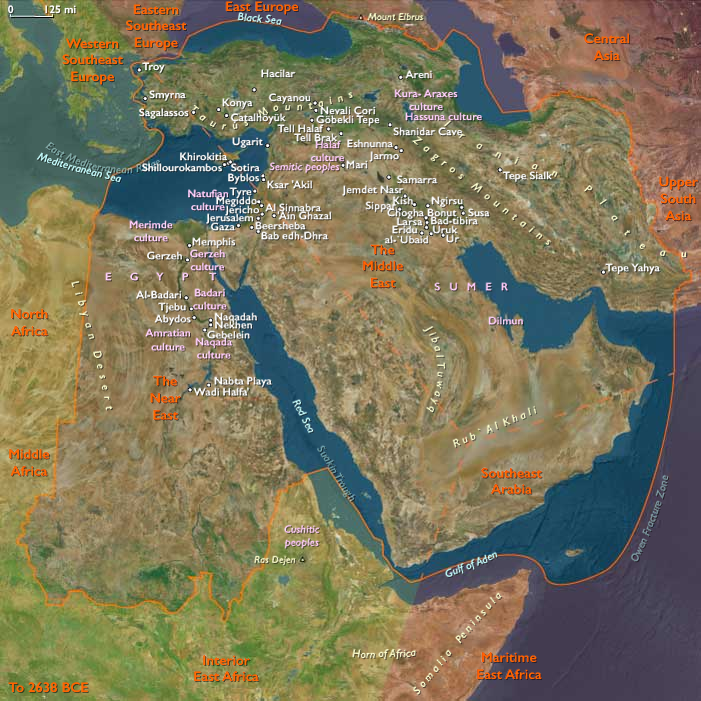
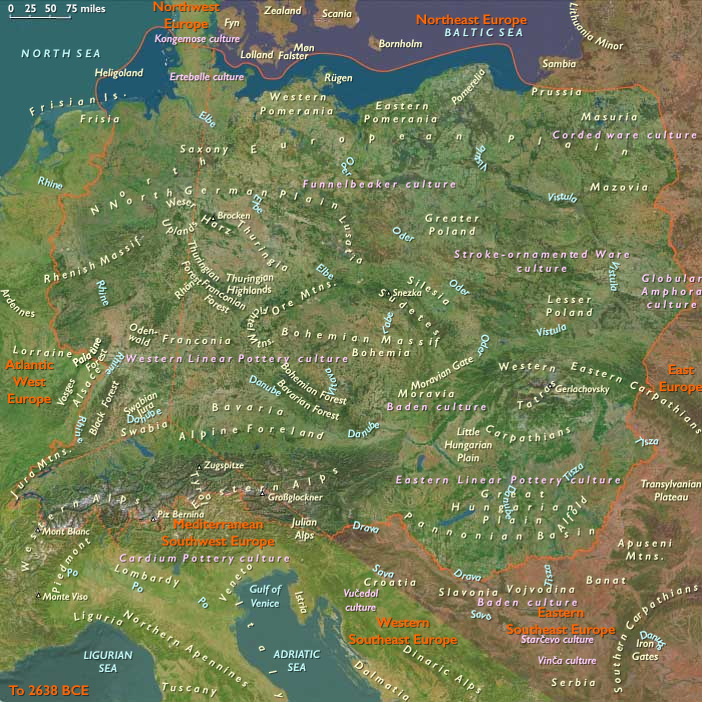
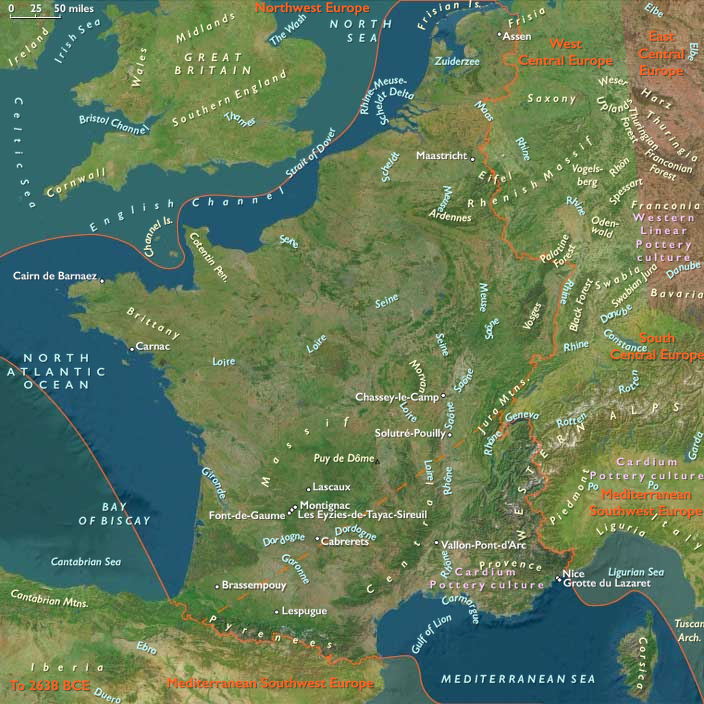
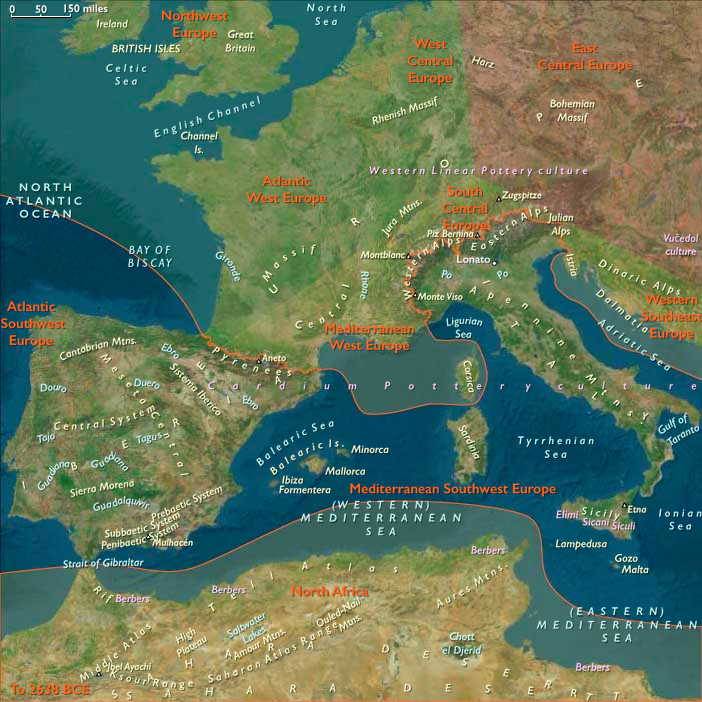
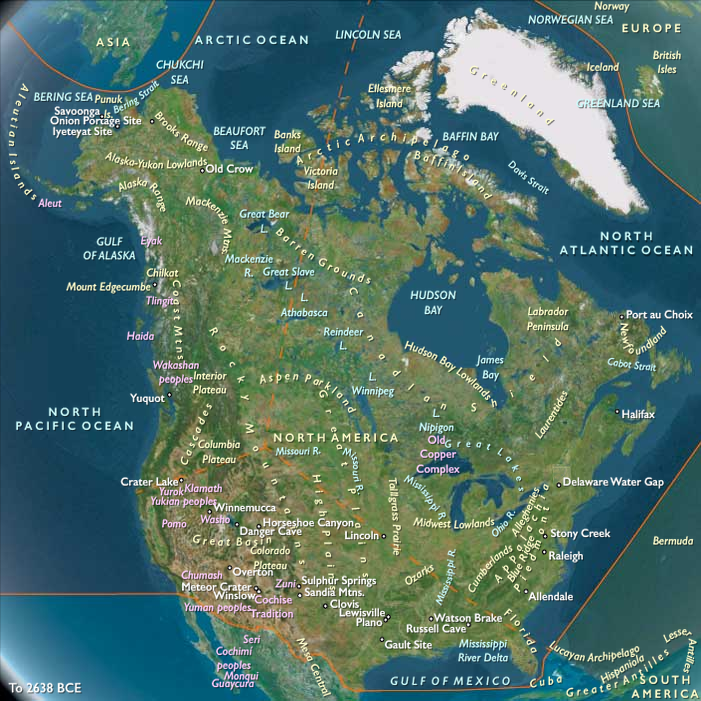
Subregions
- East Central Europe
- Near East
- South Central Europe
- Mediterranean West Europe
- Mediterranean Southwest Europe
- Atlantic Southwest Europe
- Atlantic West Europe
- West Central Europe
- Northeastern North America
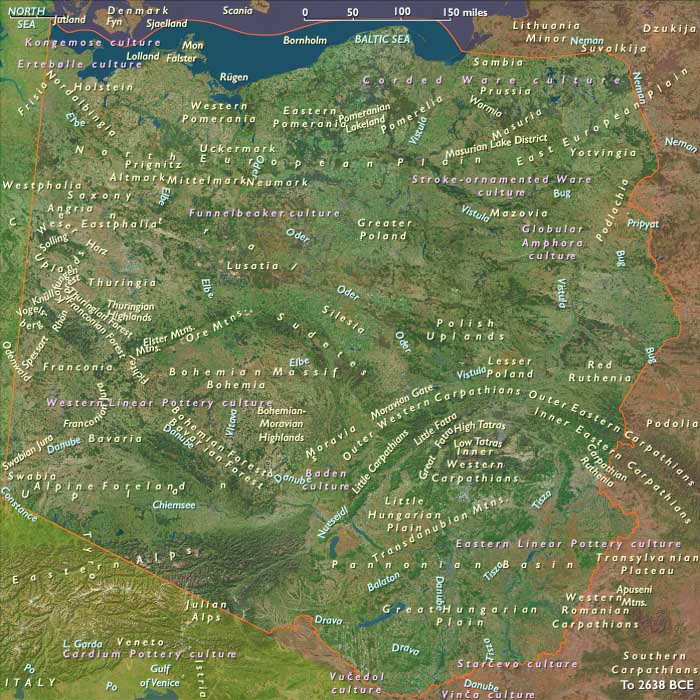
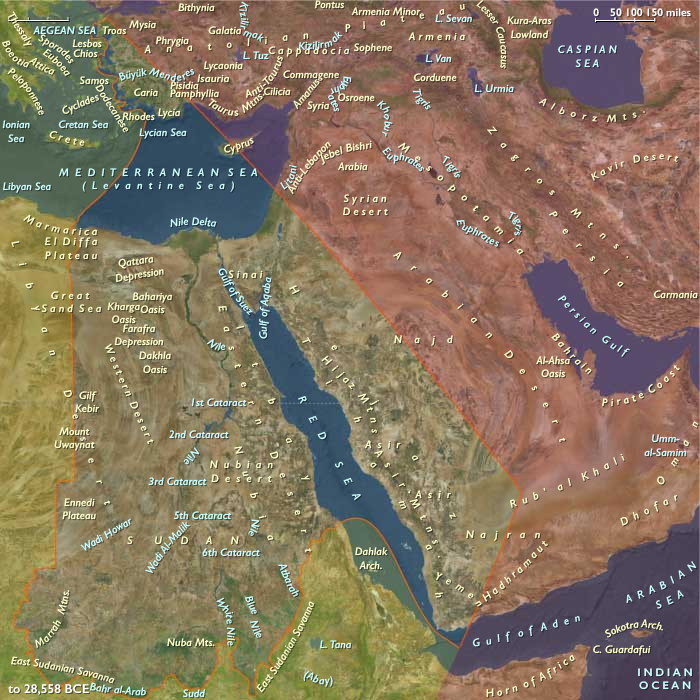
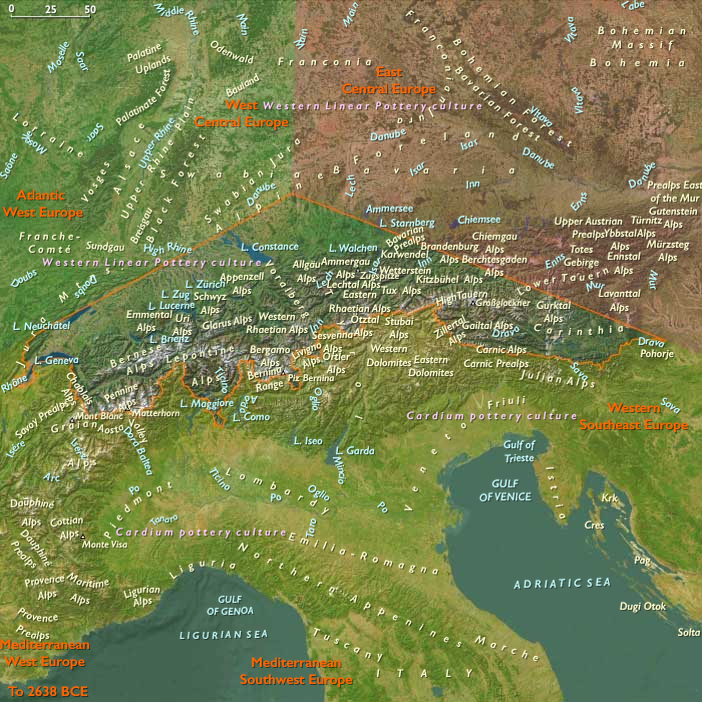
Related Events
Showing 10 events out of 69706 total
Years: 49293BCE - 28558BCE
Groups
Topics
Subjects
Regions
Subregions
- East Central Europe
- Near East
- South Central Europe
- Mediterranean West Europe
- Mediterranean Southwest Europe
- Atlantic Southwest Europe
- Atlantic West Europe
- West Central Europe
- Northeastern North America