
Dorestad: The Trading Hub of Northwestern Europe …
Years: 689 - 689
Dorestad: The Trading Hub of Northwestern Europe
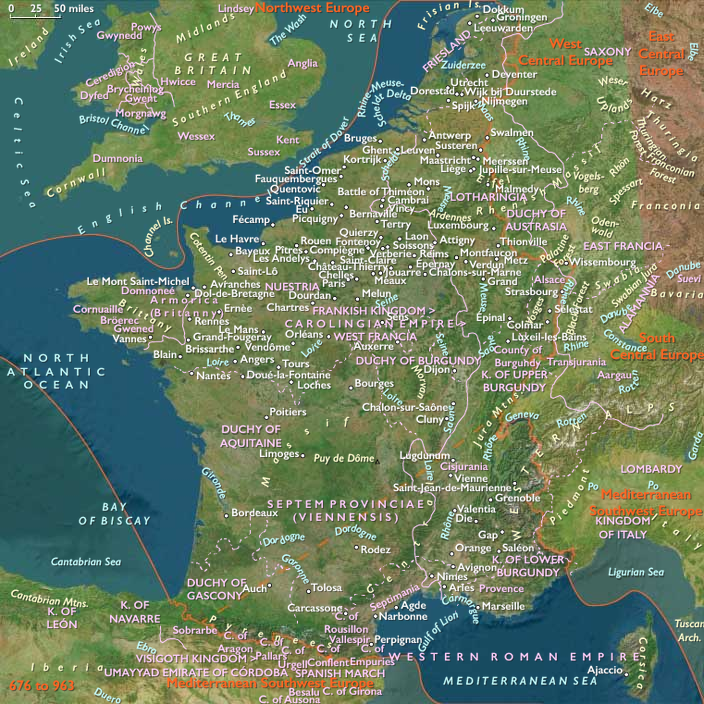
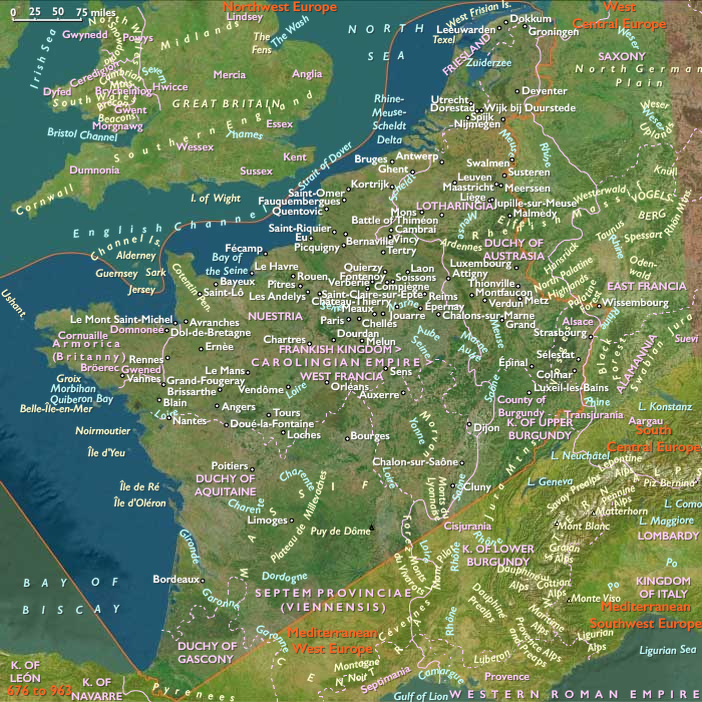
Between the 7th and 9th centuries, Dorestad emerges as the largest emporium in northwestern Europe, thriving as a major North Sea trading center. Stretching three kilometers along the confluence of the Rhine and Lek rivers, southeast of Utrecht, it occupies a strategic position near the modern town of Wijk bij Duurstede in the Netherlands. Goods from the Middle Rhineland, including wine from vineyards south of Mainz, pass through its bustling markets, reinforcing its prominence in regional commerce.
A Contested Stronghold
Dorestad’s strategic and economic value makes it a frequent battleground. Between 600 and 719, the Frisians and the Franks repeatedly clash over control of the city. A Roman fortress, originally constructed during the Roman era, remains in use throughout the Early Middle Ages, providing a defensive stronghold for whichever power holds the settlement.
The Frisian rulers, whose exact titles vary by source, are often referred to as dukes in Frankish records, while other sources call them kings—reflecting the differing perspectives of Christianized Latin chroniclers and the Germanic pagan Frisians who likely viewed their leaders as monarchs.
The Fall of Frisian Control
In the late 7th century, Frisian ruler Radbod, who had sought to expel Christian influence from his realm and resist Frankish dominance, suffers a decisive defeat at the Battle of Dorestad (689) against Pepin of Herstal. As a result, Radbod is forced to cede West Frisia (Frisia Citerior)—the territory between the Scheldt and the Vlie—to the Franks, bringing a significant portion of the Frisian lands under Frankish rule.
Despite the changing political landscape, Dorestad remains a key economic hub, its mint further enhancing its influence across the region. However, its prosperity will eventually decline in the mid-9th century, as Viking raids and shifting trade routes weaken its prominence in European commerce.
Locations
People
Groups
- Franks
- Christianity, Chalcedonian
- Frisians
- Frisian Kingdom
- Francia (mayors of the palaces of Austrasia and Neustria)
Topics
Commodoties
Subjects
Regions
Subregions
Years: 689 - 689
Locations
People
Groups
- Franks
- Christianity, Chalcedonian
- Frisians
- Frisian Kingdom
- Francia (mayors of the palaces of Austrasia and Neustria)
Topics
Commodoties
Subjects
Regions
Subregions