
The Conflict Over Holland and Frisia (1063–1076): …
Years: 1076 - 1076
The Conflict Over Holland and Frisia (1063–1076): Dirk V, Robert the Frisian, and the Imperial Struggle
The struggle for Holland and Frisia in the mid-11th century was shaped by dynastic disputes, imperial intervention, and religious conflict. Dirk V, the young Count of Holland, faced aggression from the Bishop of Utrecht, while his stepfather, Robert the Frisian, maneuvered for control of Flanders, Holland, and Frisia. The broader European conflict between Pope Gregory VII and Emperor Henry IV further intensified the regional war, culminating in the assassination of Duke Godfrey IV of Lower Lorraine and the death of Bishop William of Utrecht in 1076.
Early Conflict: Bishop William of Utrecht Seizes Holland (1063–1064)
- Upon the death of Floris I in 1061, his son Dirk V inherited the County of Holland, but as he was a minor, his mother, Gertrude of Saxony, served as regent.
- William I, Bishop of Utrecht, seized the opportunity to occupy disputed lands in Holland, claiming them for the bishopric.
- Emperor Henry IV confirmed William’s claim through charters issued on April 30 and May 2, 1064, recognizing his authority over the disputed territory.
- Dirk V and Gertrude retreated to Zeeland, where they could hold out against Utrecht’s forces.
Robert the Frisian’s Rise and the Flemish Civil War (1063–1071)
- In 1063, Gertrude married Robert the Frisian, the second son of Baldwin V of Flanders, bringing Dirk under Robert’s protection.
- Baldwin granted Dirk Imperial Flanders as an appanage, including the Frisian islands west of the Scheldt.
- Robert expanded his power, temporarily conquering Kennemerland (North Holland), though his hold on it was brief.
- Following the death of Baldwin VI in 1070, a civil war erupted in Flanders between Robert and Richilde of Mons and Hainaut, widow of Baldwin VI.
- Robert secured victory at the Battle of Cassel (February 1071), where Arnulf III of Flanders was killed, confirming Robert’s rule over Flanders and Frisia.
The Revolt in Holland and the Imperial Intervention (1075–1076)
- From 1075 onwards, the conflict in Holland and Frisia became entangled with the larger Investiture Controversy, as:
- Pope Gregory VII excommunicated Emperor Henry IV.
- The Bishop of Utrecht supported the emperor, while Dirk V and Robert the Frisian backed Pope Gregory VII and anti-king Rudolph of Swabia.
- While Robert was preoccupied in Flanders, Dirk’s supporters launched an uprising to reclaim Holland from the Bishop of Utrecht.
- Emperor Henry IV ordered Duke Godfrey IV ("the Hunchback") of Lower Lorraine to suppress the rebellion.
- Godfrey’s army crushed the revolt, restoring Episcopal rule in Holland.
The Assassination of Godfrey IV and the Death of Bishop William (1076)
- In 1076, Bishop William of Utrecht requested Duke Godfrey IV to visit his domains along the Frisian borderlands.
- While in Delft on February 26, 1076, Godfrey was assassinated by rebels, marking a major setback for imperial control in the region.
- Shortly after, Bishop William of Utrecht died on April 17, 1076, further weakening imperial influence in Holland and Frisia.
Consequences and Shift in Power
- With the deaths of Godfrey IV and Bishop William, imperial authority in Holland collapsed, giving Dirk V and Robert the Frisian a renewed opportunity to assert control.
- Robert’s position as Count of Flanders and overlord of Frisia solidified his power in both Flanders and the Low Countries.
- The events of 1076 marked a major turning point, as the balance of power shifted away from imperial-backed bishops and toward regional counts and anti-imperial factions.
The revolt in Holland (1075–1076), the assassination of Duke Godfrey IV, and the death of Bishop William of Utrecht weakened Emperor Henry IV’s hold over the region, paving the way for the resurgence of Dirk V and Robert the Frisian as dominant figures in the Low Countries.
Locations
People
- Dirk V of Holland
- Godfrey IV, Duke of Lower Lorraine
- Henry IV, Holy Roman Emperor
- Pope Gregory VII
- Robert I, Count of Flanders
- Rudolf of Rheinfelden
Groups
- Flanders, County of
- German, or Ottonian (Roman) Empire
- Utrecht, Bishopric of
- Lorraine (Lothier), Lower, (second) Duchy of
- Christians, Roman Catholic
- Holland, County of
Commodoties
Subjects
Regions
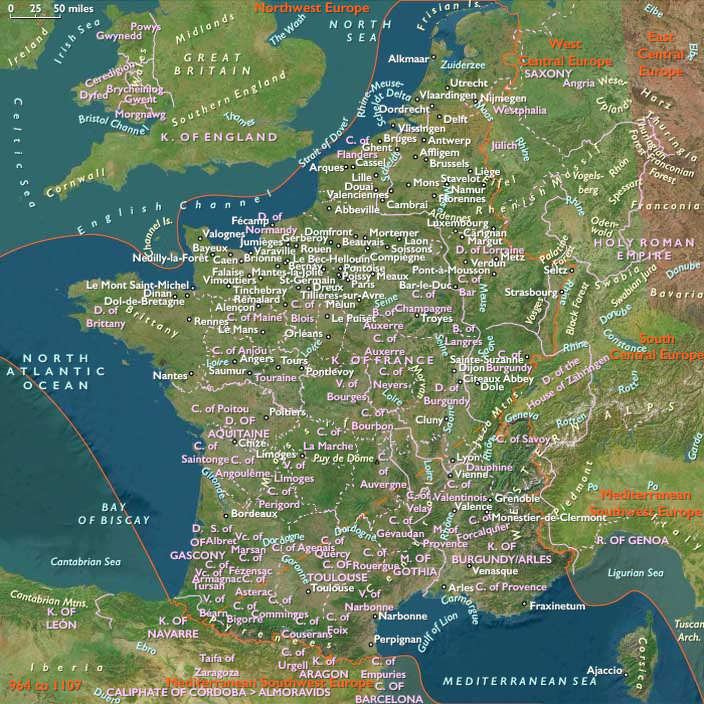
Subregions
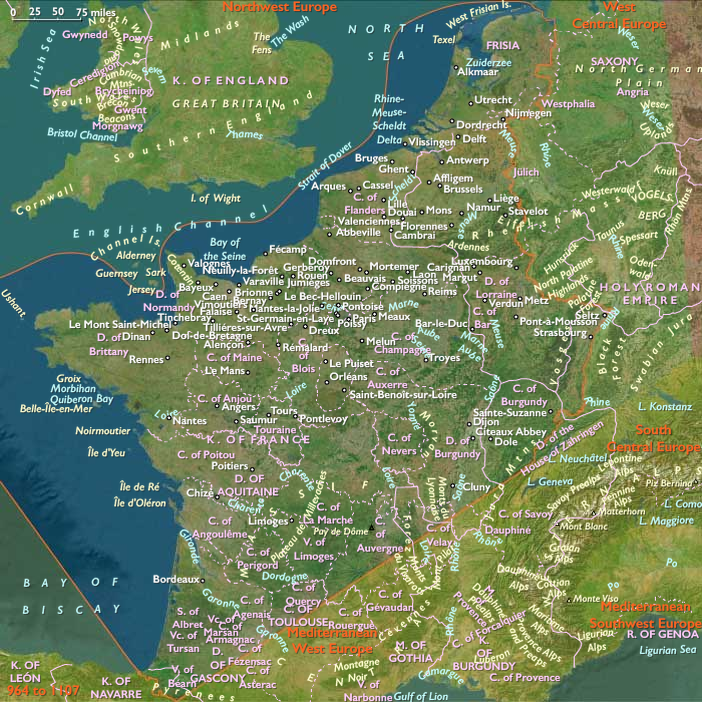
Years: 1076 - 1076
Locations
People
- Dirk V of Holland
- Godfrey IV, Duke of Lower Lorraine
- Henry IV, Holy Roman Emperor
- Pope Gregory VII
- Robert I, Count of Flanders
- Rudolf of Rheinfelden
Groups
- Flanders, County of
- German, or Ottonian (Roman) Empire
- Utrecht, Bishopric of
- Lorraine (Lothier), Lower, (second) Duchy of
- Christians, Roman Catholic
- Holland, County of
Commodoties
Subjects
Regions
Subregions