
Diophantus of Alexandria introduces an algebraic symbolism …
Years: 256 - 267
Diophantus of Alexandria introduces an algebraic symbolism that uses an abbreviation for the unknown.
He is the first Hellenistic mathematician to frankly recognize fractions as numbers.
In his influential work on the theory of numbers, called Arithmetica, he presents a collection of problems giving numerical solutions of determinate equations (those with a unique solution), and indeterminate equations. (The method for solving the latter comes to be known as Diophantine analysis.)
Diophantus determines general solutions to equations in several unknowns, such as x(2) + y(2) = z(2)—where solutions can be determined by x = 2pq; y = p(2) - q(2); z = p(2) + q(2).
The solutions to higher-order Diophantine equations prove to be more elusive, however, and will remain so for centuries.
The findings and works of Diophantus will influence mathematics greatly and cause many other questions to arise, of which the most famous is Fermat's Last Theorem.
Locations
People
Groups
Topics
Subjects
Regions
Subregions
Related Events
Filter results
Showing 10 events out of 60348 total
Each of the expeditions launched by Shu Han general Jiang Wei has ultimately been aborted due to inadequate food supplies or battlefield losses.
Jiang Wei's fifteen years of campaigning have drained Shu's already limited resources, and lead to the eventual downfall of Shu in 263 at the hands of its rival, Wei.
The conquest ends the tripartite equilibrium maintained in China for over forty years since the end of the Han Dynasty in 220 and signifies the beginning of a reunified China under the Jin Dynasty.
East Central Europe (256–267 CE): Peak Tribal Invasions and Roman Frontier Fragmentation
Between 256 and 267 CE, East Central Europe—covering Poland, Czechia, Slovakia, Hungary, and those portions of Germany and Austria lying east of 10°E and north of a line stretching from roughly 48.2°N at 10°E southeastward to the Austro-Slovenian border near 46.7°N, 15.4°E—experienced intense regional upheaval, marked by large-scale invasions, tribal migrations, and collapsing Roman provincial control during the continuing Crisis of the Third Century (235–284 CE). Roman frontier provinces (Pannonia Superior, Pannonia Inferior, Noricum) faced repeated invasions by the increasingly powerful Goths from the east and north, as well as intensified pressures from established groups such as the Marcomanni, Quadi, Vandals, and Sarmatian Iazyges, leading to widespread instability and reshaped regional dynamics.
Political and Military Developments
Escalation of Tribal Incursions
-
The Roman frontier defenses along the Danube experienced relentless incursions, especially by newly powerful Gothic tribes, who penetrated deeply into Roman territory, threatening key settlements and provincial stability.
-
The Vandals, Marcomanni, and Quadi increased their raids significantly, capitalizing on Roman internal disorder and weakening frontier defenses.
-
The Sarmatian Iazyges intensified cross-border raids into Roman Pannonia, further straining defensive capacities.
Imperial Fragmentation and Frontier Vulnerability
-
Roman imperial authority fragmented further amid rapid turnover of emperors and ongoing internal strife, severely weakening frontier administration and defense capabilities.
-
The political chaos within the Roman Empire left frontier provinces vulnerable, resulting in considerable territorial losses and military setbacks.
Economic and Technological Developments
Widespread Economic Breakdown
-
Severe disruptions in trade and commerce occurred due to persistent insecurity, repeated tribal incursions, and breakdowns in infrastructure. Frontier markets collapsed or diminished significantly, severely affecting local and regional economies.
Decline in Infrastructure Maintenance
-
Infrastructure development, maintenance of fortifications, roads, and bridges nearly halted, contributing further to regional economic and defensive deterioration.
Cultural and Artistic Developments
Cultural Decline and Survival Strategies
-
Cultural production along the Roman frontier decreased markedly, shifting overwhelmingly toward defensive strategies and practical military needs. Material culture focused heavily on survival, security, and resilience.
Restricted Cultural Exchange
-
Cultural exchanges continued at significantly reduced levels, constrained by insecurity, instability, and frequent conflict.
Settlement and Urban Development
Diminished and Fortified Roman Towns
-
Roman frontier settlements (Carnuntum, Vindobona, Aquincum) became smaller, heavily fortified, and primarily defensive in nature. Populations declined due to warfare, migration, and economic hardship.
Tribal Settlement Instability
-
Tribal communities adapted through greater mobility and frequent relocations, reflecting the chaotic nature of the period and increased threats from larger tribal confederations and regional migrations.
Social and Religious Developments
Militarization of Tribal Society
-
Tribal societies intensified their militarization, as warrior elites and chieftains increased their dominance. Leadership increasingly centered around success in warfare, survival strategies, and territorial defense.
Intensified Religious and Protective Rituals
-
Religious practices intensified significantly, focusing on rituals emphasizing martial prowess, protection, and community solidarity amid ongoing conflict and instability.
Long-Term Consequences and Historical Significance
The era from 256 to 267 CE represented the peak of frontier disruptions in East Central Europe during the Crisis of the Third Century. It decisively reshaped regional power dynamics, eroded Roman authority along the Danube, and laid the groundwork for major demographic shifts and tribal migrations that profoundly impacted the region’s subsequent historical development. This period’s events became pivotal in shaping the cultural, political, and ethnic composition of East Central Europe in the centuries that followed.
Eastern Southeast Europe (256–267 CE): Imperial Instability and Frontier Conflict
Settlement and Migration Patterns
Continued Gothic Incursions
Following Cniva's precedent, Gothic and other Germanic tribes continued frequent incursions across the Danube frontier, destabilizing settlements throughout Thrace, Moesia, and surrounding provinces. Roman frontier defenses were repeatedly tested, causing further demographic disruptions and forced relocations of local populations.
Political and Military Developments
Imperial Instability and Succession Crises
This era witnessed significant political instability and frequent changes of emperors, weakening Roman governance in Eastern Southeast Europe. Rapid turnovers of imperial authority undermined efforts at coherent frontier defense, allowing Gothic and other tribal incursions to become more frequent and bold.
Defensive Consolidation under Gallienus
In response to escalating crises, Emperor Gallienus (r. 253–268 CE) initiated crucial military reforms, including establishing mobile cavalry forces and reinforcing strategic fortifications along the Danube. These measures aimed to contain frequent barbarian raids, though their effectiveness remained limited amid persistent instability.
Economic and Technological Developments
Strained Economic Conditions
Economic conditions worsened under constant threat of invasion, severely disrupting agricultural production and regional trade networks. Markets suffered persistent insecurity, weakening regional commerce, and prosperity previously enjoyed during stable imperial eras.
Focus on Defensive Infrastructure
Investment in regional infrastructure primarily focused on defensive fortifications, bolstering cities and military outposts along frontier zones. Existing Roman roads and supply routes received critical attention to support rapid military mobilization.
Cultural and Artistic Developments
Cultural Stagnation Amid Crisis
The ongoing frontier conflicts significantly constrained cultural and artistic production. Resources shifted away from monumental public and civic projects toward immediate military and defensive needs, limiting new cultural initiatives.
Social and Religious Developments
Social Fragmentation and Local Autonomy
Social cohesion weakened under persistent threats and imperial neglect, causing local elites to assume greater autonomy for defense and governance. Communities increasingly relied on local leadership rather than distant imperial authority, reflecting broader trends toward decentralization.
Continuity of Religious Practices
Despite instability, traditional Roman religious observances continued to provide social cohesion. Christianity slowly expanded, though its growth was uneven amid disrupted societal conditions and regional insecurity.
Long-Term Consequences and Historical Significance
The era from 256 to 267 CE represented a critical stage of Roman imperial decline in Eastern Southeast Europe, marked by increased frontier instability, economic strain, and social fragmentation. These developments significantly undermined regional stability, laying groundwork for later, more profound transformations in the region's political and cultural landscape.
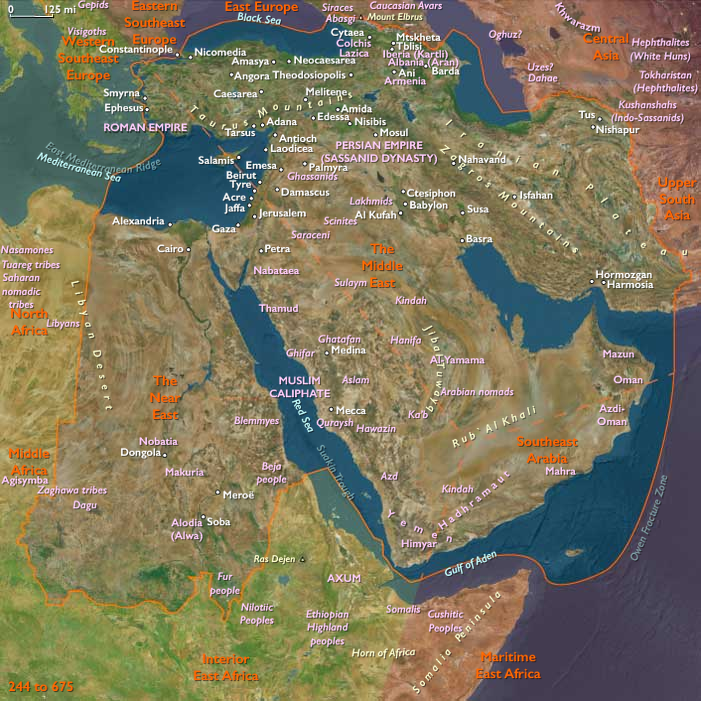
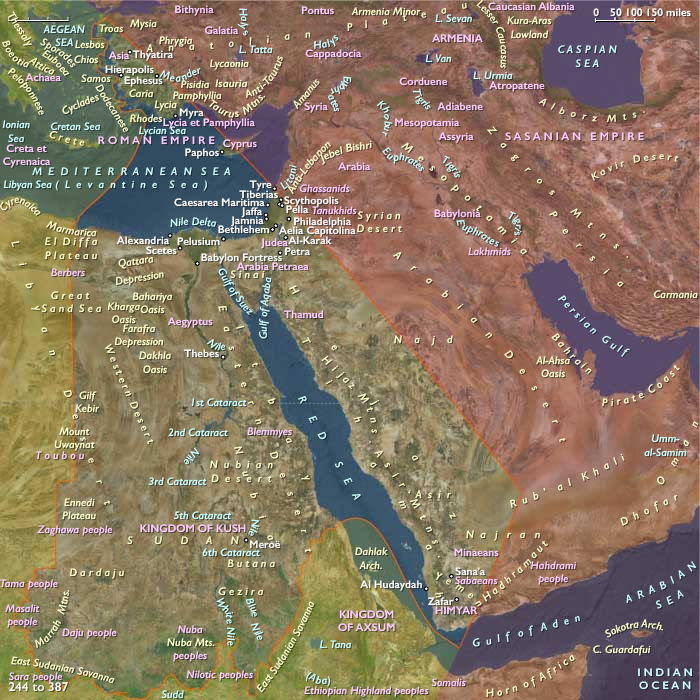
The Middle East: 256–267 CE
Shapur I’s Triumph and Roman Counterattack
The era 256 to 267 CE is dominated by dramatic confrontations between the Roman Empire and the increasingly assertive Sassanid Empire under the formidable leadership of Shapur I.
In 260 CE, Shapur achieves a spectacular victory by defeating the Roman army at the Battle of Edessa, capturing the Roman Emperor Valerian himself—a humiliating and unprecedented event in Roman history. Valerian's capture dramatically undermines Roman prestige, symbolizing the shifting power dynamics in the region.
Emboldened, Shapur pushes deeper into Roman territory, penetrating Anatolia between 258 and 260 CE. However, Roman resilience prevails. A vigorous counteroffensive led by Odaenathus, ruler of Palmyra and ally of Rome, successfully repels the Sassanids, forcing Shapur to retreat and relinquish recently captured territories, including Antioch and Armenia.
Despite these setbacks, Shapur's victories have lasting implications. His exploits highlight the Sassanid Empire's ability to rival Roman power and foreshadow ongoing conflicts that will define Roman–Persian relations for centuries to come. This period underscores a delicate balance of power, characterized by shifting borders, strategic alliances, and intense rivalries between two of antiquity’s greatest empires.
The Sassanid king Shapur captures Emperor Valerian after defeating his army at the Battle of Edessa.
He advances into Anatolia between 258 and 260 but is defeated by Roman forces there; attacks from Odaenathus force the Persians to withdraw from Roman territory, surrendering Armenia and Antioch.
The first of two massive invasions into Roman territory by "Scythian" tribes (as our sources anachronistically call them, probably referring to their geographical origin—Scythia, i.e., the Pontic region north of the Danube—rather than to the Scythian people, steppe nomads of Iranic origin, related to the Sarmatians, who had supplanted the Scythians' dominance of the steppes in the period BCE) comes during Gallienus's reign.
It begins in 267 when the Heruli, raiding from five hundred ships, ravage the southern Black Sea coast and unsuccessfully attack Byzantium and Cyzicus.
Defeated by the Roman navy, they manage to escape into the Aegean Sea, where they ravage the islands of Lemnos and Scyros and sack several cities of the southern Greece province of Achaea, including Athens, Corinth, Argos, and Sparta.
An Athenian militia, led by the historian Dexippus, then pushes the invaders to the North, where they are intercepted by the Roman army under Gallienus.
He wins an important victory near the Nessos (Nestos) river, on the boundary between Macedonia and Thrace, with the aid of the Dalmatian cavalry.
Reported barbarian casualties are three thousand men.
The Heruli leader Naulobatus subsequently comes to terms with the Romans.
The attacks on the Roman Empire are finally coming from within by 258, when the Empire breaks up into three separate competing states.
Since Rome is unable to protect the eastern provinces against the Sassanids, then-governor Septimius Odaenathus of Palmyra decides to use the substantial legions he has at his disposal—among them the famed Legio XII Fulminata—to defend his provinces, rather than intervene in the struggles for Rome.
Mediterranean Southwest Europe (256–267 CE): Deepening Crisis and Imperial Fragmentation
The era 256–267 CE in Mediterranean Southwest Europe continues to witness profound turmoil, intensifying the "Crisis of the Third Century." Persistent military threats, rapid imperial succession, and ongoing economic difficulties further weaken the Roman Empire, exacerbating fragmentation and internal divisions across the region.
Continued Military Instability and Short-lived Emperors
During this period, rapid turnover among emperors persists, with power frequently seized and lost amid violent military rivalries. The absence of stable imperial leadership exacerbates political fragmentation, significantly undermining centralized authority and administrative efficiency.
Increased External Pressures and Frontier Vulnerability
Mediterranean Southwest Europe endures heightened pressures from external threats, particularly along the Rhine and Danube frontiers. Germanic tribes launch increasingly aggressive raids into Roman territories, while eastern borders remain vulnerable to Sassanian incursions, severely stretching Roman defensive capabilities.
Economic Deterioration and Regional Hardships
Economic conditions continue to deteriorate as prolonged instability and military conflicts severely disrupt trade, agriculture, and commerce. Inflation and resource scarcity lead to widespread hardship, weakening local economies and undermining regional prosperity.
Rise of Provincial and Regional Authorities
With central imperial governance increasingly unreliable, local authorities, military commanders, and regional governors assume greater autonomy and responsibility. Provinces and municipalities often independently manage defense, administration, and economic affairs, reflecting significant decentralization and a shift toward regional governance.
Cultural Adaptation and Intellectual Persistence
Despite pervasive turmoil, cultural life exhibits remarkable resilience. Artistic, literary, and philosophical pursuits persist, adapting creatively to prevailing uncertainties. Intellectual discourse remains vigorous, particularly among Christian communities, whose theological dialogues continue to shape their evolving identity and role within Roman society.
Growth and Consolidation of Christianity
Christian communities steadily expand, further entrenching their social and cultural influence despite external challenges. Continued theological development and organizational structuring enable Christianity to provide social cohesion and a sense of communal stability amid broader imperial instability.
Legacy of the Era
The era 256–267 CE marks a deepening of Rome’s existential crisis, characterized by political instability, intensified external threats, and pervasive economic decline. Yet, regional resilience, cultural persistence, and the steady growth of Christian communities highlight the adaptive strengths within Roman society, significantly shaping the enduring historical and cultural landscape of Mediterranean Southwest Europe.
Germanic usurper Postumus in 260 declares himself Emperor of the Gallic Empire, including Roman Gaul, Roman Britain, Roman Spain and Germania.
Atlantic Southwest Europe (256–267 CE): Regional Stability, Economic Adjustment, and Strengthened Local Autonomy Amid the Imperial Crisis
Between 256 and 267 CE, Atlantic Southwest Europe—comprising northern and central Portugal, Galicia, Asturias, Cantabria, and northern Spain south of the Franco-Spanish border (43.05548° N, 1.22924° W)—continued to navigate the ongoing Crisis of the Third Century, a time of profound instability across the Roman Empire. Despite widespread imperial turmoil marked by rapid leadership changes, economic uncertainty, and weakened central authority, this region maintained a notable degree of stability, regional autonomy, and cultural resilience. Effective local governance, adaptive economic strategies, and enduring cultural traditions allowed Atlantic Southwest Europe to manage external disruptions and internal pressures successfully.
Political and Military Developments
Effective Local Governance and Increasing Autonomy
-
As central imperial authority weakened, local civic elites in Atlantic Southwest Europe further asserted regional autonomy, managing administrative responsibilities traditionally held by central Roman authorities. Local bureaucracies, municipal councils, and urban governments maintained internal peace, administrative continuity, and economic functionality despite distant imperial instability.
-
The established Roman administrative framework—fortified settlements, local military garrisons, and civic institutions—continued providing stability, allowing the region to manage external uncertainties independently.
Continued Integration of Northern Tribes
-
Northern tribal communities, including the Gallaeci, Astures, and Cantabri, remained peaceful, prosperous, and fully integrated within provincial governance. These tribes sustained stability by actively participating in local administration and cooperating effectively with provincial authorities.
-
The Vascones maintained their autonomy, territorial integrity, diplomatic neutrality, and cultural distinctiveness, contributing significantly to regional stability.
Economic and Technological Developments
Economic Adaptation and Regional Self-Sufficiency
-
The broader imperial economic disruption led Atlantic Southwest Europe to adjust its economy toward greater regional self-sufficiency. Although Mediterranean trade persisted at reduced levels, local production—especially in agriculture, livestock, metal extraction, textiles, and pottery—increased to compensate for declining external imports and exports.
-
Provincial elites adapted effectively to economic challenges, maintaining relative prosperity and local economic stability through strengthened internal economic networks.
Persistent but Reduced Reliance on Slave Labor
-
Slavery remained integral to regional economic structures, primarily in agriculture, mining, domestic services, and artisanal production. Yet, declining slave availability and reduced external trade gradually lessened the scope of the slave economy, prompting shifts toward more reliance on local free and semi-free labor systems.
Infrastructure Maintenance and Technological Innovation
-
Existing infrastructure—including roads, aqueducts, urban amenities, temples, and fortifications—continued receiving essential maintenance, even as ambitious new projects slowed due to reduced imperial investment.
-
Technological innovations in metallurgy, agriculture, and local craftsmanship sustained productivity and resourcefulness, enabling regional economies to adapt effectively to new economic realities.
Cultural and Religious Developments
Resilient Cultural Traditions and Local Identities
-
Indigenous cultural traditions remained vibrant, blending Iberian, Celtic, and Roman influences dynamically. Material culture—characterized by intricate metalwork, jewelry, high-quality pottery, and ceremonial artifacts—continued highlighting resilient regional identities and enduring cultural vitality.
-
Communities—including the Lusitanians, Gallaeci, Astures, Cantabri, and Vascones—persisted robustly, reinforcing local identities and traditions despite external pressures.
Ritual Continuity and Religious Adaptations
-
Ritual and religious traditions persisted actively, integrating indigenous Iberian, Celtic, and Roman religious practices. Sacred landscapes, temples, ritual centers, and communal ceremonies remained significant sources of social cohesion, regional identity, and cultural resilience.
-
Traditional ancestral rites, warrior ceremonies, and regional festivals continued strongly, providing critical social stability amidst the broader uncertainties of the third-century crisis.
Civic Identity and Increasing Regionalism
-
Universal Roman citizenship had been long-established since Caracalla’s Constitutio Antoniniana (212 CE). However, as central authority weakened, local civic identities and regionalism became increasingly prominent, reinforcing distinct regional characteristics within an enduring Roman provincial framework.
Notable Tribal Groups and Settlements
-
Lusitanians: Continued economic and cultural prosperity, adapting effectively to increased regional autonomy and economic shifts.
-
Vettones and Vaccaei: Sustained regional stability and local autonomy, adapting effectively to changing economic circumstances through strong civic participation.
-
Gallaeci, Astures, Cantabri: Maintained peaceful integration, actively preserving local cultural identities and economic stability amidst growing external uncertainties.
-
Vascones: Successfully maintained diplomatic neutrality, territorial autonomy, and internal stability, reinforcing regional resilience.
Long-Term Significance and Legacy
Between 256 and 267 CE, Atlantic Southwest Europe:
-
Maintained notable provincial stability, effective local governance, and autonomy, effectively managing regional affairs amid broader imperial crises.
-
Successfully adapted economically toward greater self-sufficiency, adjusting to reduced external trade volumes and shifting labor dynamics.
-
Demonstrated enduring cultural resilience and vibrant local identities, integrating indigenous traditions with continued Roman influences, even amidst weakening central authority.
This era reinforced Atlantic Southwest Europe's enduring capacity for regional autonomy, economic adaptation, and cultural continuity, establishing critical foundations for its resilience in the face of ongoing imperial instability throughout the remainder of the third century.
Years: 256 - 267
Locations
People
Groups
Topics
Subjects
Regions
Subregions