
Diocletian is not, properly speaking, a soldier, …
Years: 286 - 286
March
Diocletian is not, properly speaking, a soldier, although he comes from the army's ranks, having lived most of his life in military camps (these may have been either in Gaul, as reported in the Historia Augusta, or in Moesia), he The empire is too great for one man to administer; nearly every week, either in Africa, or somewhere on the frontier that extends from Britain to the Persian Gulf, along the Rhine, the Danube, the Pontus Euxinus (Black Sea), and the Euphrates, he has been forced to suppress a revolt or stop an invasion.
Diocletian and his lieutenants have in the past six months calmed the stirrings of revolt among Roman troops stationed on the frontiers.
He is in Nicomedia in the beginning of 286, and from this point forward, he dedicates himself to restoring civil order to the empire by removing the army from politics.
Being more attracted to administration, Diocletian requires a man who is both a soldier and a faithful companion to take responsibility for military defense.
He now makes an unexpected decision-to share the throne with a colleague of his choice.
He chooses Maximian, an Illyrian, the son of a peasant from the area around Sirmium, whom he had made Caesar in 285, and now makes him Augustus.
A little later, though still keeping Rome as the official capital, he chooses two other residences.
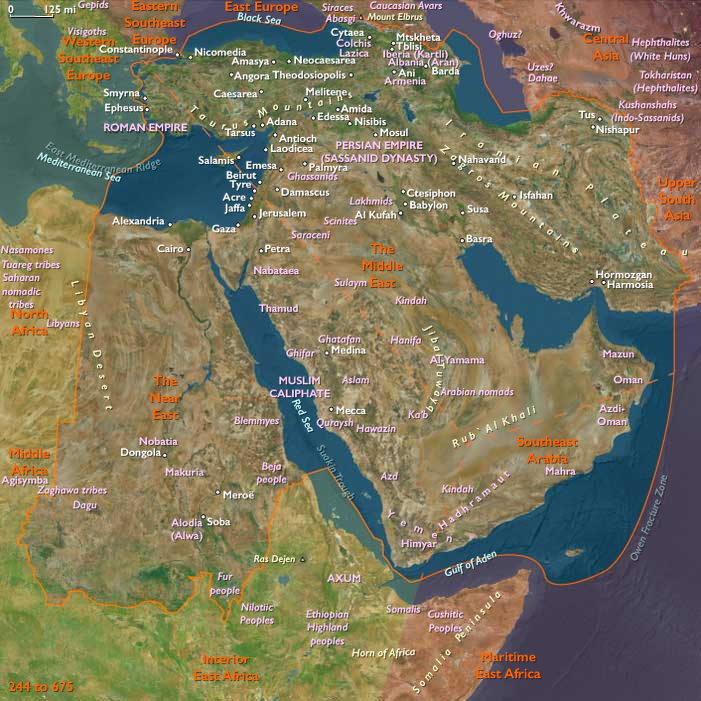
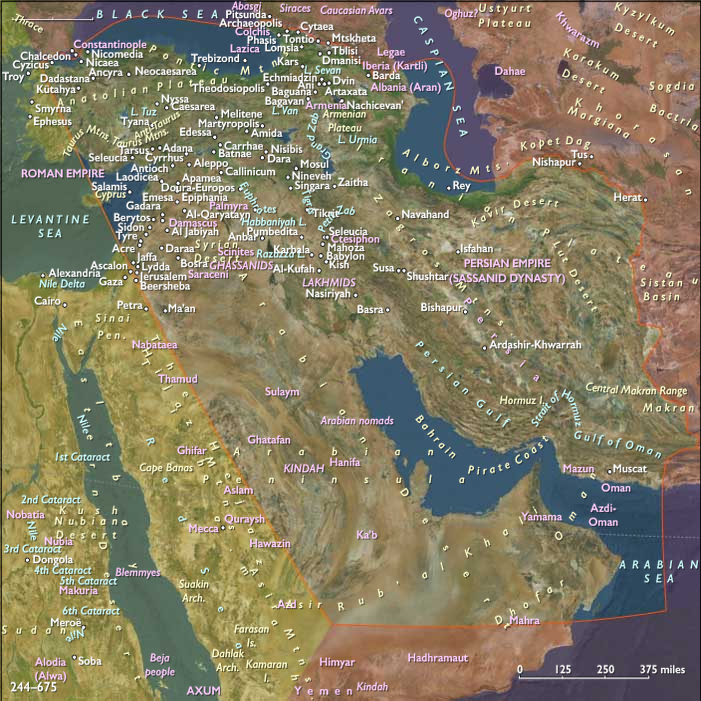
Diocletian establishes himself at Nicomedia, in western Anatolia and close to the Persian frontier, in order to keep watch on the East.
Locations
People
Groups
Topics
Commodoties
Subjects
Regions
Subregions
Related Events
Showing 10 events out of 60128 total
Years: 286 - 286
March
Locations
People
Groups
Topics
Commodoties
Subjects
Regions
Subregions