
Filters:
ijon Becomes the Capital of the Dukes …
Years: 1016 - 1016
ijon Becomes the Capital of the Dukes of Burgundy (1016)
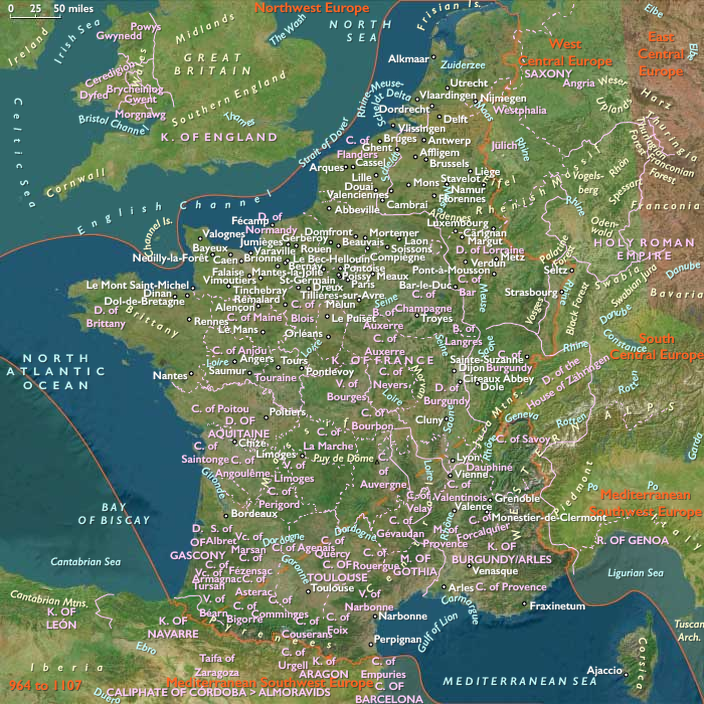
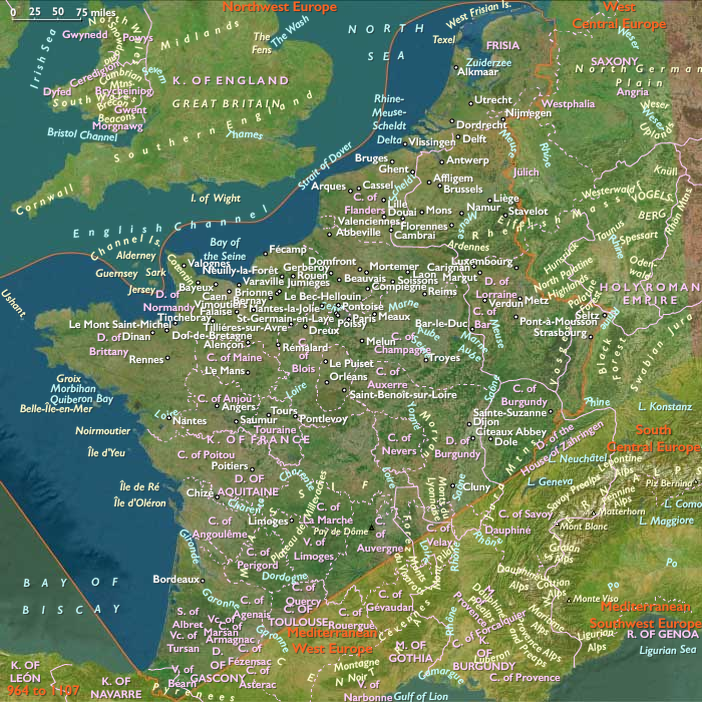
Originally settled as a Roman military camp, Dijon, situated at the confluence of the Suzon and Ouche rivers, emerged as a significant center of power in medieval France. In 1016, it was formally established as the capital of the Duchy of Burgundy, marking a turning point in its political and economic development.
Dijon's Early History
- The site was first occupied by the Romans, serving as a strategic settlement along vital trade and military routes.
- Following the fall of the Western Roman Empire, Dijon remained an important local stronghold, later incorporated into the growing Burgundian territories.
The Rise of Dijon as the Burgundian Capital
- In 1016, the Dukes of Burgundy, vassals of the Capetian kings of France, chose Dijon as their administrative center, replacing previous centers of power.
- The city’s central location within the duchy made it an ideal choice for governance, commerce, and military logistics.
- Bishop Lambert of Langres, who held jurisdiction over Dijon, was instrumental in securing its importance as an ecclesiastical and political hub.
Impact and Legacy
- As the Burgundian capital, Dijon became a center of ducal authority, where the dukes established administrative institutions and fortifications.
- Over time, the city grew into a major economic and cultural center, particularly under the Valois Dukes of Burgundy (14th–15th centuries), when it flourished as a hub of art, learning, and commerce.
- Dijon’s designation as the ducal capital in 1016 set the stage for its long-term prominence in French history, eventually becoming a symbol of Burgundian identity and prestige.
The elevation of Dijon in 1016 marked the beginning of its transformation into a leading medieval and Renaissance city, shaping the trajectory of the Duchy of Burgundy as a powerful entity in medieval Europe.
Locations
Groups
Topics
Subjects
Regions
Subregions
Related Events
Showing 6 events out of 6 total
Years: 1016 - 1016
Locations
Groups
Topics
Subjects
Regions
Subregions