
Differences of philosophical understanding, liturgical usage, language, …
Years: 1052 - 1052
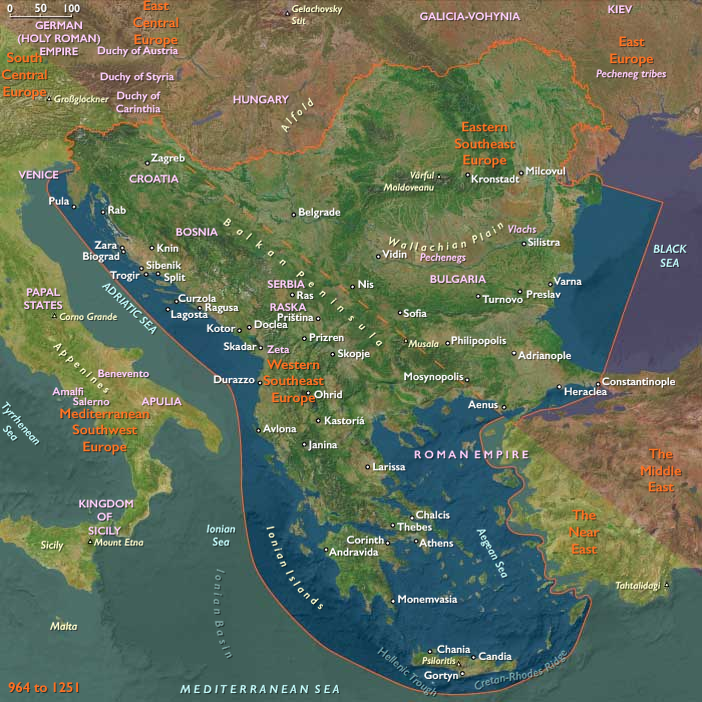
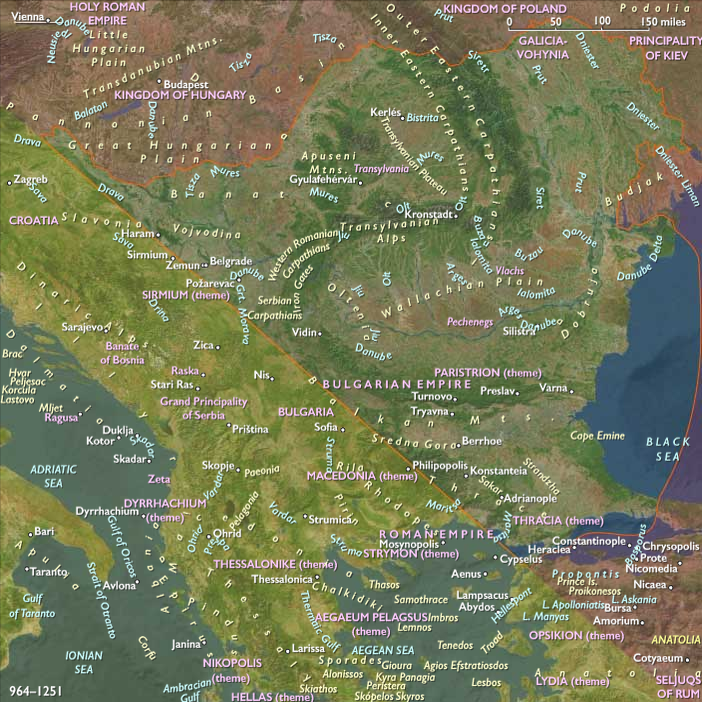
Differences of philosophical understanding, liturgical usage, language, and custom have already contributed to the growing misunderstanding and alienation between the Eastern and Western churches, but political rivalries and divisions are equally important factors.
Open division on doctrinal questions, as well as matters of discipline and daily practice, has resulted in heated disputes over such matters as the ecclesiastical calendar, the use of leavened or unleavened bread, or additions to the creed (notably the “filioque” clause of the Nicene Creed).
Michael Cerularius had been named patriarch in 1043 by Constantine, although he had been educated for the civil service rather than for an ecclesiastical career.
Cerularius' ambitious desires for political power, coupled with his inflexible belief in the autonomy of the Eastern Church, have led him to thwart Constantine's attempts to ally the Greek and German empires in defense against the Normans; he also rejects the “filioque” clause.
In 1052, partly in response to concessions that Constantine has made to Pope Leo IX, Cerularius decides to force the Latin churches in his diocese to use the Greek language and liturgical practices; when they refuse to do so, he orders them closed.
Locations
People
Groups
- Christianity, Chalcedonian
- Roman Empire, Eastern: Macedonian dynasty
- Normans
- German, or Ottonian (Roman) Empire
- Italy, Catepanate of
Topics
Commodoties
Subjects
Regions
Subregions
Years: 1052 - 1052
Locations
People
Groups
- Christianity, Chalcedonian
- Roman Empire, Eastern: Macedonian dynasty
- Normans
- German, or Ottonian (Roman) Empire
- Italy, Catepanate of
Topics
Commodoties
Subjects
Regions
Subregions