
Filters:
The British colony of Nova Scotia in …
Years: 1752 - 1752
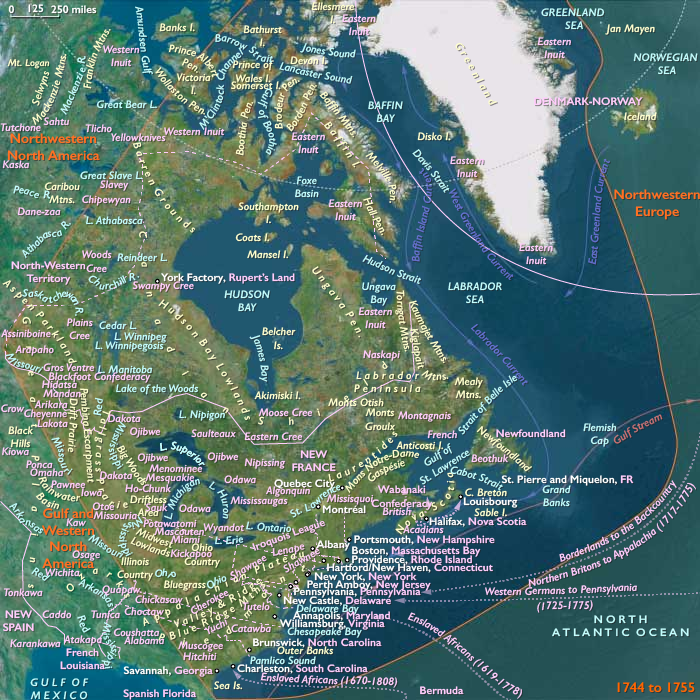
The British colony of Nova Scotia in 1749 had been almost completely populated by native Mi'kmaq and ten thousand French-speaking and Roman Catholic Acadians.
The British, specifically the Board of Trade, want to settle Protestants in the region.
Attracting British immigrants is difficult as most preferred to go to the warmer southern colonies.
Thus, a plan has been developed to aggressively recruit foreign Protestants.
This recruiting drive is led by John Dick, who has been quite successful.
The British government has agreed to provide free passage to the colony, as well as free land and one year's rations upon arrival.
Over two thousand of the "Foreign Protestants" have arrived between 1750 and 1752, in twelve ships, coming mostly from German duchies and principalities on the Upper Rhine in the present-day Rhineland-Palatinate bundesländer.
The duchy of Württemberg is the major source, but there are also "Foreign Protestants" from the present day Tripoint of France, Germany and Switzerland.
They come from Montbéliard in France, and parts of Switzerland and the Netherlands.
The British, specifically the Board of Trade, want to settle Protestants in the region.
Attracting British immigrants is difficult as most preferred to go to the warmer southern colonies.
Thus, a plan has been developed to aggressively recruit foreign Protestants.
This recruiting drive is led by John Dick, who has been quite successful.
The British government has agreed to provide free passage to the colony, as well as free land and one year's rations upon arrival.
Over two thousand of the "Foreign Protestants" have arrived between 1750 and 1752, in twelve ships, coming mostly from German duchies and principalities on the Upper Rhine in the present-day Rhineland-Palatinate bundesländer.
The duchy of Württemberg is the major source, but there are also "Foreign Protestants" from the present day Tripoint of France, Germany and Switzerland.
They come from Montbéliard in France, and parts of Switzerland and the Netherlands.
Locations
People
Groups
- Maliseet, or Wolastoqiyik, people (Amerind tribe)
- Abenaki people (Amerind tribe)
- Mi'kmaq people (Amerind tribe)
- Christians, Roman Catholic
- Swiss Confederacy, Old (Swiss Confederation)
- Württemberg, Duchy of
- Passamaquoddy (Amerind tribe)
- Wabanaki Confederacy
- New France (French Colony)
- Anglicans (Episcopal Church of England)
- Netherlands, United Provinces of the (Dutch Republic)
- France, (Bourbon) Kingdom of
- Massachusetts, Province of (English Crown Colony)
- Britain, Kingdom of Great
- Nova Scotia (British Colony)
- Electoral Palatinate
Topics
Commodoties
Subjects
Regions
Subregions
Years: 1752 - 1752
Locations
People
Groups
- Maliseet, or Wolastoqiyik, people (Amerind tribe)
- Abenaki people (Amerind tribe)
- Mi'kmaq people (Amerind tribe)
- Christians, Roman Catholic
- Swiss Confederacy, Old (Swiss Confederation)
- Württemberg, Duchy of
- Passamaquoddy (Amerind tribe)
- Wabanaki Confederacy
- New France (French Colony)
- Anglicans (Episcopal Church of England)
- Netherlands, United Provinces of the (Dutch Republic)
- France, (Bourbon) Kingdom of
- Massachusetts, Province of (English Crown Colony)
- Britain, Kingdom of Great
- Nova Scotia (British Colony)
- Electoral Palatinate
Topics
Commodoties
Subjects
Regions
Subregions