
David Livingstone had been obliged to leave …
Years: 1851 - 1851
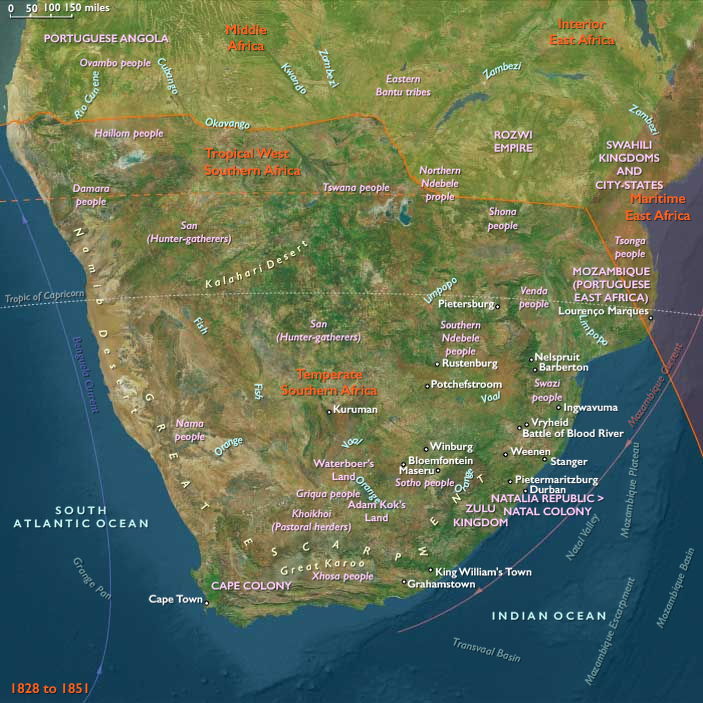
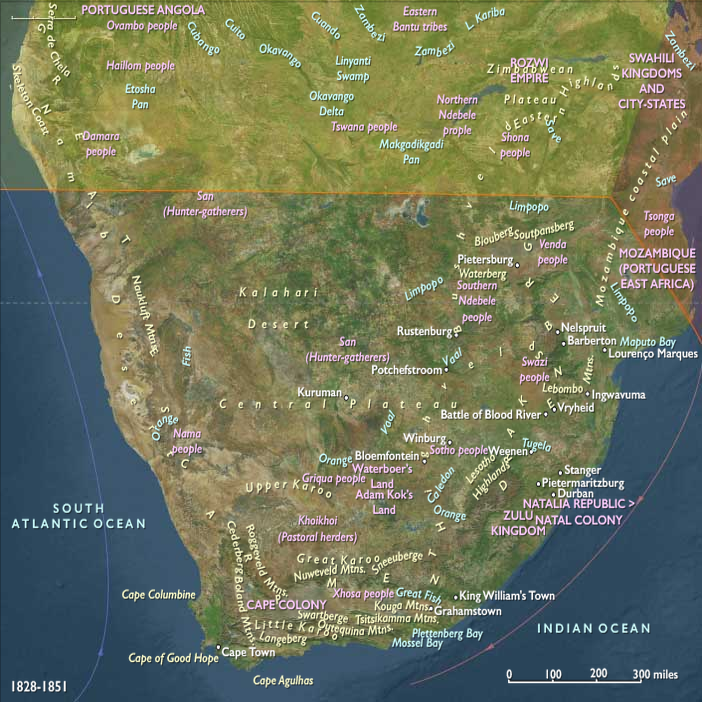
David Livingstone had been obliged to leave his first mission at Mabotsa in Botswana in 1845 after irreconcilable differences emerged between him and his fellow missionary, Roger Edwards, and because the Bakgatla were proving indifferent to the Gospel.
He had abandoned Chonuane, his next mission, in 1847 because of drought and the proximity of the Boers and his desire "to move on to the regions beyond".
At Kolobeng Mission Livingstone converts Chief Sechele in 1849 after two years of patient persuasion, but only a few months later Sechele lapses.
In 1851, when Livingstone finally leaves Kolobeng, he does not use this failure to explain his departure, although it plays an important part in his decision.
Just as important had been the three journeys far to the north of Kolobeng which he had undertaken between 1849 and 1851 and which had left him convinced that the best long-term chance for successful evangelizing is to open up Africa to European plunderers and missionaries by mapping and navigating its rivers which might then become "Highways" into the interior.
Therefore, Livingstone will travel the African interior to the north between 1852 and 1856, mapping almost the entire course of the Zambezi, and will be the first European to see the Mosi-o-Tunya ("the smoke that thunders") waterfall, which he will call Victoria Falls after his monarch Queen Victoria.
Locations
People
Groups
- Anglicans (Episcopal Church of England)
- London Missionary Society
- Britain (United Kingdom of Great Britain and Ireland)
- Cape Colony, British
Subjects
Regions
Subregions
Years: 1851 - 1851
Locations
People
Groups
- Anglicans (Episcopal Church of England)
- London Missionary Society
- Britain (United Kingdom of Great Britain and Ireland)
- Cape Colony, British
Subjects
Regions
Subregions