
Darius’ death has left to his son …
Years: 481BCE - 481BCE
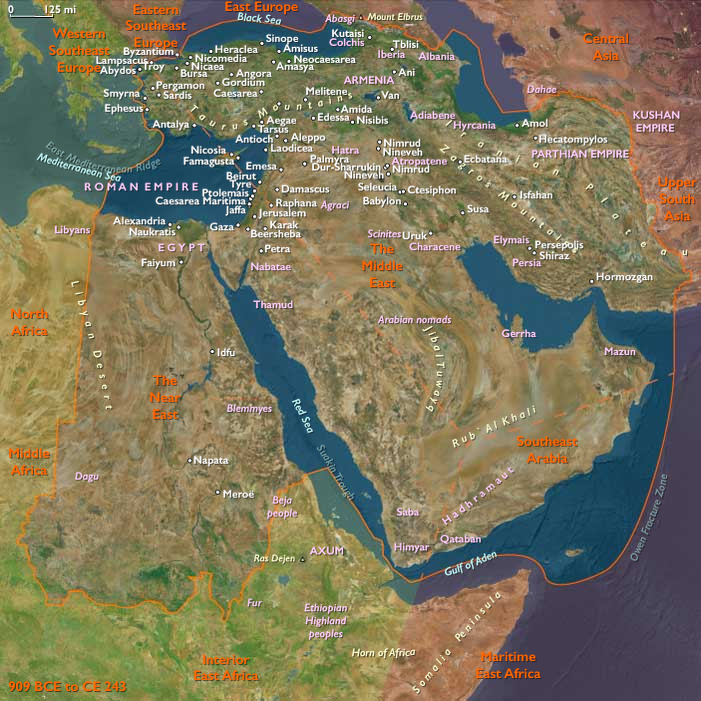
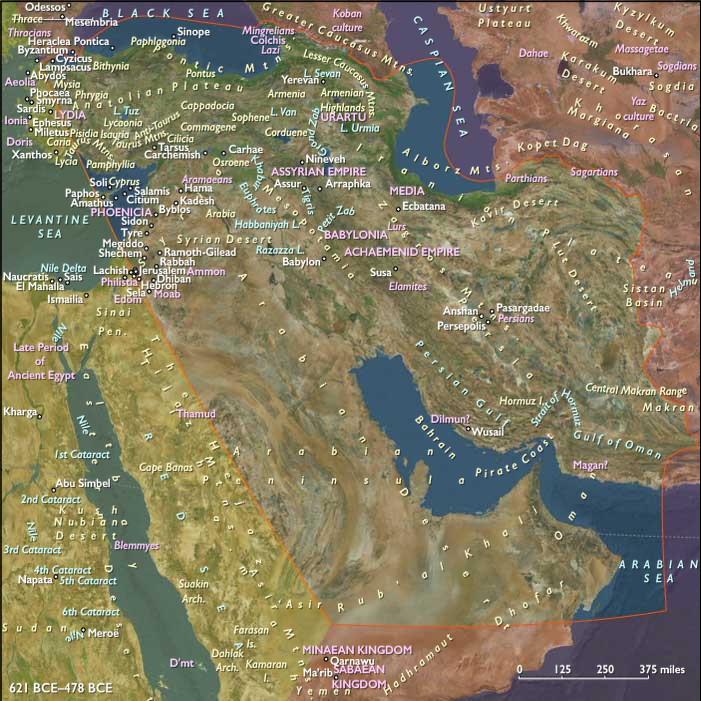
Darius’ death has left to his son the task of punishing the Athenians, Naxians, and Eretrians for their interference in the Ionian Revolt, the burning of Sardis and their victory over the Persians at Marathon.
From 483 BCE, Xerxes had begun preparing his expedition: A channel is dug through the isthmus of the peninsula of Mount Athos, provisions are stored in the stations on the road through Thrace, two pontoon bridges later known as Xerxes' Pontoon Bridges are built across the Hellespont.
Soldiers of many nationalities serve in the armies of Xerxes, including the Assyrians, Phoenicians, Babylonians, Egyptians and Judahites.
Among the Phoenician naval contingents of the Persian fleet are the sailors of Sidon.
Xerxes concludes an alliance with Carthage, and thus deprives Greece of the support of the powerful monarchs of Syracuse and Akragas.
Many smaller Greek states, moreover, take the side of the Persians, especially Thessaly, Thebes and Argos.
Locations
People
Groups
- Egyptians
- Athens, City-State of
- Thebes, City-State of
- Argos, City-State of
- Persian people
- Assyrian people
- Greece, classical
- Sparta, Kingdom of
- Carthage, Kingdom of
- Thessalian League
- Syracuse, Corinthian city-state of
- Egypt (Ancient), Late Period of
- Judahites
- Phoenicia, Achaemenid
- Achaemenid, or First Persian, Empire
Topics
- Younger Subboreal Period
- Iron Age, Near and Middle East
- Iron Age Cold Epoch
- Classical antiquity
- Greco-Persian Wars, Early
Commodoties
Subjects
- Commerce
- Watercraft
- Engineering
- Environment
- Labor and Service
- Conflict
- Faith
- Government
- Custom and Law
- Technology
Regions
Subregions
Years: 481BCE - 481BCE
Locations
People
Groups
- Egyptians
- Athens, City-State of
- Thebes, City-State of
- Argos, City-State of
- Persian people
- Assyrian people
- Greece, classical
- Sparta, Kingdom of
- Carthage, Kingdom of
- Thessalian League
- Syracuse, Corinthian city-state of
- Egypt (Ancient), Late Period of
- Judahites
- Phoenicia, Achaemenid
- Achaemenid, or First Persian, Empire
Topics
- Younger Subboreal Period
- Iron Age, Near and Middle East
- Iron Age Cold Epoch
- Classical antiquity
- Greco-Persian Wars, Early
Commodoties
Subjects
- Commerce
- Watercraft
- Engineering
- Environment
- Labor and Service
- Conflict
- Faith
- Government
- Custom and Law
- Technology
Regions
Subregions